Though the use of new portable greenhouse techniques, one farmer is looking to extend his local food growing season year-round -- in Northern Vermont.


"As fall gave way to winter, Johnson saw his vision vindicated. Through weeks of snow and some single-digit temperatures, Johnson supplied his community-supported agriculture (CSA) customers with fresh lettuce and other greens grown inside the unheated greenhouse. (In CSA consumers buy food directly from local farmers.)"
"Those plants stopped growing during Vermont's deep January freeze (minus 30 degrees one week), but Johnson expects to start harvesting new growth in mid-February. 'And that's pretty cool to get fresh greens from unheated greenhouses all but one month of the winter,' he says."
"Last spring the movable concept sprouted again in his imagination. Now with over 250 CSA customers, he bought four 35-x-200-foot greenhouses and erected them on steel skids. The plan was an attempt at something most people would have thought impossible in a northern climate until recently – harvesting virtually year-round."
"Johnson is one of 'a critical mass of new, innovative farmers' at the heart of 'a massive wave of change,' says Dave Rogers, national policy director of the Northeast Organic Farmers Association. 'Nationally, local food is mushrooming, and winter CSAs are developing all over the country.' He adds that even the US Department of Agriculture is getting the message: Last year's farm bill designated $100 million for organic agriculture."
FULL STORY: Where imagination meets farming

Fish: the Future of Urban Farming
Cityscape Farms has developed a new technique for farming fish along with vegetables in combined urban food systems that allows them to farm in developed areas.
Is the Local Food Movement Misguided?
Eating local is in vogue, as the environmental impacts of industrialized agriculture surface. But is eating local really the right response? One author says maybe not.
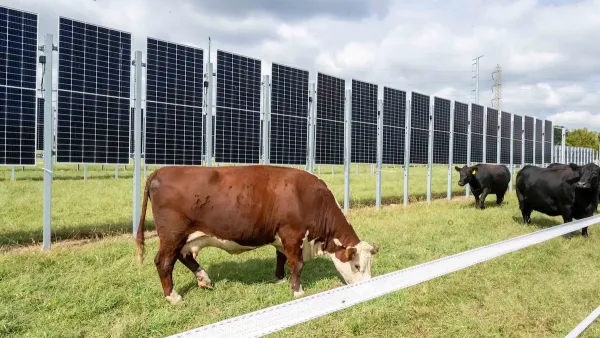
New Jersey Agrivoltaic Project Combines Solar Energy With Farming
A Rutgers University-New Brunswick demonstration farm will evaluate solar array designs to understand how they can best support grazing and agriculture on the same site.

The state-sanctioned urbicide of Austin
People don’t kill cities. Freeways do.

US to reduce Colorado River water deliveries to Mexico
A new Colorado Treaty amendment reduces Mexico’s Colorado River water allocation by 250,000 acre feet.

New Jersey’s second-largest city bans standalone data centers
Jersey City will continue to allow co-location facilities, such as those meant for research institutions that store their own data.

Amtrak not solely to blame for New Jersey commuter rail's unreliability, report finds
A new study from the Garden State Initiative found that NJ Transit’s budget grew 20% across a 4 year period, but reliability declined significantly over the same period.

EPA erases limits on planet-warming pollution from power plants
Under Monday’s plan, power plants would still have some limits on how much mercury, arsenic and other contaminants they can emit.

Phoenix announces new on-demand transit service, more frequent RAPID buses
Both new services will launch in October, and are part of Phoenix's Project Effective Access Solutions for Easing Congestion.

FREE Course: Walkable City 1: Why Walkability?
After describing his path towards focusing on walkability as the essence of good planning, Jeff Speck marches through his five principal reasons for making more walkable places.
Reinventing Malls: Planning Alchemy—Turning Gray Fields Into Gold
The course focuses on the opportunities and imperatives that shape reinvention of mall sites.

Eagle County Government
Harvard University Graduate School of Design
Nashville Planning Department
The Architects Foundation
University of Cincinnati Online
The Pocatello Development Authority
The Urban Renewal Agency of the City of Pocatello
Journal of the American Planning Association