Paterson? Yeah Paterson, the City 13 miles to the west of NYC. Birthplace of American industry, the “Silk City” founded by Alexander Hamilton and designed by Washington DC’s master planner Pierre Charles L’Enfant. Besides textiles, Paterson was home to the first repeating revolver, first submarine and the Rogers Locomotive Works that, at one time, manufactured 80% of the Country’s locomotives. Paterson is also home to the second largest waterfall in the northern hemisphere (Niagra Falls taking top honors of course) and a collection of foreign born residents so lar


Paterson? Yeah Paterson, the City 13 miles to the west of NYC. Birthplace of American industry, the "Silk City" founded by Alexander Hamilton and designed by Washington DC's master planner Pierre Charles L'Enfant. Besides textiles, Paterson was home to the first repeating revolver, first submarine and the Rogers Locomotive Works that, at one time, manufactured 80% of the Country's locomotives. Paterson is also home to the second largest waterfall in the northern hemisphere (Niagra Falls taking top honors of course) and a collection of foreign born residents so large that the Peruvian Consulate is located downtown. It's a unique, chaotic, historic and largely unknown and undiscovered City.
But not for long. After a long campaign, the Great Falls was finally designated National Park status in the past month. The Great Falls had already been designated a "natural landmark" in the late 1960s and a "national historic landmark" in 1976. So what's in a name? Money it seems. The designation in 1976 brought some much needed dollars to restore the "the system of "raceways" that were designed to channel water to local mills. The promise of National Park status is that a lot more financial support will flow to Paterson and help restore and rebuild.
For those most familiar with the City and the mills that surround the Great Falls, this is long overdue and a potential shot in the arm to generate some much needed attention. There are extraordinary assets in this small City but also monumental challenges. Take Hinchliffe Stadium (see below). Built in the 1930s, the 10,000 sq. ft. stadium was an important home to the Negro Baseball Leagues, car racing, professional football and boxing. It now sits as an unused but astounding landmark overlooking the Falls.

This rich history has engendered an almost ruthless devotion to the City from its residents, even if they moved away. It's perhaps best summarized in this quote from the book About Paterson: The Making and Unmaking of an American City by Christopher Norwood - "There are two elements that dominate the city's character: a pride so enormous that it sometimes verges on hysteria and a deep-seated mistrust that makes cooperation out of the question."
After spending some time there, that might be overstating it a bit. After all, it was cooperation that brought about this National Park status, revived many formerly vacant mill buildings and created new schools that have altered the face of the neighborhood surrounding the Falls. Here's hoping for a new era of success.
While an urban national park might not be in the cards for everyone, all small and mid-size cities have interesting stories to tell but are all too often overshadowed by the problems. I think of these as hidden narratives. Peregrine Arts in Philadelphia has taken this problem as a source of inspiration and organized a four-week event called the "Hidden City." In essence the event is a call to "rediscover" where you live. Seems small and mid-size cities could benefit enormously by this type of local story-telling. It might not result in a large grant, but it would certainly help reinforce local pride and awareness about each community's unique moments.
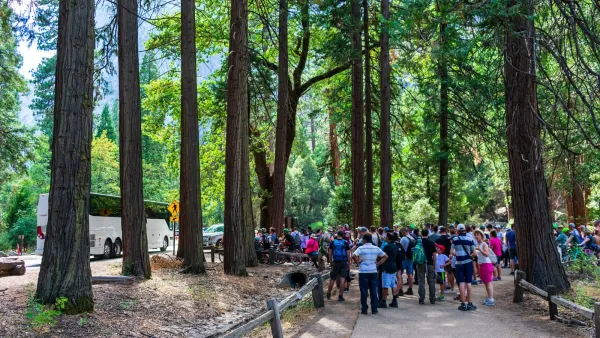
Yosemite crowds wait hours to enter park after NPS ends reservation system
Bumper-to-bumper traffic and a lack of parking foreshadowed a potentially chaotic summer.
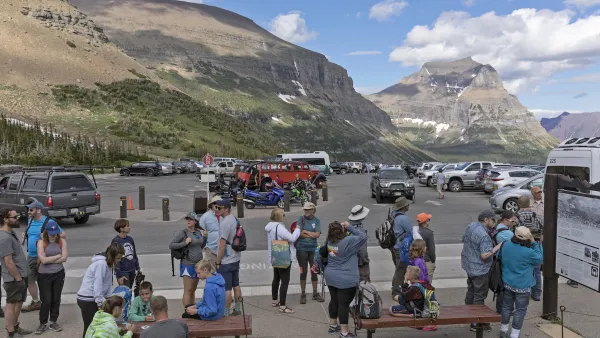
Glacier National Park drops reservation requirement, plans to double down on shuttle network
Since 2021, visitors with cars have had to make a reservation to access the park.
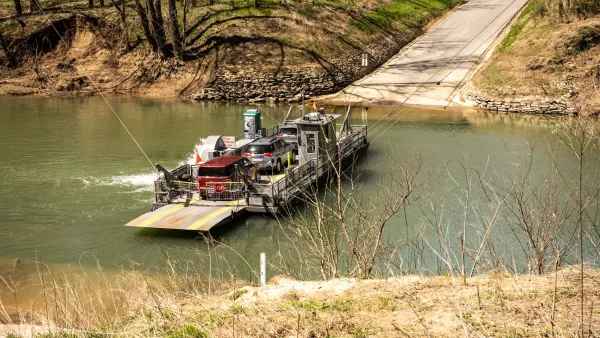
Nation’s Shortest Car Ferry Travels Just 200 Feet in a National Park
The Green River Ferry shuttles cars in a 30-second trip.

Desperate measures: Advocates weigh draining Lake Powell to fill Colorado River
Draining the reservoir could reduce evaporation losses by a couple hundred thousand acre-feet.

Eastern Nebraska is running out of electricity
Data centers and electrification are straining eastern Nebraska’s grid, throttling economic development.

Malls are becoming the midtowns of the future
Mall and office park redevelopments are a generational opportunity to create new nodes of urbanity.

NYC breaks ground on anti-flooding infrastructure project
New York City's new system will reduce stormwater flows to local sewers by 90%.

One Kentucky town’s secret to affordable housing
The Smoketown Community Land Trust has already built seven affordable homes for community members.

Houston gains petal-shaped cooling infrastructure to make streets more ‘delightful’
The city has installed the pavilions along 15 blocks in Houston.

FREE Course: Walkable City 1: Why Walkability?
After describing his path towards focusing on walkability as the essence of good planning, Jeff Speck marches through his five principal reasons for making more walkable places.
Reinventing Malls: Planning Alchemy—Turning Gray Fields Into Gold
The course focuses on the opportunities and imperatives that shape reinvention of mall sites.

City of Rosemead
Rutgers University, Edward J. Bloustein School of Planning and Public Policy
One Hundred Miles
University of Michigan School for Environment and Sustainability (SEAS)
Hunter College, City University of New York (CUNY)
The Architects Foundation
City of Cambridge
Montrose County
The Pocatello Development Authority

