Professor Richard Morill of the University of Washington maps population growth over the past seven years, which shows a continuing pattern of movement towards large metropolitan regions.


"The big growth areas are concentrated in Texas (Houston, Dallas-Fort Worth, San Antonio, Austin), greater Atlanta, North Carolina (Charlotte-Raleigh), most of Florida, the Virginia and Maryland suburbs of Washington-Baltimore, the desert Southwest (Riverside-San Bernardino, Las Vegas, Phoenix, Tucson). Substantial exurban or spillover growth was common, with the Bay Area extending into California Central Valley, in far exurban New York and Pennsylvania as well as in largely once rural counties around such places as Salt Lake City, Denver, Portland, Seattle, Minneapolis, Chicago, Kansas City, Nashville, Indianapolis and Columbus.
Many smaller metropolitan areas grew, especially in the south and west. Many counties with universities appear to have also grown, notably in the South. Many rural or small-town counties with substantial growth boasted environmental amenities and a strong ‘quality of life' appeal."
FULL STORY: Restless Americans: Migration and Population Change, 2000-2007


Oregon cities are excluding a key tool that could help their housing goals: maps
An effort to use geospatial analysis to understand how housing and access to opportunity are distributed in Oregon cities has largely stalled.
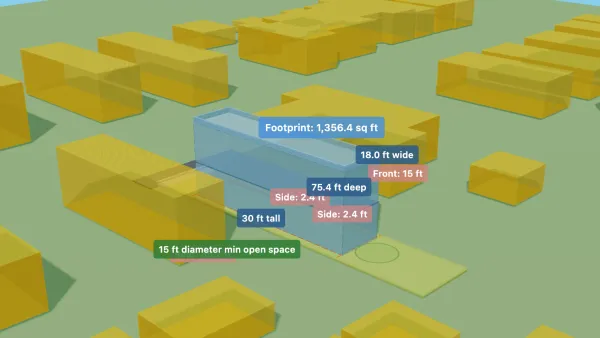
Interactive, 3D Chicago Zoning Map Lets You Visualize Potential Development
A new tool creates a visual model of potential development on Chicago lots based on the property’s specific zoning regulations.

See the First Complete Map of NYC Walking Traffic
A new model of pedestrian routes and activity can help NYC planners make more informed decisions about transportation infrastructure and pedestrian safety improvements.

The state-sanctioned urbicide of Austin
People don’t kill cities. Freeways do.

US to reduce Colorado River water deliveries to Mexico
A new Colorado Treaty amendment reduces Mexico’s Colorado River water allocation by 250,000 acre feet.

New Jersey’s second-largest city bans standalone data centers
Jersey City will continue to allow co-location facilities, such as those meant for research institutions that store their own data.

Amtrak not solely to blame for New Jersey commuter rail's unreliability, report finds
A new study from the Garden State Initiative found that NJ Transit’s budget grew 20% across a 4 year period, but reliability declined significantly over the same period.

EPA erases limits on planet-warming pollution from power plants
Under Monday’s plan, power plants would still have some limits on how much mercury, arsenic and other contaminants they can emit.

Phoenix announces new on-demand transit service, more frequent RAPID buses
Both new services will launch in October, and are part of Phoenix's Project Effective Access Solutions for Easing Congestion.

FREE Course: Walkable City 1: Why Walkability?
After describing his path towards focusing on walkability as the essence of good planning, Jeff Speck marches through his five principal reasons for making more walkable places.
Reinventing Malls: Planning Alchemy—Turning Gray Fields Into Gold
The course focuses on the opportunities and imperatives that shape reinvention of mall sites.

Eagle County Government
Harvard University Graduate School of Design
Nashville Planning Department
The Architects Foundation
University of Cincinnati Online
The Pocatello Development Authority
The Urban Renewal Agency of the City of Pocatello
Journal of the American Planning Association