Although it is a public transit success, Metrolink was cobbled together with old freight rail lines. It was a relatively cheap and quick way of providing rail service, but its drawbacks have become obvious.


"Metrolink was put together because Southern California was not moving far enough or fast enough to build a comprehensive passenger rail transit system, like BART in the Bay Area," writes Bill Fulton, a frequent Metrolink rider. "BART currently operates in four counties and is planning to penetrate a fifth. It's a heavy-rail subway system, though it runs above-ground in some places. It operates on its own right-of-way in a seamless fashion."
"L.A. rail transit system, on the other hand, has been stitched together with a motley combination of rights-of-way and technologies. There's a backbone subway line (the Red Line), but there are also a lot of incompatible light-rail lines. And building new lines to the outlying counties has, up to now, simply not been in the cards."
In November, Los Angeles County voters will consider a sales tax to fund transportation system improvements, and Ventura County voters could make a similar decision in 2010. Even those revenues, however, might not be enough.
Read the full story: Will Metro L.A. Pay The Piper On Metrolink?

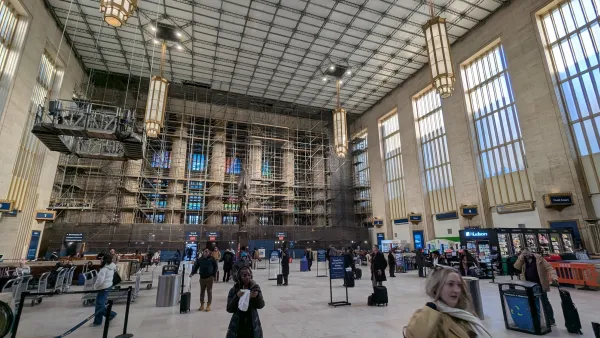
Pennsylvania 12-year transportation plan commits $13B for transit
The state's new mid-range transportation strategy includes nearly $17 billion for roads and bridges and $367 million for multimodal projects.
The Crucial Role of Suburban Voters in the Midterms
Suburban voters were instrumental in preventing a 'red wave' on Election Day and on December 6 in the Georgia U.S. Senate runoff election, enabling the Democrats to win a 51st Senate seat.

Brookings: A Demographic Post-Mortem of the Midterms
Young adults, according to a deep dive analysis by Brookings Metro demographer William Frey, were a key demographic group responsible for stopping the red wave that most polling predicted as the likely outcome of last month's midterm elections.

Planetizen Federal Action Tracker
A weekly monitor of how Trump’s orders and actions are impacting planners and planning in America.

The state-sanctioned urbicide of Austin
People don’t kill cities. Freeways do.

Colorado’s Largest Data Center Could Rise Next to Homes — Without a Public Hearing
The proposed campus would consume 11 times the power of Denver International Airport; as it has across the country, opposition mounts.

Judges permit Denver to divert 77,000 acre feet from the Colorado River for reservoir expansion
Overuse and climate change have caused the Colorado River’s water levels to plummet.
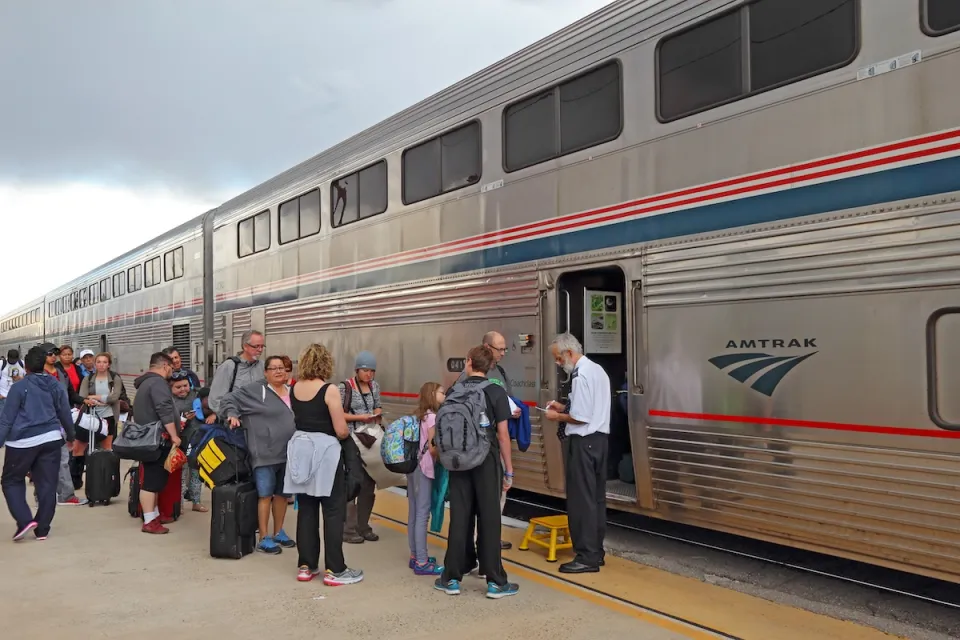
Amtrak, CN end decades-long dispute with eight-year agreement
The new operating agreement establishes an updated framework for the companies to work together, including processes to resolve disputes.

Raised interest rates may kill financially vulnerable construction projects
The chief economist at ConstructConnect warns that if construction project owners are negatively impacted by the raised rates, it could result in delayed payments to contractors.

FREE Course: Walkable City 1: Why Walkability?
After describing his path towards focusing on walkability as the essence of good planning, Jeff Speck marches through his five principal reasons for making more walkable places.
Reinventing Malls: Planning Alchemy—Turning Gray Fields Into Gold
The course focuses on the opportunities and imperatives that shape reinvention of mall sites.

KFH Group Inc.
Greater Baltimore Committee
Eagle County Government
The Architects Foundation
University of Cincinnati Online
The Pocatello Development Authority
The Urban Renewal Agency of the City of Pocatello