






















This article from The New York Times contrasts the rapid development of cities like Beijing and Dubai, while New Orleans continues to struggle in its Hurricane Katrina recovery effort.


"However one feels about its other policies, the Chinese government is clearly not afraid to invest in the future of its cities. The array of architecture it created for the Beijing Olympics was only part of a mosaic of roads, bridges, tunnels, canals, subway lines and other projects that have transformed a medieval city of wood and brick into a modern metropolis overnight.
Meanwhile, three full years after Hurricane Katrina devastated New Orleans, much of the city remains a wasteland. As Hurricane Gustav raced toward the Gulf Coast, it became clear that the city's patchwork levee system could not guarantee the safety of its citizens. The evacuation of tens of thousands of residents was cheered as some sort of victory.
But for those with a sense of urban history, the tragedy of New Orleans is not just about governmental disregard for the welfare of the city's inhabitants. It is about a lost opportunity. All of the great challenges that confront the 21st-century city - from class, race and environmental issues to the continuing duel between history and modernity - are crystallized in New Orleans.
Yet the kind of visionary urban plan that could address these issues in a bold and thoughtful way has yet to materialize. Instead, some of the country's greatest architectural minds are inventing the future in cities like Beijing, Shenzhen and Dubai, where their talents are more appreciated."
FULL STORY: Reflections: New Orleans and China


Planetizen Federal Action Tracker
A weekly monitor of how Trump’s orders and actions are impacting planners and planning in America.
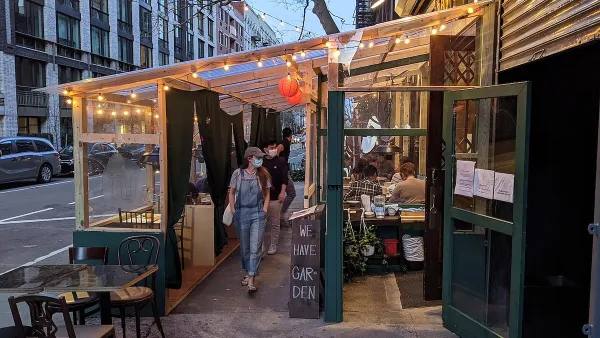
Restaurant Patios Were a Pandemic Win — Why Were They so Hard to Keep?
Social distancing requirements and changes in travel patterns prompted cities to pilot new uses for street and sidewalk space. Then it got complicated.
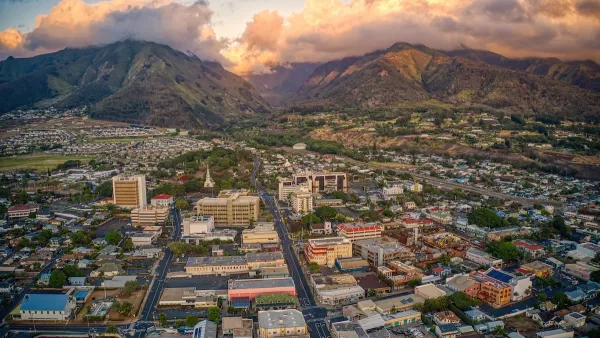
Maui's Vacation Rental Debate Turns Ugly
Verbal attacks, misinformation campaigns and fistfights plague a high-stakes debate to convert thousands of vacation rentals into long-term housing.

Boulder Eliminates Parking Minimums Citywide
Officials estimate the cost of building a single underground parking space at up to $100,000.

Orange County, Florida Adopts Largest US “Sprawl Repair” Code
The ‘Orange Code’ seeks to rectify decades of sprawl-inducing, car-oriented development.

Maui's Vacation Rental Debate Turns Ugly
Verbal attacks, misinformation campaigns and fistfights plague a high-stakes debate to convert thousands of vacation rentals into long-term housing.

Urban Design for Planners 1: Software Tools
This six-course series explores essential urban design concepts using open source software and equips planners with the tools they need to participate fully in the urban design process.
Planning for Universal Design
Learn the tools for implementing Universal Design in planning regulations.

Heyer Gruel & Associates PA
JM Goldson LLC
Custer County Colorado
City of Camden Redevelopment Agency
City of Astoria
Transportation Research & Education Center (TREC) at Portland State University
Camden Redevelopment Agency
City of Claremont
Municipality of Princeton (NJ)