One of Congress' newest members sees it fitting that Americans should drive slower to save fuel - an appropriate sacrifice for a war she sees partly waged for oil. Her first bill, HR 6458, lowers speed limits to 60/65 mph (urban/rural areas).


"Speier wasted no time announcing her presence. On her first day, April 10, the Hillsborough (CA) Democrat was booed on the House floor by Republicans who objected to her speech about the specter of a 100-year U.S. engagement in Iraq: "History will not judge us kindly if we sacrifice four generations of Americans because of the folly of one."
"If there is a political polar opposite of a Mother's Day resolution, it is trying to regulate how Americans drive. Speier has done just that with her very first bill, which would set a national speed limit of 60 mph in cities and 65 mph in rural areas.
"It's like guns - don't mess with my car, my Harley or my gun," Speier observed. "I know it's not going to make me a lot of friends, but I didn't go there for that reason."
"It might seem like an uphill climb in view of America's car culture, but Speier attacks it with relish. She notes the relatively small differences in travel times between 70 mph and 60 mph, against the potential savings of more than 2,000 lives and the reduction in this nation's carbon footprint and dependence on imported oil. Speier contends the lower speed limit (and corresponding drop in fuel consumption) would have far more near-term impact on gas prices than the other plans (offshore drilling, alternative fuel incentives) that have been kicking around in the House.
In the larger picture, Speier goes back to the subject of the speech she made on her first day in Congress: the war in Iraq, which has claimed 4,500 U.S. lives and has consumed more than $10 billion a month."
"Part of our reason for going there was oil," she said. Many Americans, she said, have not felt a direct sacrifice of the war. A reduced speed limit would be at least a small sacrifice, or, as Speier put it, "an act of patriotism."
Office of Congresswoman Speier: HR 6458: Establishing a National 60 mph Speed Limit
Oakland Tribune: 60 mph limit gaining speed
U.S. D.O.E.: Driving More Efficiently
AP: Senator asks if nation's drivers should slow down
Planetizen: Lowering The Speeding Limit To Improve Air Quality
Read the full story: Speier proves quick study on Capitol Hill

It's Time To Reconsider How Speed Limits Are Set
Speed limits are currently determined by a calculation that considers only the status quo of vehicular velocity. Standard practices for speed limit setting and legislators should prioritize the safety of community members, according to this article.
Slow Streets Are Coming to D.C.
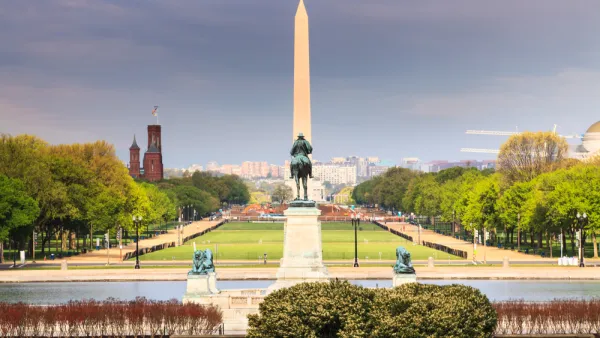
Seven streets in Washington, D.C. will have speed limit reduced to 15 miles per hour following a District-wide 20 miles per hour local road speed limit set at the end of May.
More Rights, Fewer Responsibilities, for Electric Scooter Riders in California
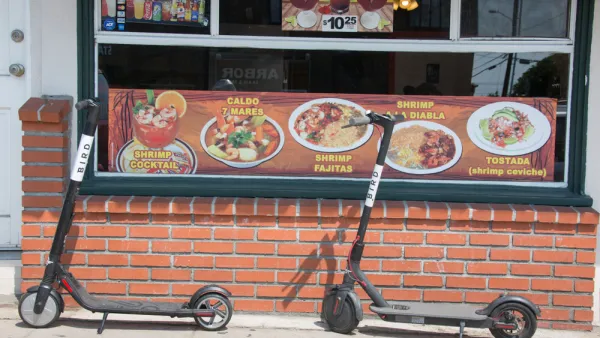
A bill that would toss the helmet requirement for adult e- scooter riders and allow them to ride on roads where the speed limit is 35 mph, up from the current limit of 25 mph, is on Governor Jerry Brown's desk. He has until Sept. 30 to decide.

Planetizen Federal Action Tracker
A weekly monitor of how Trump’s orders and actions are impacting planners and planning in America.

California plans to bury El Niño’s downpour
If the state plays its cards right, it may be able to store a billion acre-feet of El Niño’s water in aquifers.

Desperate measures: Advocates weigh draining Lake Powell to fill Colorado River
Draining the reservoir could reduce evaporation losses by a couple hundred thousand acre-feet.

Housing is the top priority of Seattle’s sole new councilmember
Jenks campaigned on building 1,000 new units of affordable housing.

New tax cuts may slash $1.5 billion in funding for Miami transit, public parks
Amendment 3 will save Miami-Dade homeowners $2,700 in 2028.

Arizona, Wisconsin, Pennsylvania hope to finally advance climate goals post-midterms
The three states have spent years under Republican or divided control.

FREE Course: Walkable City 1: Why Walkability?
After describing his path towards focusing on walkability as the essence of good planning, Jeff Speck marches through his five principal reasons for making more walkable places.
Reinventing Malls: Planning Alchemy—Turning Gray Fields Into Gold
The course focuses on the opportunities and imperatives that shape reinvention of mall sites.

City of Rosemead
Rutgers University, Edward J. Bloustein School of Planning and Public Policy
One Hundred Miles
University of Michigan School for Environment and Sustainability (SEAS)
Hunter College, City University of New York (CUNY)
The Architects Foundation
City of Cambridge
Montrose County
The Pocatello Development Authority