In this column, Richard Florida argues the decline in the popularity of suburbs is not just a product of rising oil prices, but a result of a new "spatial fix" that is reorganizing how and where people live their lives.


"One of the few things increasing as fast as the price of oil lately has been the amount of commentary linking higher energy costs to the death of suburbia. Clearly, higher gas prices have affected where people want – or can afford – to live. Just as the demand for SUVs plummets and consumers have finally begun to see the point of hybrids, people are turning away from sprawling exurbs toward urban neighbourhoods and inner suburbs."
"But what's happening here goes a lot deeper than the end of cheap oil. We are now passing through the early development of a wholly new geographic order – what geographers call "the spatial fix" – of which the move back toward the city is just one part."
"Suburbanization was the spatial fix for the industrial age – the geographic expression of mass production. Low-cost mortgages, massive highway systems and suburban infrastructure projects fueled the industrial engine of postwar capitalism, propelling demand for cars, appliances and all sorts of industrial goods."
"The creative economy is giving rise to a new spatial fix and a very different geography – the contours of which are only now emerging."
Read the full story: The days of urban sprawl are over ...


Planning for Congestion Relief
The third and final installment of Planetizen's examination of the role of the planning profession in both perpetuating and solving traffic congestion.

How Planning Fails to Solve Congestion
Solutions for congestion are never as simple and easy as armchair planners and engineers would like you to believe—especially those who suggest that congestion can be solved by forever building more roadway capacity.
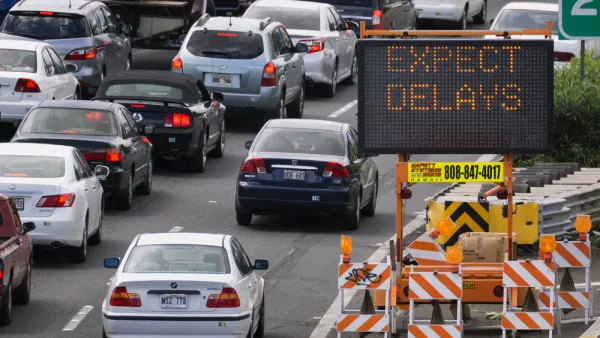
Planning and the Complicated Causes and Effects of Congestion
What do planners know about congestion, and what can they do about it? Explanations and solutions are less obvious than they seem (part one of a three-part series).

Planetizen Federal Action Tracker
A weekly monitor of how Trump’s orders and actions are impacting planners and planning in America.

Northwest rail fans eager for Sept. 30 debut of Amtrak’s Airo fleet
Get ready for that new train smell and more seats. But they won’t go faster or run more frequently on the Cascades route in Washington and Oregon.
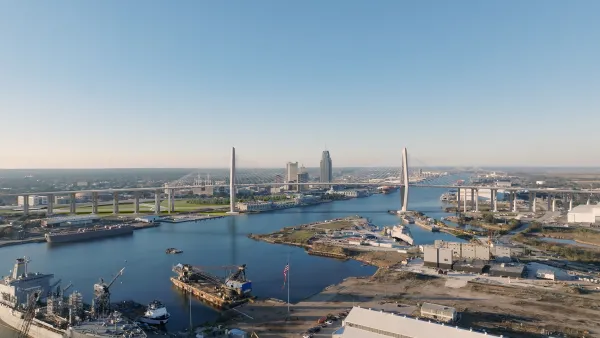
Alabama scores up to $2.5 billion federal loan for largest infrastructure project in state’s history
The Mobile River Bridge and Bayway Project aims to ease congestion at Alabama’s worst bottleneck.

Novel study finds extreme state-by-state disparity in housing construction timelines
The first comprehensive working paper on U.S. construction timelines also found that the permitting process for multi-family projects has slowed nationwide.

California may destroy its beaches trying to save homes from El Niño
Boulders and seawalls can protect homes from waves, but ultimately destroy sandy beaches.

California high-speed rail accomplishes only one legislative goal in 2026
The majority of the agency's failed pitches were never developed into written proposals.

FREE Course: Walkable City 1: Why Walkability?
After describing his path towards focusing on walkability as the essence of good planning, Jeff Speck marches through his five principal reasons for making more walkable places.
Reinventing Malls: Planning Alchemy—Turning Gray Fields Into Gold
The course focuses on the opportunities and imperatives that shape reinvention of mall sites.

City of Thousand Oaks
City of Wisconsin Rapids
Harvard University Graduate School of Design
The Architects Foundation
University of Cincinnati Online
Northern Illinois Transit Authority (NITA)
The Pocatello Development Authority
The Urban Renewal Agency of the City of Pocatello