A new condo proposal in a Honolulu neighborhood is 70 feet over the current height limits. Developers say new heights are necessary to make projects pencil out with rising construction costs.


"The developers of Holomua, planned for 1315 Kalakaua Ave., say the high-rise project wouldn't make economic sense at 150 feet - the height limit for the neighborhood - so they are proposing to build to 220 feet and offer 51 percent of the for-sale units at affordable prices.
"It all boils down to economies of scale," said Serge Krivatsy of THM Partners, developer of the project. "The cost of land, especially in urban Honolulu, means the more units you can get on a parcel, the more you can reduce the selling price."
Though Holomua won't be the only high-rise towering over the area - the nearby Banyan Tree Plaza on Punahou Street soars to 350 feet and another nearby project hits 220 feet - dozens of Makiki residents oppose the 176-unit project, saying its height exemption translates into more people, more cars and more problems."
Read the full story: Oahu skyline expands with taller buildings
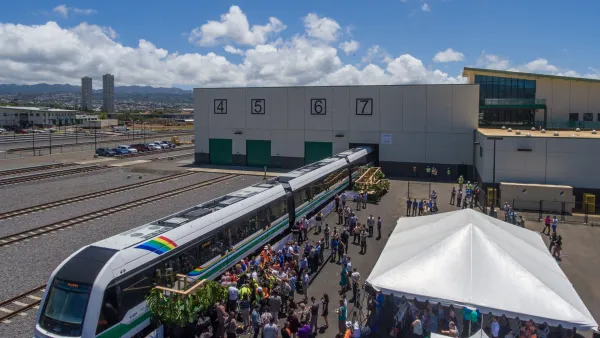
From robotaxis to robotrains: LA, DC weigh driverless transit
If approved, the projects will take years to implement and face financial and technical hurdles.

New CA housing laws tear down development red tape
Recently-signed legislation makes building starter homes and ADUs cheaper and faster in California.

Is AI really the Panacea to our permitting woes?
Let’s have a look at what’s happening on the ground.

Planetizen Federal Action Tracker
A weekly monitor of how Trump’s orders and actions are impacting planners and planning in America.

Eastern Nebraska is running out of electricity
Data centers and electrification are straining eastern Nebraska’s grid, throttling economic development.

Study reveals best places in the U.S. for cycling, walking
New research from Streetlight Data examines bicycle and pedestrian miles per capita in the 100 largest U.S. cities by population.

DSA members accuse Mamdani of 'abandoning values' over housing redevelopment
New York City's mayor plans to replace about 2,000 units of public housing with private, mixed-income housing.

All sides of BRT debate unhappy with CDOT’s most recent move
The Colorado Department of Transportation is no longer considering center-running bus lanes for Colorado Boulevard.

Massachusetts bogs generate both power, and cranberries
Putting solar panels above farmland is one way Massachusetts is advancing toward its goal of net-zero carbon emissions by 2050.

FREE Course: Walkable City 1: Why Walkability?
After describing his path towards focusing on walkability as the essence of good planning, Jeff Speck marches through his five principal reasons for making more walkable places.
Reinventing Malls: Planning Alchemy—Turning Gray Fields Into Gold
The course focuses on the opportunities and imperatives that shape reinvention of mall sites.

City of Rosemead
Rutgers University, Edward J. Bloustein School of Planning and Public Policy
One Hundred Miles
University of Michigan School for Environment and Sustainability (SEAS)
Hunter College, City University of New York (CUNY)
The Architects Foundation
City of Cambridge
The Pocatello Development Authority
The Urban Renewal Agency of the City of Pocatello