The streetcar returns to New Orleans' St. Charles Ave., a step forward in the long struggle to get the city's transit back on it's feet after Katrina.


"Once the final mile or so reopens, tourists, downtown workers and bar-hopping college students will be able to ride the popular, un-air-conditioned St. Charles line from the downtown business district through mansion-lined streets and other areas nearly 24 hours a day.
In harder-hit and slowly recovering neighborhoods, however, the wait for a bus can be an hour or more. Only a quarter of the people who took streetcars and buses on workdays before Katrina are doing so now.
Civic groups want more streetcar and bus lines to link neighborhoods as the city rebuilds, saying public transportation will help attract new residents to a city where insurance and gasoline prices are pushing up the already-high cost of living.
Thelma Tyler, who is trying to rebuild her Lower 9th Ward home, hopes that with the streetcar back, transit officials can focus on improving service in her old neighborhood."Hopefully, things will be expedited as soon as possible, because we don't want the elderly waiting that long or walking, especially in the heat," she said.
After Katrina damaged the Regional Transit Authority's fleet, it curtailed bus service to many neighborhoods where fewer people were living."
Read the full story: New Orleans streetcar reopens as transit struggles
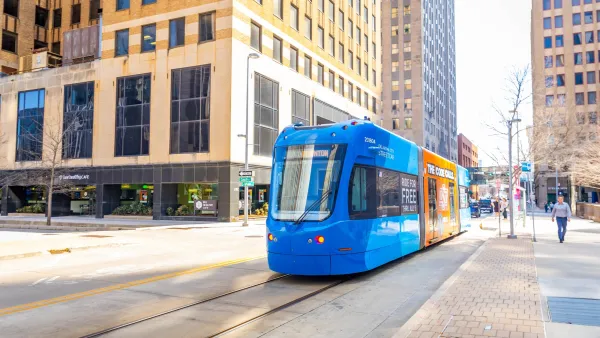
OKC streetcar will stay fare-free after ridership shot up 74%
The downtown streetcar saw a surge in ridership after it eliminated fares in January.
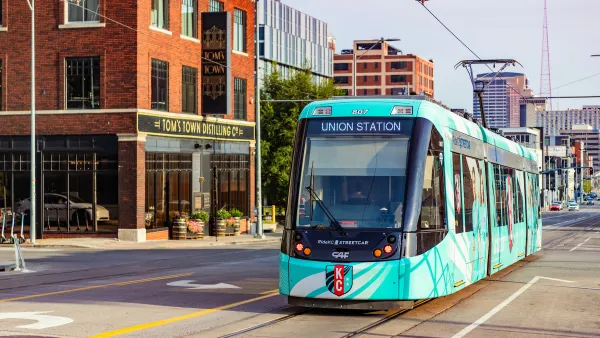
Kansas City completes riverfront streetcar extension
The streetcar line carries a third of the region's transit riders.
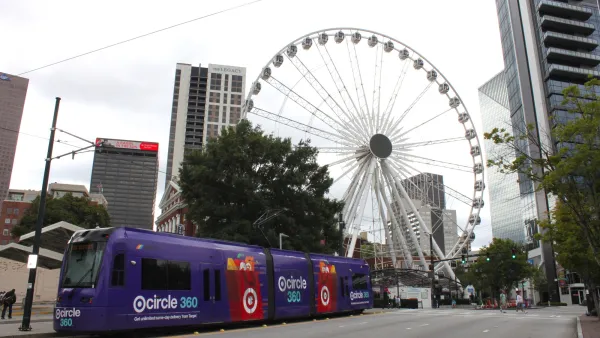
MARTA Streetcar Returns February 3
Streetcar service in Atlanta was suspended for five months for repairs and upgrades.

Planetizen Federal Action Tracker
A weekly monitor of how Trump’s orders and actions are impacting planners and planning in America.

Eastern Nebraska is running out of electricity
Data centers and electrification are straining eastern Nebraska’s grid, throttling economic development.

Study reveals best places in the U.S. for cycling, walking
New research from Streetlight Data examines bicycle and pedestrian miles per capita in the 100 largest U.S. cities by population.

DSA members accuse Mamdani of 'abandoning values' over housing redevelopment
New York City's mayor plans to replace about 2,000 units of public housing with private, mixed-income housing.

All sides of BRT debate unhappy with CDOT’s most recent move
The Colorado Department of Transportation is no longer considering center-running bus lanes for Colorado Boulevard.

Massachusetts bogs generate both power, and cranberries
Putting solar panels above farmland is one way Massachusetts is advancing toward its goal of net-zero carbon emissions by 2050.

FREE Course: Walkable City 1: Why Walkability?
After describing his path towards focusing on walkability as the essence of good planning, Jeff Speck marches through his five principal reasons for making more walkable places.
Reinventing Malls: Planning Alchemy—Turning Gray Fields Into Gold
The course focuses on the opportunities and imperatives that shape reinvention of mall sites.

City of Rosemead
Rutgers University, Edward J. Bloustein School of Planning and Public Policy
One Hundred Miles
University of Michigan School for Environment and Sustainability (SEAS)
Hunter College, City University of New York (CUNY)
The Architects Foundation
City of Cambridge
The Pocatello Development Authority
The Urban Renewal Agency of the City of Pocatello