New York Times columnist Thomas Friedman holds no punches in expressing his displeasure in the 'gas tax holiday' proposal now that presidential candidate Hillary Clinton has joined presumptive Republican nominee John McCain in endorsing it.


"Hillary Clinton has decided to line up with John McCain in pushing to suspend the federal excise tax on gasoline, 18.4 cents a gallon, for this summer's travel season. This is not an energy policy. This is money laundering: we borrow money from China and ship it to Saudi Arabia and take a little cut for ourselves as it goes through our gas tanks.
No, no, no, we'll just get the money by taxing Big Oil, says Mrs. Clinton. Even if you could do that, what a terrible way to spend precious tax dollars - burning it up on the way to the beach rather than on innovation?
The McCain-Clinton gas holiday proposal is a perfect example of what energy expert Peter Schwartz of Global Business Network describes as the true American energy policy today: "Maximize demand, minimize supply and buy the rest from the people who hate us the most."
From Reuters:
"Economists said that since refineries cannot increase their supply of gasoline in the space of a few summer months, lower prices will just boost demand and the benefits will flow to oil companies, not consumers.
"You are just going to push up the price of gas by almost the size of the tax cut," said Eric Toder, a senior fellow at the Urban-Brookings Tax Policy Center in Washington.
Obama criticized the plan as pure politics and said the only way to lower the price of gas is to use less oil."
Thanks to Mark Boshnack
Read the full story: Op-Ed Columnist: Dumb as We Wanna Be
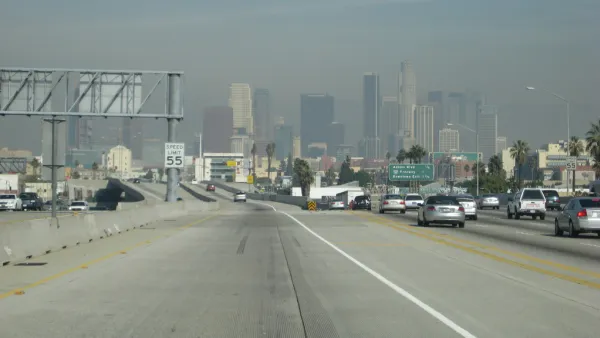
If Road Pricing Is Inherently Unfair and Regressive...
Road pricing has its faults as a revenue measure, but it needs to be compared to ten elements of the current system of paying for transportation, including hidden subsidies, says Joe Cortright, an urban economist with Portland-based City Observatory.
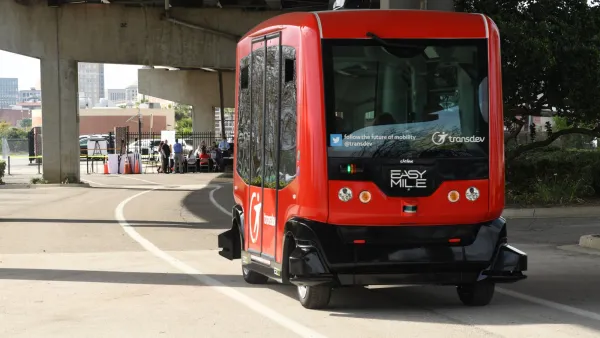
Self-Driving Cars Will Take More Transportation Funding Than They Give
There's a potential consequence from autonomous vehicles that has mostly gone unnoticed: municipal financial ruin.
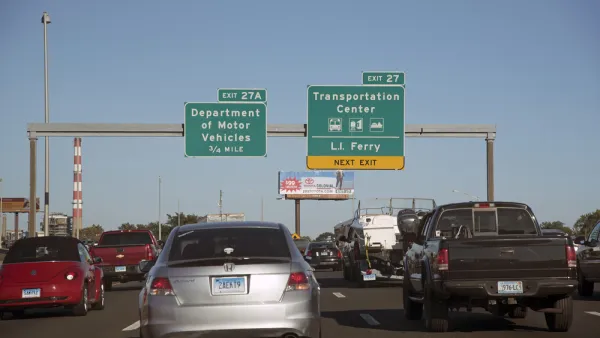
Connecticut Governor's Transportation Plan Raises New Revenue to Fund Road Projects
Tolls and gas taxes—that's how Connecticut Governor Daniel P. Malloy plans on raising revenue for the state's troubled Special Transportation Fund.

Planetizen Federal Action Tracker
A weekly monitor of how Trump’s orders and actions are impacting planners and planning in America.

Eastern Nebraska is running out of electricity
Data centers and electrification are straining eastern Nebraska’s grid, throttling economic development.

Study reveals best places in the U.S. for cycling, walking
New research from Streetlight Data examines bicycle and pedestrian miles per capita in the 100 largest U.S. cities by population.

Officials look to alter BART extension as price goes through the roof
Tariffs and the war with Iran are behind the rising cost.

To power data centers, Utah company may build hundreds of nuclear reactors on state land
In its permit application, Valar asked for the county to confirm that changes within its outlined plan would still be covered by the permit.

San Antonio is using environmental review to stall ICE detention center
San Antonio sued last month to pause work on the new detention center until the federal government studied its effect on the surrounding area.

FREE Course: Walkable City 1: Why Walkability?
After describing his path towards focusing on walkability as the essence of good planning, Jeff Speck marches through his five principal reasons for making more walkable places.
Reinventing Malls: Planning Alchemy—Turning Gray Fields Into Gold
The course focuses on the opportunities and imperatives that shape reinvention of mall sites.

City of Charlotte
City of Rosemead
Rutgers University, Edward J. Bloustein School of Planning and Public Policy
University of Michigan School for Environment and Sustainability (SEAS)
Hunter College, City University of New York (CUNY)
The Architects Foundation
City of Cambridge
The Pocatello Development Authority
The Urban Renewal Agency of the City of Pocatello