Forget slogans and fancy trains. If transit agencies just focused on getting people where they need to go in a consistent, reliable (and preferably quicker) way, more people would abandon their cars.


"The bus lurches to a stop behind a rush-hour fender bender.
Passengers look up from their laptops and BlackBerrys, pausing from answering email or watching YouTube via wireless Internet access.
Their trip home is delayed.
Luckily, the vehicle has a satellite transit tracking system that shows buses and streetcars on nearby lines moving well. The information is available at passengers' fingertips via on-board touch screens, which provide real-time updates on route delays and connections.
It means riders can hop off and be assured of grabbing another bus and still getting home in time for dinner.
A futuristic glimpse of public transit? No, today in San Francisco.
Called the Connected Bus, it's a lesson in Customer Service 101.
Restaurateurs and retailers have long known how vital it is to provide service that encourages repeat business. But transit operators are behind schedule when it comes to treating riders like customers."
Read the full story: The genuinely better way


Idaho may see an 18% drop in federal surface transit funding — the largest estimated cut in the US
Transit systems in rural communities are much more reliant on federal funding to provide their services.
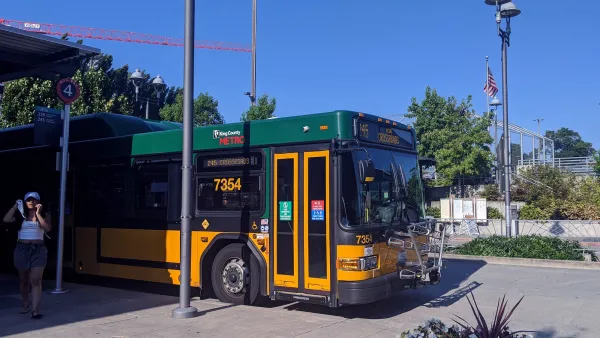
King County Metro adds 3,000 weekly bus trips, more connections to rail
King County Metro and Sound Transit are both making major adjustments to their bus networks to improve light rail connectivity across the region.
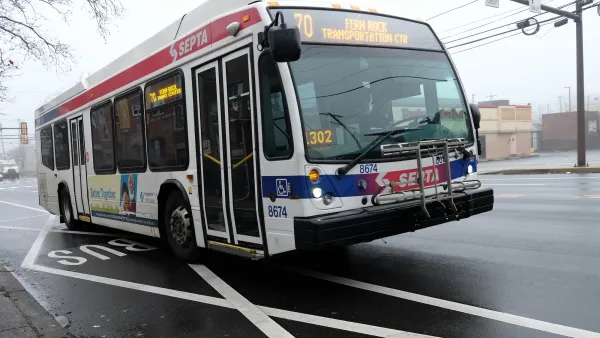
Pennsylvania lawmaker wants to ban fully self-driving buses
State Rep. Ben Waxman's proposed bill would require autonomous buses to have a licensed driver on board.

Planetizen Federal Action Tracker
A weekly monitor of how Trump’s orders and actions are impacting planners and planning in America.

California plans to bury El Niño’s downpour
If the state plays its cards right, it may be able to store a billion acre-feet of El Niño’s water in aquifers.

Chicago breaks ground on $3 billion megadevelopment
The new neighborhood, titled Foundry Park, will one day host 3,700 residences.

California High-Speed Rail Authority CEO resigns after $600,000 scandal
Under Ian Choudri, the authority used taxpayer dollars to fund first class flights and trips to nightclubs.

Want to study the Missouri River? Soon, you may need unanimous approval from 10 states
Legislation would require 10 governors’ permission to study or build projects moving water outside the basin.

Desperate measures: Advocates weigh draining Lake Powell to fill Colorado River
Draining the reservoir could reduce evaporation losses by a couple hundred thousand acre-feet.

FREE Course: Walkable City 1: Why Walkability?
After describing his path towards focusing on walkability as the essence of good planning, Jeff Speck marches through his five principal reasons for making more walkable places.
Reinventing Malls: Planning Alchemy—Turning Gray Fields Into Gold
The course focuses on the opportunities and imperatives that shape reinvention of mall sites.

City of Rosemead
Rutgers University, Edward J. Bloustein School of Planning and Public Policy
One Hundred Miles
Hunter College, City University of New York (CUNY)
The Architects Foundation
University of Cincinnati Online
City of Cambridge
Montrose County
The Pocatello Development Authority