The New York City Council has approved Mayor Michael Bloomberg's plan to charge drivers $8 to enter Manhattan.


"The controversial proposal to charge drivers in the busiest parts of Manhattan took a major step forward on Monday, with Mayor Michael R. Bloomberg and Speaker Christine C. Quinn wrenching approval from the City Council by an unusually slim margin.
Under intense pressure from the mayor, Ms. Quinn and their allies that continued almost until the voting began, council members approved the plan to charge most drivers $8 to enter a zone below 60th Street by a vote of 30 to 20, with no abstentions and one absence."
"But the ultimate fate of the proposal now resides in Albany, where the intentions of lawmakers whose approval is needed remained unclear. Gov. David A. Paterson and the Senate majority leader, Joseph L. Bruno, have expressed their support. But Assembly Speaker Sheldon Silver, who has derailed Mr. Bloomberg's ambitions in the past, remained noncommittal, telling members of the Democratic conference on Sunday night that he would not take the issue up until the state budget was completed."
Read the full story: City Council Approves Fee to Drive Below 60th

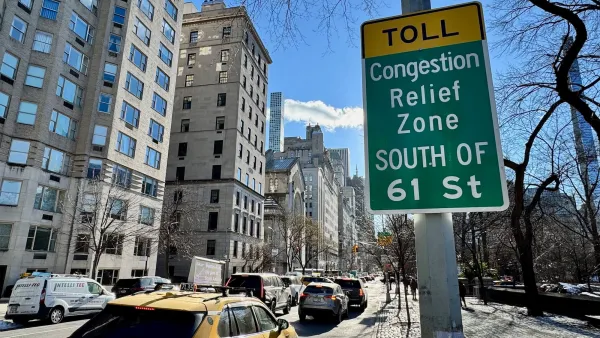
Study: NYC congestion pricing didn't impact parking demand
A city report shows that free parking, not congestion pricing, is the main driver of limited parking demand in the city.
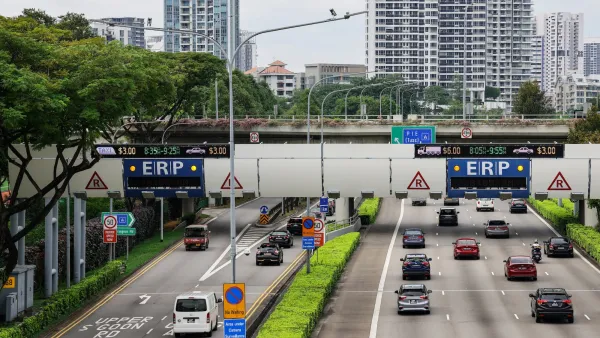
Singapore adopts in-vehicle GPS tech to manage road tolls
The city's latest update to its congestion pricing system could open the door to distance-based tolling.

NYC Congestion Pricing Revenue Will Fund up to 1,000 Hybrid Refrigerated Trucks
Traffic to the Hunts Point Produce Market causes increased rates of asthma in surrounding neighborhoods.

Amtrak, CN end decades-long dispute with eight-year agreement
The new operating agreement establishes an updated framework for the companies to work together, including processes to resolve disputes.

Judges permit Denver to divert 77,000 acre feet from the Colorado River for reservoir expansion
Overuse and climate change have caused the Colorado River’s water levels to plummet.
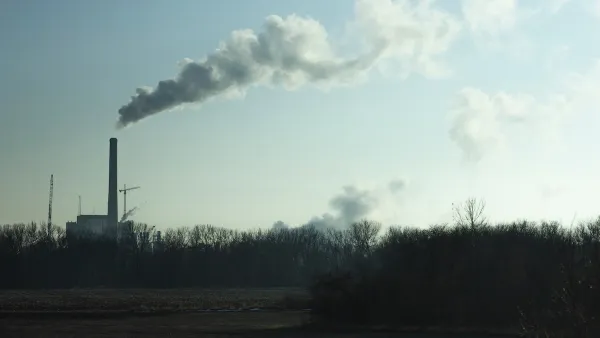
Nation's most wind-powered state turns to coal as data centers increase energy demand
For the first time in decades, Iowa has increased its generation of coal power.

Boston has spent millions making the Green Line more accessible — and there’s no end in sight
While the city has invested millions into expanding and adding platforms to the Green Line to make it more accessible, new train cars set to arrive next year will be too tall for disabled passengers to board without raising the current platforms.

Idaho may see an 18% drop in federal surface transit funding — the largest estimated cut in the US
Transit systems in rural communities are much more reliant on federal funding to provide their services.

How ‘post-disaster gentrification’ alters neighborhoods after natural calamities
After hurricanes, fires or other calamities, the original residents of a community are often replaced by younger, wealthier residents.

FREE Course: Walkable City 1: Why Walkability?
After describing his path towards focusing on walkability as the essence of good planning, Jeff Speck marches through his five principal reasons for making more walkable places.
Reinventing Malls: Planning Alchemy—Turning Gray Fields Into Gold
The course focuses on the opportunities and imperatives that shape reinvention of mall sites.

City of Wisconsin Rapids
Harvard University Graduate School of Design
KFH Group Inc.
The Architects Foundation
University of Cincinnati Online
The Pocatello Development Authority
The Urban Renewal Agency of the City of Pocatello