Alleys are a major part of the character of San Francisco, and many parts of the city are trying to embrace these unique aspects of the urban makeup.


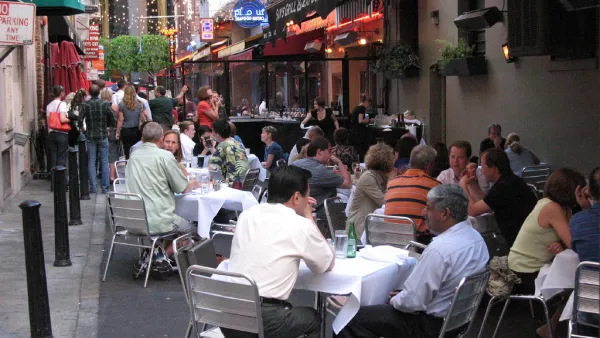
"Built in haste after the discovery of California gold in 1848 and rebuilt in a bigger hurry after the 1906 earthquake and fire, San Francisco is riven with all manner of concrete crannies, quaint cobblestone back ways and remote waterfront hide-outs like the Ramp, a sunset margarita spot whose front deck literally drops into the bay. In the tradition of a city whose literary legacy includes both the Beats and Sam Spade, those out-of-the-way addresses also include hipster bars and Zagat-rated speakeasies like Bix, an alley-front favorite whose Jazz Age ethos includes tuxedo jackets and torch songs."
"Indeed, unlike many cities that have built over or ignored their old service streets, San Francisco has embraced them, with tourist-friendly spots like Belden Lane downtown, which is home to a row of restaurants specializing in everything from Spanish food (B44) to vodka (Voda). Cast an eye down pretty much any alley near the Union Square shopping district and you'll find a different national cuisine, including French (Café Claude, Anjou), bar-top bar food (Azul), Vietnamese (Le Colonial) or Irish (the Irish Bank), though much of the "eating" there seems to be the liquid variety."
Read the full story: Alleys for Cool Cats
Four Cities Making the Most of Alley Spaces
Urbanful examines four cities making the most of scare public spaces by reactivating their alleys with programming and pedestrian-friendly designs.
Alley Rally Aims to Examine the City's Forgotten Spaces
In popular culture alleyways are often depicted as the setting for illicit acts. But seen in a different light, alleys are key contributors to urban life. SPUR kicks off a week of alley exploration with an essay on their benefits.
Tenderloin National Forest
An unconventional outdoor spaces has helped transform a small part of a problem-riddled San Francisco neighborhood.

Planetizen Federal Action Tracker
A weekly monitor of how Trump’s orders and actions are impacting planners and planning in America.

California plans to bury El Niño’s downpour
If the state plays its cards right, it may be able to store a billion acre-feet of El Niño’s water in aquifers.

Desperate measures: Advocates weigh draining Lake Powell to fill Colorado River
Draining the reservoir could reduce evaporation losses by a couple hundred thousand acre-feet.

Los Angeles just elected an urban planner as its mayor
Transportation analysts are optimistic that Raman will be more aggressive in addressing transit issues than Bass.

Mamdani’s pied-à-terre tax survives legal challenge
A panel of judges found that the plaintiffs failed to demonstrate injury as a result of New York City's implementation of the tax.

Eastern Nebraska is running out of electricity
Data centers and electrification are straining eastern Nebraska’s grid, throttling economic development.

FREE Course: Walkable City 1: Why Walkability?
After describing his path towards focusing on walkability as the essence of good planning, Jeff Speck marches through his five principal reasons for making more walkable places.
Reinventing Malls: Planning Alchemy—Turning Gray Fields Into Gold
The course focuses on the opportunities and imperatives that shape reinvention of mall sites.

City of Rosemead
Rutgers University, Edward J. Bloustein School of Planning and Public Policy
One Hundred Miles
University of Michigan School for Environment and Sustainability (SEAS)
Hunter College, City University of New York (CUNY)
The Architects Foundation
City of Cambridge
Montrose County
The Pocatello Development Authority