Richard Florida's latest research shows that vibrant music "scenes" -- or a city's "audio identity" -- are good indicators of urban vitality.


Richard Florida writes:
"As part of a new project on the music industry and its impact on regional economies, I worked with Kevin Stolarick, a University of Toronto colleague at the Martin Prosperity Institute, as well as Charlotta Mellander of our affiliated Prosperity Institute of Scandinavia and Scott Jackson, a doctoral student at George Mason University in Washington, D.C., to chart the evolution of popular music scenes and what they mean for regional economies. Our findings suggest there's good news coming.
Music scenes provide a useful lens through which to better understand why innovation and economic activity continue to cluster in today's global economy. Their clustering is puzzling because music-making requires little, if anything, in the way of physical input (such as iron ore or coal) to succeed, and they don't generate economies of scale.
Because musical and artistic endeavours require little more than small groups to make their final products, you would think that musicians should be able to live anywhere they want. Music scenes have every reason to "fly apart" and spread our geographically, especially in this age of the Internet and social media. But they don't. Instead, they concentrate and cluster in specific cities and regions.
What exactly is a scene? When it comes to music, the term "scene" derived from the early crossroads urban centres where rural black and white musicians began to migrate and then combine with producers and studio owners to produce remarkable new musical genres. Scenes are to music what Silicon Valley is to the high-tech industry - a vehicle for bringing together highly skilled talent, sophisticated consumers, cultural gatekeepers who identify new trends, economic infrastructure such as state-of-the-art recording studios and leading venues, and business moguls who take those trends to market in a concentrated physical and geographic space.
Music combines with technology and business trends to put these places on the map. It reflects their openness to new ideas, new people and new sounds. The places where these music scenes flourish have the underlying commercial ecosystem that is open to new ideas and can mobilize real resources around the market opportunities they signal. And as one of my former students once put it, music is the best way to market a region. Creative people don't like marketing slogans. But they do identify with a city's sound - what he called its 'audio identity.'"
Read the full story: Why making the scene makes cents for the rest of us


Planetizen Federal Action Tracker
A weekly monitor of how Trump’s orders and actions are impacting planners and planning in America.

‘Going backwards:’ Baltimore mayor, students rally against state's transit funding plan
Maryland's proposed six-year plan provides no funding for Baltimore’s BMORE bus program and reduces its road maintenance funding.
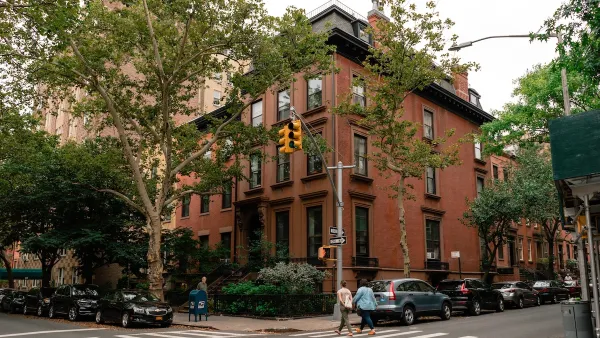
Mamdani sent nearly 6,000 pied-à-terre tax warnings to homes that didn’t qualify
A judge has ordered the administration to cancel thousands of pied-à-terre tax notices after it sent 35% of them erroneously.

Newsom vetoes high-speed rail supervision bill after agency receives condemnatory audit
The audit found the CHSRA approved almost $600,000 in unallowable travel expenses.

Nation sees first electric plane-boat hybrid take off in public demo
The Viceroy Seaglider can fly at speeds of 180mph for up to 180 miles.

One of nation’s poorest counties to receive $6 billion data center
The developers estimate the project will create 200 permanent jobs and 1,000 temporary construction jobs.

FREE Course: Walkable City 1: Why Walkability?
After describing his path towards focusing on walkability as the essence of good planning, Jeff Speck marches through his five principal reasons for making more walkable places.
Reinventing Malls: Planning Alchemy—Turning Gray Fields Into Gold
The course focuses on the opportunities and imperatives that shape reinvention of mall sites.

City of Thousand Oaks
City of Wisconsin Rapids
Harvard University Graduate School of Design
The Architects Foundation
University of Cincinnati Online
Northern Illinois Transit Authority (NITA)
The Pocatello Development Authority
The Urban Renewal Agency of the City of Pocatello