
























Philadelphia has appointed a Zoning Reform Commission to rewrite its 1962 Code. Two leaders who advocated for the rewrite share what they learned from other cities.


After a three year push by building industry and neighborhood organizations, Philadelphia has appointed a 31 member Zoning Reform Commission and begun to rewrite its outdated Code. To do so, the authors state that Philadelphia would be wise to learn from the experience of other cities and:
- Hold listening sessions to understand the failings of the Code for different constituencies
- Analyze the Code to determine where change is needed to modernize, simplify or add consistency to Code
- Share key findings early to assure consensus
- Simplify the 624 page Code so that a lawyer isn't needed to understand it
- Educate and update the public regularly
- Reduce the number of zoning designations from 55 to a sensible and workable number
- Add contextual zoning to choose "street sense" over code adherence
- In the absence of a Comprehensive Plan, find big ideas that define the goals of zoning
- Adopt changes throughout the process rather than waiting until the end
- Do not tackle the most controversial issues in your first rewrite phase and risk the entire process
FULL STORY: 10 tipes to city for building a better code


Planetizen Federal Action Tracker
A weekly monitor of how Trump’s orders and actions are impacting planners and planning in America.
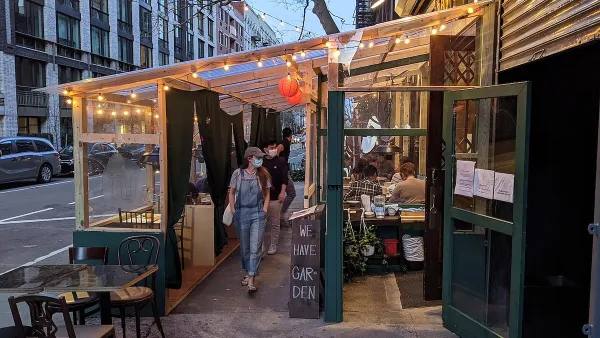
Restaurant Patios Were a Pandemic Win — Why Were They so Hard to Keep?
Social distancing requirements and changes in travel patterns prompted cities to pilot new uses for street and sidewalk space. Then it got complicated.

Map: Where Senate Republicans Want to Sell Your Public Lands
For public land advocates, the Senate Republicans’ proposal to sell millions of acres of public land in the West is “the biggest fight of their careers.”

Maui's Vacation Rental Debate Turns Ugly
Verbal attacks, misinformation campaigns and fistfights plague a high-stakes debate to convert thousands of vacation rentals into long-term housing.

San Francisco Suspends Traffic Calming Amidst Record Deaths
Citing “a challenging fiscal landscape,” the city will cease the program on the heels of 42 traffic deaths, including 24 pedestrians.

California Homeless Arrests, Citations Spike After Ruling
An investigation reveals that anti-homeless actions increased up to 500% after Grants Pass v. Johnson — even in cities claiming no policy change.

Urban Design for Planners 1: Software Tools
This six-course series explores essential urban design concepts using open source software and equips planners with the tools they need to participate fully in the urban design process.
Planning for Universal Design
Learn the tools for implementing Universal Design in planning regulations.

Heyer Gruel & Associates PA
JM Goldson LLC
Custer County Colorado
City of Camden Redevelopment Agency
City of Astoria
Transportation Research & Education Center (TREC) at Portland State University
Camden Redevelopment Agency
City of Claremont
Municipality of Princeton (NJ)