























A new study shows that property values have spiked around the proposed parkway, threatening to price lower-income residents out of their homes.


"A new study by a nonprofit housing group claims that land values are rising so quickly around Atlanta's proposed Beltline that the resulting property-tax increases threaten to drive thousands of poor people from their homes.
If the city does not set up tax breaks and other incentives to help low-income homeowners keep their houses, the proposed 22-mile loop of park and trails ringing downtown will create a circle of wealth and an outer ring of concentrated poverty, warns the Georgia Tech professor who conducted the analysis.
"The Beltline is a great idea - unless we're going to build it on the backs of poor folks," said Dan Immergluck, an expert on real estate and community development. "If it's just going to be for one income, higher incomes and people with shiny new homes, from a public policy perspective, that doesn't make a whole lot of sense."
A Beltline official said the study reveals a problem that leaders want to address.
The 39-page study, scheduled to be released today by the affordable-housing advocacy group Georgia Stand-Up, shows that in the past six years, property values within an eighth of a mile of the proposed Beltline rose at a rate much faster than most other parts of the city. Values rose most sharply in the southern part of the proposed loop.
Clarice Mackie, a 17-year resident of southwest Atlanta, said the report confirms what her neighbors have known for years.
"Our taxes have jumped," said Mackie, 58. "Houses that once cost $30,000 suddenly started appraising for $150,000 .... No building had happened there for years. Then this Beltline came out and all these speculative builders came in here." "
FULL STORY: Beltline property taxes afire, study says


Planetizen Federal Action Tracker
A weekly monitor of how Trump’s orders and actions are impacting planners and planning in America.
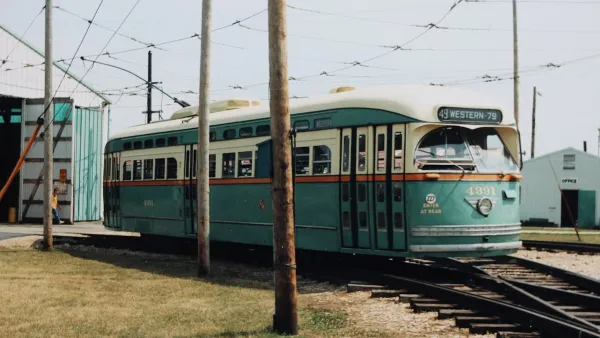
Chicago’s Ghost Rails
Just beneath the surface of the modern city lie the remnants of its expansive early 20th-century streetcar system.
Amtrak Cutting Jobs, Funding to High-Speed Rail
The agency plans to cut 10 percent of its workforce and has confirmed it will not fund new high-speed rail projects.

Ohio Forces Data Centers to Prepay for Power
Utilities are calling on states to hold data center operators responsible for new energy demands to prevent leaving consumers on the hook for their bills.

MARTA CEO Steps Down Amid Citizenship Concerns
MARTA’s board announced Thursday that its chief, who is from Canada, is resigning due to questions about his immigration status.

Silicon Valley ‘Bike Superhighway’ Awarded $14M State Grant
A Caltrans grant brings the 10-mile Central Bikeway project connecting Santa Clara and East San Jose closer to fruition.

Urban Design for Planners 1: Software Tools
This six-course series explores essential urban design concepts using open source software and equips planners with the tools they need to participate fully in the urban design process.
Planning for Universal Design
Learn the tools for implementing Universal Design in planning regulations.

Caltrans
City of Fort Worth
Mpact (founded as Rail~Volution)
City of Camden Redevelopment Agency
City of Astoria
City of Portland
City of Laramie