



















High demand for parking spaces at a transit station has prompted one city to consider banning residents of other cities from using the parking lot.


"The council's move is the latest in a battle among the cities. Many Apple Valley leaders resent that commuters who don't pay the extra taxes take up space in the 337-space lot, which routinely fills by 7:15 a.m. A survey last fall of cars parked at the station showed that 59 percent came from outside the transit tax district, according to the MVTA."
"The free permits would be available to residents of Apple Valley, Burnsville and Rosemount, but not Lakeville or Farmington."
"That's because Lakeville and Farmington are outside the transit tax district, in which residents pay extra property taxes for buses and stations."
"Many Lakeville and Farmington residents argue that their regular property and motor vehicle taxes already help pay for transit. 'If it's a public transit facility, it should be open and accessible to members of the public, and Farmington residents, last time I checked, were part of the public,' said Farmington Mayor Kevan Soderberg."
FULL STORY: Cities battle for parking spaces at transit station

Planetizen Federal Action Tracker
A weekly monitor of how Trump’s orders and actions are impacting planners and planning in America.
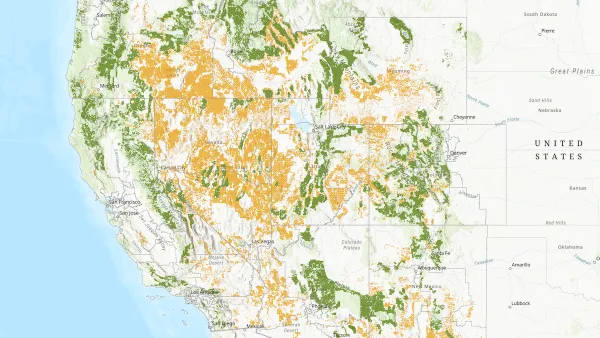
Map: Where Senate Republicans Want to Sell Your Public Lands
For public land advocates, the Senate Republicans’ proposal to sell millions of acres of public land in the West is “the biggest fight of their careers.”
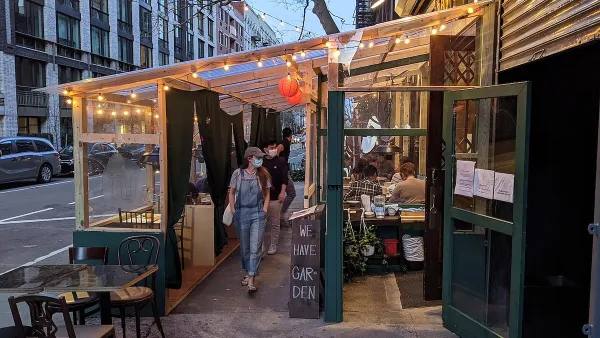
Restaurant Patios Were a Pandemic Win — Why Were They so Hard to Keep?
Social distancing requirements and changes in travel patterns prompted cities to pilot new uses for street and sidewalk space. Then it got complicated.

Platform Pilsner: Vancouver Transit Agency Releases... a Beer?
TransLink will receive a portion of every sale of the four-pack.

Toronto Weighs Cheaper Transit, Parking Hikes for Major Events
Special event rates would take effect during large festivals, sports games and concerts to ‘discourage driving, manage congestion and free up space for transit.”

Berlin to Consider Car-Free Zone Larger Than Manhattan
The area bound by the 22-mile Ringbahn would still allow 12 uses of a private automobile per year per person, and several other exemptions.

Urban Design for Planners 1: Software Tools
This six-course series explores essential urban design concepts using open source software and equips planners with the tools they need to participate fully in the urban design process.
Planning for Universal Design
Learn the tools for implementing Universal Design in planning regulations.

Heyer Gruel & Associates PA
JM Goldson LLC
Custer County Colorado
City of Camden Redevelopment Agency
City of Astoria
Transportation Research & Education Center (TREC) at Portland State University
Camden Redevelopment Agency
City of Claremont
Municipality of Princeton (NJ)