



















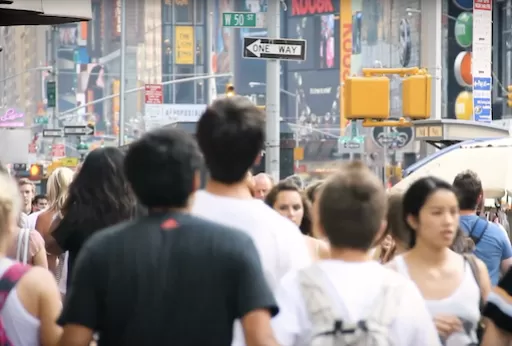
Despite the attention that global warming has received in the U.S., most Americans aren't choosing more eco-friendly commutes.


"Global warming may be the nation's latest roadside attraction, but the American obsession with the carbon-spewing automobile still seems to be charging full speed ahead.
Seventy-seven percent of workers in the United States – more than 102 million people – drive alone to and from work, up from 1990, according to recently released US Census data, based on surveys conducted in 2005. This happened despite the fact that retail gasoline prices rose by 60 cents per gallon in that same 15-year period, controlling for inflation.
The news comes amid growing hype about going green, in an age when climate change has become as common a conversation topic as its quotidian counterpart, the weather. It could indicate that when it comes to transit, Americans talk the talk, but – put simply – aren't walking.
"People don't have flexibility to respond quickly to changes. And Americans have almost grown accustomed to seeing a three in front of the price of gasoline," says Alan Pisarski, a transportation behavior analyst and author of the "Commuting in America" series. "There's an immense benefit – whether it's convenience or control – that people garner from driving alone." "
FULL STORY: More US commuters drive solo

Planetizen Federal Action Tracker
A weekly monitor of how Trump’s orders and actions are impacting planners and planning in America.
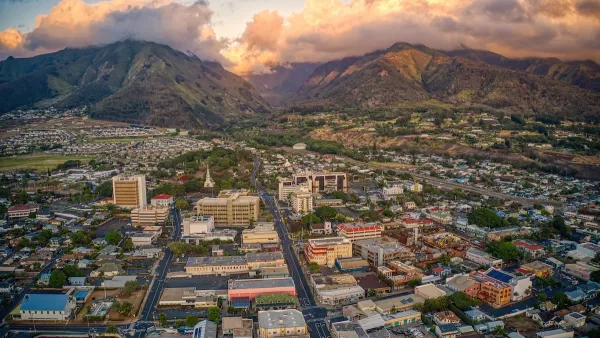
Maui's Vacation Rental Debate Turns Ugly
Verbal attacks, misinformation campaigns and fistfights plague a high-stakes debate to convert thousands of vacation rentals into long-term housing.
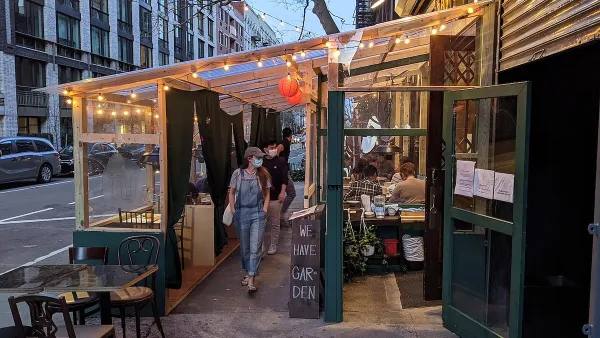
Restaurant Patios Were a Pandemic Win — Why Were They so Hard to Keep?
Social distancing requirements and changes in travel patterns prompted cities to pilot new uses for street and sidewalk space. Then it got complicated.

In California Battle of Housing vs. Environment, Housing Just Won
A new state law significantly limits the power of CEQA, an environmental review law that served as a powerful tool for blocking new development.

Boulder Eliminates Parking Minimums Citywide
Officials estimate the cost of building a single underground parking space at up to $100,000.

Orange County, Florida Adopts Largest US “Sprawl Repair” Code
The ‘Orange Code’ seeks to rectify decades of sprawl-inducing, car-oriented development.

Urban Design for Planners 1: Software Tools
This six-course series explores essential urban design concepts using open source software and equips planners with the tools they need to participate fully in the urban design process.
Planning for Universal Design
Learn the tools for implementing Universal Design in planning regulations.

Heyer Gruel & Associates PA
JM Goldson LLC
Custer County Colorado
City of Camden Redevelopment Agency
City of Astoria
Transportation Research & Education Center (TREC) at Portland State University
Jefferson Parish Government
Camden Redevelopment Agency
City of Claremont