A new survey has named Calgary the cleanest and most sanitary city in the world.


"Mercer Human Resource Consulting ranked Calgary No. 1 in the world when measured against 215 other cities on the quality and availability of hospital and medical supplies and levels of air pollution and infectious diseases."
"'The efficiency of waste removal and sewage systems, water potability and the presence of harmful animals and insects are also taken into account,' Mercer reported today."
"Vancouver ranked third in the world, behind Zurich and Geneva, in Mercer's broader "quality of life" index, which takes into account political, social, economic and environmental factors, personal safety and health, education, transportation and public services. Toronto was 15th, Ottawa finished 18th, Montreal was 22nd and Calgary was 24th in the survey, which evaluated the cities in terms of their desirability to expatriate employees on international assignment."
Read the full story: No place cleaner than Calgary, global survey says


Planetizen Federal Action Tracker
A weekly monitor of how Trump’s orders and actions are impacting planners and planning in America.

‘Going backwards:’ Baltimore mayor, students rally against state's transit funding plan
Maryland's proposed six-year plan provides no funding for Baltimore’s BMORE bus program and reduces its road maintenance funding.
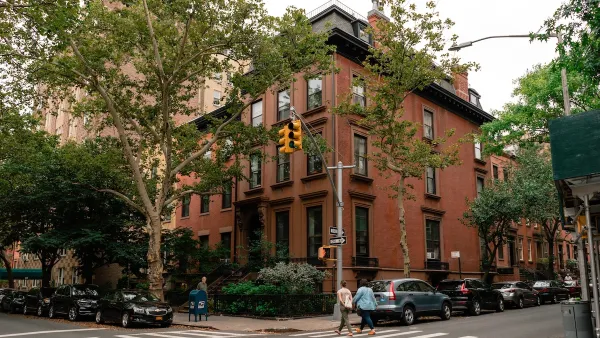
Mamdani sent nearly 6,000 pied-à-terre tax warnings to homes that didn’t qualify
A judge has ordered the administration to cancel thousands of pied-à-terre tax notices after it sent 35% of them erroneously.

Newsom vetoes high-speed rail supervision bill after agency receives condemnatory audit
The audit found the CHSRA approved almost $600,000 in unallowable travel expenses.

Nation sees first electric plane-boat hybrid take off in public demo
The Viceroy Seaglider can fly at speeds of 180mph for up to 180 miles.

One of nation’s poorest counties to receive $6 billion data center
The developers estimate the project will create 200 permanent jobs and 1,000 temporary construction jobs.

FREE Course: Walkable City 1: Why Walkability?
After describing his path towards focusing on walkability as the essence of good planning, Jeff Speck marches through his five principal reasons for making more walkable places.
Reinventing Malls: Planning Alchemy—Turning Gray Fields Into Gold
The course focuses on the opportunities and imperatives that shape reinvention of mall sites.

City of Thousand Oaks
City of Wisconsin Rapids
Harvard University Graduate School of Design
The Architects Foundation
University of Cincinnati Online
Northern Illinois Transit Authority (NITA)
The Pocatello Development Authority
The Urban Renewal Agency of the City of Pocatello