




















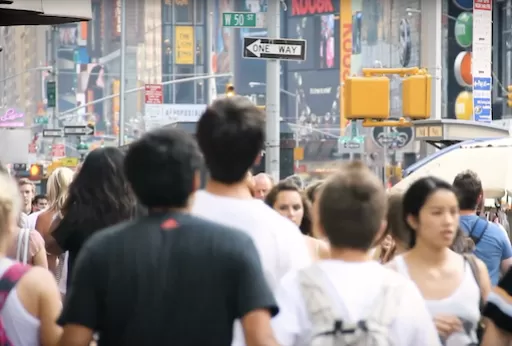
Traffic delays will increase 65 percent and the number of congested lane-miles on urban roads will rise by 50 percent over the next 25 years, according to a new Reason study.


Los Angeles, home to the nation's worst traffic today, will continue to have the longest delays, with trips during peak hours taking nearly twice as long as they do when roads are free-flowing. But LA won't be alone. Several cities face the dubious honor of having Los Angeles-like gridlock.
By 2030, drivers in 11 metro areas â€" Atlanta, Baltimore, Chicago, Denver, Las Vegas, Miami, Minneapolis/St. Paul, Portland, San Francisco-Oakland, Seattle-Tacoma, and Washington, D.C. - will be stuck in daily traffic jams that are as bad as or worse than today's infamous bottlenecks in Los Angeles, according to a new Reason Foundation study. In those cities it will take at least 75 percent longer to make a trip during peak hours than off-peak periods. So, for example, a trip that is supposed to take 30 minutes would take over 52 minutes.
Today, only four cities (LA, Chicago, San Francisco, and Washington, D.C.) experience travel time delays of even 50 percent. But, because road capacity is failing to keep up with demand and population growth, the Reason study finds that a whopping 30 cities will be experiencing daily delays that make rush hour trips 50 percent longer than off-peak journeys. Los Angeles and the other 11 cities listed above will be joined in congestion purgatory by Austin, Boston, Bridgeport-Stamford (CT), Charlotte, Dallas-Fort Worth, Detroit, Houston, New York City-Newark (NJ), Orlando, Philadelphia, Phoenix-Mesa, Riverside-San Bernardino, Sacramento, Salt Lake City, San Diego, San Jose, Tampa-St. Petersburg, and Tucson.
The full study, with in-depth analysis of long-term traffic congestion levels and the road capacity needs in every state and over 400 U.S. cities, are available as PDF documents.
Cities With 2030 Travel Time Delays Worse Than Today's Los Angeles
- 1. Los Angeles-Long Beach
- 2. Chicago
- 3. Washington
- 4. San Francisco-Oakland
- 5. Atlanta
- 6. Miami
- 7. Denver-Aurora
- 8. Seattle-Tacoma, WA
- 9. Las Vegas
FULL STORY: Building Roads to Reduce Traffic Congestion in America's Cities: How Much and at What Cost?


Planetizen Federal Action Tracker
A weekly monitor of how Trump’s orders and actions are impacting planners and planning in America.
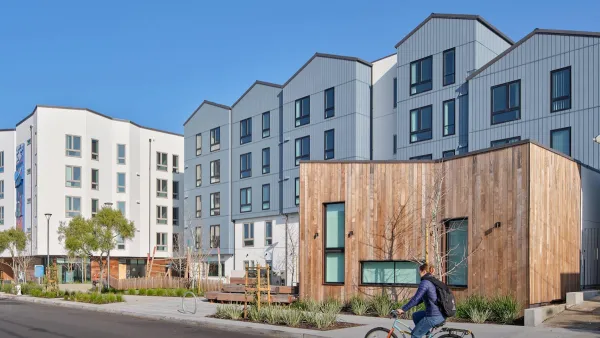
San Francisco's School District Spent $105M To Build Affordable Housing for Teachers — And That's Just the Beginning
SFUSD joins a growing list of school districts using their land holdings to address housing affordability challenges faced by their own employees.

Can We Please Give Communities the Design They Deserve?
Often an afterthought, graphic design impacts everything from how we navigate a city to how we feel about it. One designer argues: the people deserve better.

The EV “Charging Divide” Plaguing Rural America
With “the deck stacked” against rural areas, will the great electric American road trip ever be a reality?

Judge Halts Brooklyn Bike Lane Removal
Lawyers must prove the city was not acting “arbitrarily, capriciously, and illegally” in ordering the hasty removal.

Engineers Gave America's Roads an Almost Failing Grade — Why Aren't We Fixing Them?
With over a trillion dollars spent on roads that are still falling apart, advocates propose a new “fix it first” framework.

Urban Design for Planners 1: Software Tools
This six-course series explores essential urban design concepts using open source software and equips planners with the tools they need to participate fully in the urban design process.
Planning for Universal Design
Learn the tools for implementing Universal Design in planning regulations.

Borough of Carlisle
Smith Gee Studio
City of Camden Redevelopment Agency
City of Astoria
Transportation Research & Education Center (TREC) at Portland State University
City of Camden Redevelopment Agency
Municipality of Princeton (NJ)