local
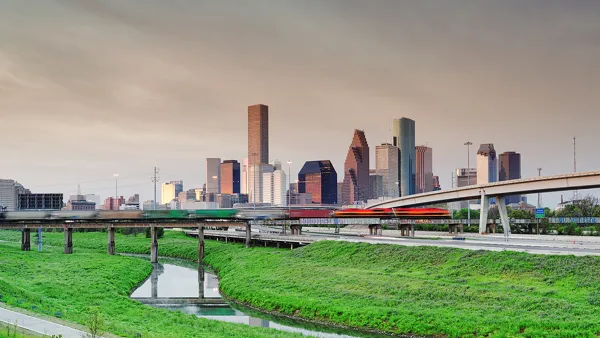
When States Should Blow the Whistle
States regulate local governments too much in some areas, but not enough in others.

Zoning Our Way to HOA Insanity
If local's so great, why is the HOA, the country's most popular form of micro-governance, such an impediment to complete, complex and convivial communities? Scott Doyon has some ideas.
One way to protect bus riders
As gas prices keep rising, the public demand for buses and trains keeps growing. Yet in some cities, government is actually cutting back transit service, because rising gas prices make transit vehicles more expensive to operate.(1) But as a matter of substantive policy, service reductions are not only less desirable than service increases, but also less desirable than fare increases. As a bus rider, I’d rather pay $1.50 and know that my service is safe from fiscal crises than pay $1 and worry that my service might be reduced or canceled next month. Moreover, if fairness means spreading pain equally throughout the population, it is fairer to have everyone pay a little more than to have some neighborhoods be left without service.

FREE Course: Walkable City 1: Why Walkability?
After describing his path towards focusing on walkability as the essence of good planning, Jeff Speck marches through his five principal reasons for making more walkable places.
Reinventing Malls: Planning Alchemy—Turning Gray Fields Into Gold
The course focuses on the opportunities and imperatives that shape reinvention of mall sites.

City of Rosemead
Rutgers University, Edward J. Bloustein School of Planning and Public Policy
One Hundred Miles
University of Michigan School for Environment and Sustainability (SEAS)
Hunter College, City University of New York (CUNY)
The Architects Foundation
City of Cambridge
Montrose County
The Pocatello Development Authority









