Santa Fe Institute
How Ancient and Modern Cities Compare (and Why Planners Should Care)
A new scholarly paper argues that ancient and modern cities can be usefully analyzed in a comparative perspective. But what you do with the comps depends on how much you value similarities versus differences in urban form.
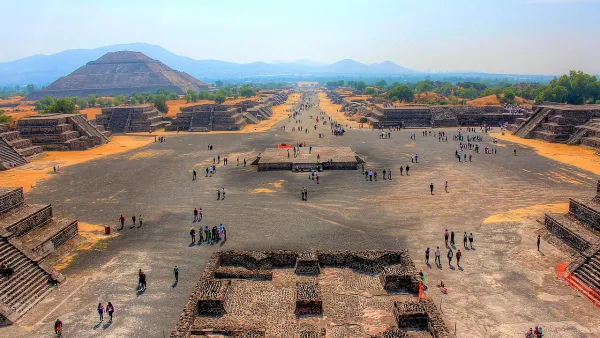
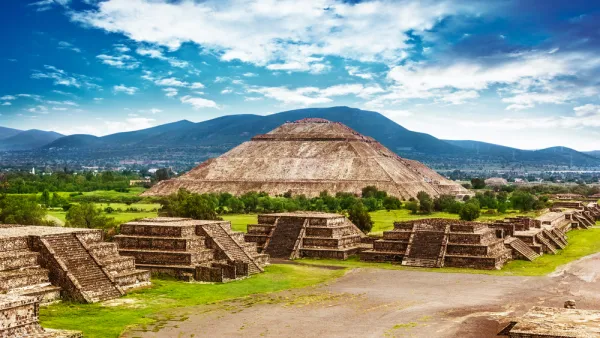
Study: Ancient Cities Grew Much Like Modern Cities
Scientists from the Santa Fe Institute have discovered basic patterns underlying the way cities have always grown. The mechanics of "urban scaling" may have something fundamental to tell us about how large settlements evolve.
Physicist Tackles Urban Theory
Physicist Geoffrey West of the Santa Fe Institute applied his talents to unraveling urban issues like population growth in a similar vein that he did earlier with biology. He found answers that explain how all cities work if enough data is supplied.

FREE Course: Walkable City 1: Why Walkability?
After describing his path towards focusing on walkability as the essence of good planning, Jeff Speck marches through his five principal reasons for making more walkable places.
Reinventing Malls: Planning Alchemy—Turning Gray Fields Into Gold
The course focuses on the opportunities and imperatives that shape reinvention of mall sites.

City of Rosemead
Rutgers University, Edward J. Bloustein School of Planning and Public Policy
One Hundred Miles
University of Michigan School for Environment and Sustainability (SEAS)
Hunter College, City University of New York (CUNY)
The Architects Foundation
City of Cambridge
Montrose County
The Pocatello Development Authority









