Pollution poses a significant public health threat all over the planet, and good planning can help.



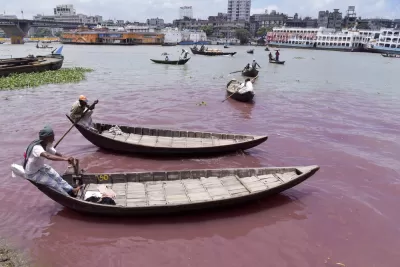
Pollution, carbon footprint, and other eco-minded buzzwords are constantly in the news, but unless you live in an area impacted by pollution, it’s the sort of thing that people don’t generally consider a threat.
But there are many countries with huge numbers of pollution-related deaths. What does the larger issue of pollution mean for the people who live in these countries, and what changes can be made in the future to reduce these pollution-induced deaths and improve city planning and infrastructure?
Countries With High Pollution-Related Deaths
A recent study estimated that upwards of nine million deaths were directly caused by pollution in 2015. Bangladesh had the highest portion of fatalities caused by pollution, with roughly 26%. This is followed closely by India with 24.5% and Pakistan with 21.9%. The United States falls at the bottom of the list with 5.7% of the fatalities for the year caused by pollution.
The study found that the highest number of deaths occurred in countries in Asia, but the highest overall pollution-related mortality rates were found in African countries.
Overall, pollution has been linked globally to one out of every six deaths, which the majority of these deaths being from non-infectious diseases—lung cancer, heart disease, etc.—caused by the pollution. Air pollution accounts for roughly two-thirds of the pollution-related deaths, and many of the sources of this pollution could potentially be reduced or eliminated by focusing on eco-friendly city planning.
Reducing Air Pollution With City Planning
The idea that intelligent urban planning could reduce air pollution isn't new—the EPA released a guide to help city planners do just that in 1973. While the information may be outdated, the sentiment remains the same—urban planning is a practical and strategic solution available to us that could help reduce air pollution.
First, all new city plans and remodeling plans should include ways to reduce car use. Whether that means improving walking and cycling paths, reworking and reinforcing forms of public transportation, or just making it easier and safer for citizens to carpool, we need to reduce the number of individuals driving. Its impact can be dramatic.
Beijing is one of the hardest hit cities when it comes to air pollution—on an average day, it rates about 160 out of 500 on the Air Pollution Index. Banning cars for two weeks in 2017 resulted in the sky turning perfectly blue and reduced the city's air pollution rating to 17.
Beijing’s air pollution problem could also be dealt with by reducing the focus on expanding highway and road infrastructure. Shift that focus instead to improving public transportation or making the road safer for pedestrians and bicyclists.
Preventing polluting cars from driving in limited access zones can also help to reduce air pollution in congested city areas like those found in London or in Bologna, Italy. Both of these cities have created exclusion zones where emissions are not allowed—only walking, biking, or electric vehicles can be used in these areas.
Older cars that don’t have the same sort of emissions-reducing equipment as newer cars could also be retrofitted or repaired to help reduce their emissions. This would require some extra funding—a large number of older cars are owned by lower- or middle-income families that might not have the available funds to make the required repairs—but that investment could potentially help to reduce local air pollution.
City construction zones can also damage local air quality. Clean construction is about more than just building new green homes and businesses. The construction itself needs to focus on reducing its impact on the local area. Wastewater should be captured and cleaned or removed from the construction site, not just allowed to enter the city’s wastewater system.
Going Green—Literally
Going green doesn’t just have to mean reducing emissions or using renewable energy. Making the city green can also help to reduce air pollution. Chicago is a perfect example of the benefits of greening the city. The Green Roofs Initiative is designed to use otherwise empty roof space to grow plants that can naturally help to absorb CO2 and reduce emissions.
Other cities, like Seattle, have started changing old zoning laws to allow in-city farming and the keeping of livestock within the city limits. This helps to reduce emissions by reducing the amount of food being shipped into the city, as well as creating green spots to absorb CO2 within the city limits.
Planning a city might seem difficult when the city has already been built, but we can take the existing infrastructure and use it as the foundation to reduce air pollution.
By improving the air quality of these cities, we can help to reduce pollution-related illnesses and deaths both in the United States and around the world.

Watch: What it Takes to Retrofit Suburbia
June Williamson explains the necessary components of the next generation of the suburban retrofitting project, and why these actions are so necessary.
EPA Guts Emissions Regulations
The agency is eliminating the endangerment finding that underpins the agency’s authority to regulate greenhouse gas emissions.
‘Architectural Epidemiology:’ Centering Public Health in Urban Design
A new book asks, what if cities were designed around health equity?

The state-sanctioned urbicide of Austin
People don’t kill cities. Freeways do.

US to reduce Colorado River water deliveries to Mexico
A new Colorado Treaty amendment reduces Mexico’s Colorado River water allocation by 250,000 acre feet.

New Jersey’s second-largest city bans standalone data centers
Jersey City will continue to allow co-location facilities, such as those meant for research institutions that store their own data.

Amtrak not solely to blame for New Jersey commuter rail's unreliability, report finds
A new study from the Garden State Initiative found that NJ Transit’s budget grew 20% across a 4 year period, but reliability declined significantly over the same period.

EPA erases limits on planet-warming pollution from power plants
Under Monday’s plan, power plants would still have some limits on how much mercury, arsenic and other contaminants they can emit.

Phoenix announces new on-demand transit service, more frequent RAPID buses
Both new services will launch in October, and are part of Phoenix's Project Effective Access Solutions for Easing Congestion.

FREE Course: Walkable City 1: Why Walkability?
After describing his path towards focusing on walkability as the essence of good planning, Jeff Speck marches through his five principal reasons for making more walkable places.
Reinventing Malls: Planning Alchemy—Turning Gray Fields Into Gold
The course focuses on the opportunities and imperatives that shape reinvention of mall sites.

Eagle County Government
Harvard University Graduate School of Design
Nashville Planning Department
The Architects Foundation
University of Cincinnati Online
The Pocatello Development Authority
The Urban Renewal Agency of the City of Pocatello
Journal of the American Planning Association

