An aging population of farmers may give way to a generation of young entrepreneurs who see the value and values of growing food.



Writing in Fortune, Kimball Musk notes that the rapidly shifting agricultural industry is opening up opportunities for younger people to begin taking over smaller farms, albeit with some training beforehand. Musk, a cofounder of the start-up Square Root, is trying to teach people how to grow and market their food through urban, indoor hydroponic farms. The program then works with the US Department of Agriculture to obtain loans in order to move on to their own farm.
In recent years, many of the same technologies that have revolutionized the consumer world have fundamentally altered and improved the way we farm. Drones, satellites, autonomous tractors and robotics are now all at home on farms. As a result, tomorrow’s farms won’t just be part of the agricultural sector, they’ll also be part of the tech sector – and tomorrow’s farmers will look a whole lot like the coders who populate Silicon Valley…except with better tans.
The need for new farmers is becoming especially acute, as the number of farmers fell by 100,000 and new farmers declined by 20 percent between 2007 and 2012.
Read the full story: How Millennials Will Forever Change America’s Farmlands
Fish: the Future of Urban Farming
Cityscape Farms has developed a new technique for farming fish along with vegetables in combined urban food systems that allows them to farm in developed areas.

Urban Farming Addressing Hunger (and More) in Pittsburgh
Urban farming provides opportunities to increase food security in addition to other benefits.
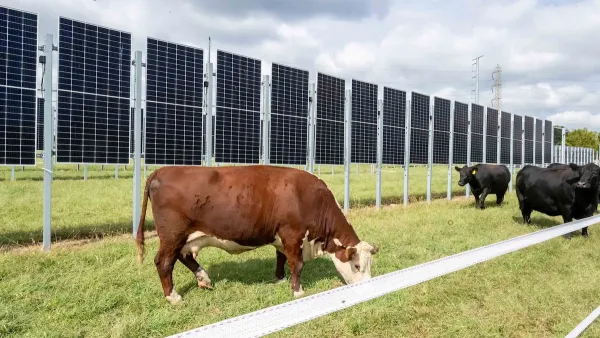
New Jersey Agrivoltaic Project Combines Solar Energy With Farming
A Rutgers University-New Brunswick demonstration farm will evaluate solar array designs to understand how they can best support grazing and agriculture on the same site.

Planetizen Federal Action Tracker
A weekly monitor of how Trump’s orders and actions are impacting planners and planning in America.

California plans to bury El Niño’s downpour
If the state plays its cards right, it may be able to store a billion acre-feet of El Niño’s water in aquifers.

Desperate measures: Advocates weigh draining Lake Powell to fill Colorado River
Draining the reservoir could reduce evaporation losses by a couple hundred thousand acre-feet.

Chicago voters approve permanent festival grounds, penalty for vacant property owners
Currently, major summer and fall festivals take over public parks for weeks at a time, drawing criticism from nearby residents

NYC votes to cut outdoor dining red tape, speed up permitting
New York City also voted to allow the Department of Transportation to begin work on urgent projects before notifying elected officials.

California appears to reject Prop. 45
The proposition would have expanded the projects that qualify for a streamlined environmental review, effectively paring down the California Environmental Quality Act.

FREE Course: Walkable City 1: Why Walkability?
After describing his path towards focusing on walkability as the essence of good planning, Jeff Speck marches through his five principal reasons for making more walkable places.
Reinventing Malls: Planning Alchemy—Turning Gray Fields Into Gold
The course focuses on the opportunities and imperatives that shape reinvention of mall sites.

City of Rosemead
Rutgers University, Edward J. Bloustein School of Planning and Public Policy
One Hundred Miles
Hunter College, City University of New York (CUNY)
The Architects Foundation
University of Cincinnati Online
City of Cambridge
Montrose County
The Pocatello Development Authority