What Makes a Good Main Street Work? Kaid Benfield uses Corning, New York, to illustrate five key elements.


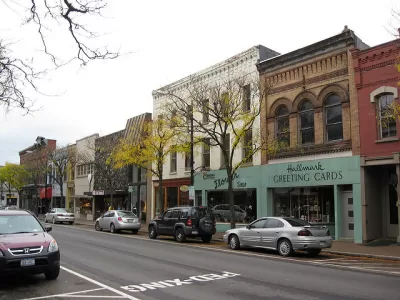
"While some Main Streets seem well past their prime, others – like Corning, New York – remain thriving to this day. Why? A lot of it has to do with the towns and cities in which they are located, of course; it’s hard to have a well-functioning Main Street in a down-and-out community. But there are also elements of design and context that matter. What are they? The answers matter to sustainability, because traditional Main Streets tend to have central locations and good walkability, both of which reduce carbon and other emissions associated with driving; over time, they also recycle land, buildings and infrastructure."
Benfield muses on some essential elements for thriving Main Streets:
- A superior pedestrian experience
- Density, but at human scale
- Viable local businesses
- Nature
- Nearby residences
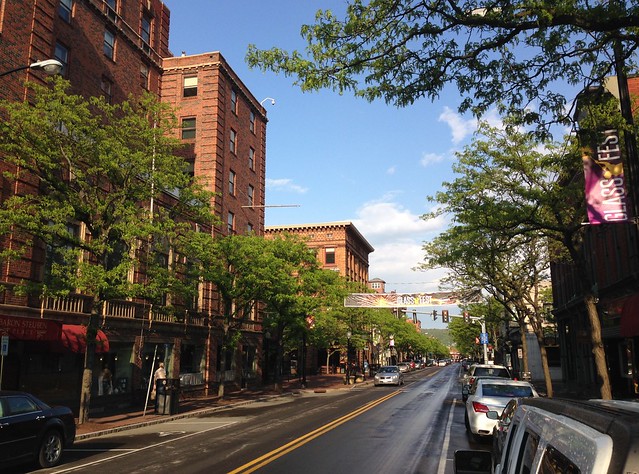
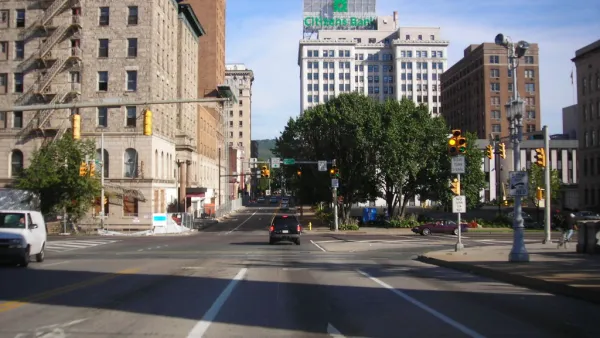
Market Street, Corning, New York, © Kaid Benfield
Read the full story: What Makes a Good Main Street Work?
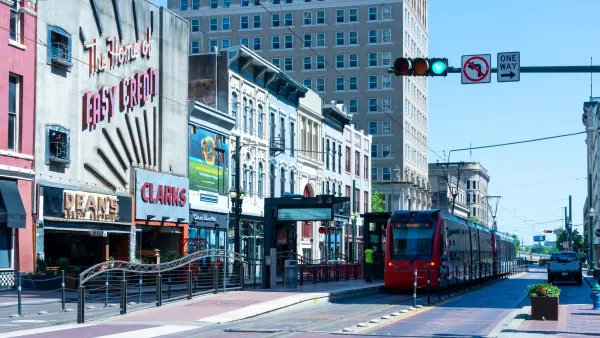
Houston's pedestrian promenade on track to be ready for World Cup crowds
The city is transforming seven downtown blocks along a light rail line into a car-free zone focused on outdoor dining and entertainment.
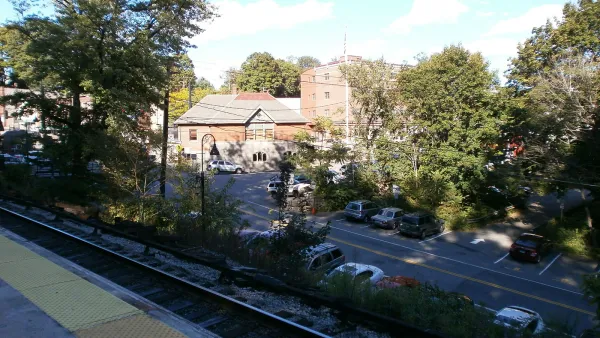
Main Street Redevelopment Hopes To Lure NYC Commuters to Village of Brewster
Officials in the Village of Brewster, a community of just over 2,000 people in New York's Putnam County, hope a redesign of their downtown will attract new residents who want to escape the clamor of the city.
How Some Main Street Businesses Survived the Pandemic
Despite the economic blow dealt by last year's lockdowns, business districts in smaller cities like Wilkes-Barre managed to weather the crisis.

Planetizen Federal Action Tracker
A weekly monitor of how Trump’s orders and actions are impacting planners and planning in America.

California plans to bury El Niño’s downpour
If the state plays its cards right, it may be able to store a billion acre-feet of El Niño’s water in aquifers.

Desperate measures: Advocates weigh draining Lake Powell to fill Colorado River
Draining the reservoir could reduce evaporation losses by a couple hundred thousand acre-feet.

Chicago voters approve permanent festival grounds, penalty for vacant property owners
Currently, major summer and fall festivals take over public parks for weeks at a time, drawing criticism from nearby residents

NYC votes to cut outdoor dining red tape, speed up permitting
New York City also voted to allow the Department of Transportation to begin work on urgent projects before notifying elected officials.

California appears to reject Prop. 45
The proposition would have expanded the projects that qualify for a streamlined environmental review, effectively paring down the California Environmental Quality Act.

FREE Course: Walkable City 1: Why Walkability?
After describing his path towards focusing on walkability as the essence of good planning, Jeff Speck marches through his five principal reasons for making more walkable places.
Reinventing Malls: Planning Alchemy—Turning Gray Fields Into Gold
The course focuses on the opportunities and imperatives that shape reinvention of mall sites.

City of Rosemead
Rutgers University, Edward J. Bloustein School of Planning and Public Policy
One Hundred Miles
Hunter College, City University of New York (CUNY)
The Architects Foundation
University of Cincinnati Online
City of Cambridge
Montrose County
The Pocatello Development Authority