Can the tiny house fetish evolve to address real sustainability and affordable housing challenges? Ben Brown says yes.


"I’ve never been much of a fan of the Tiny House movement, which seemed to me to be a solution in search of a problem. Squeezing marginally comfortable living space into something you can haul around with a truck didn’t seem to be much of a design challenge. After all, there’s a whole industry that’s been addressing that demand for generations. You know, RVs."
Brown goes on to discuss his three months living in what many might call a Tiny House. He had no problem functioning happily in its 350-square-feet because "the house was a legal structure on a fixed foundation in a mixed-use, infill neighborhood in easy reach of everything I needed." It's about the neighborhood structure.
Now there are a number of different organizations and ideologies having the same conversation, calling it all different things: weeHouse, pocket neighborhoods, and cottage courts. Brown suggests we broaden the discussion so these parallel paths can converge to a set of best practices.
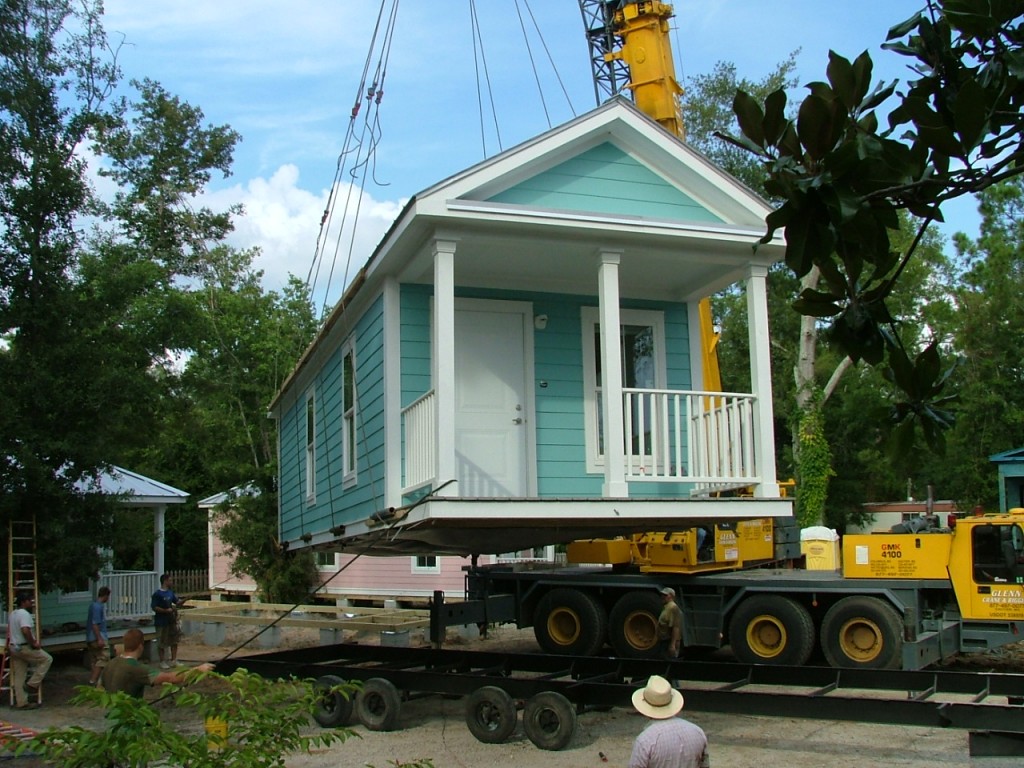
FULL STORY: Thinking a Little Bigger About the Tiny House Thing

Tiny Home Village for the Homeless to Expand in Austin
Political support and a new capital campaign are helping to expand the tiny home concept as a solution to homelessness in Austin, Texas.
Tiny House Movement Pushing the Boundaries of Traditional Zoning
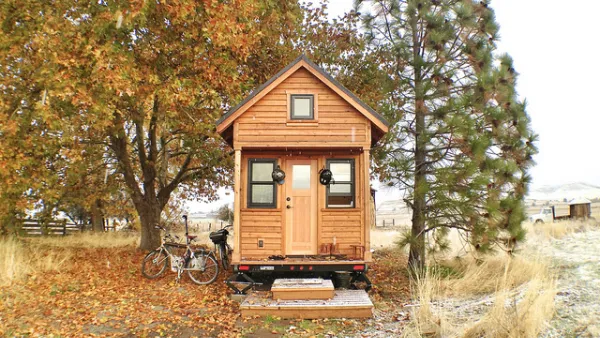
Tiny Houses on trailers are available and buyers are ready to live small, but most zoning regulations don’t allow recreational vehicles as a permanent residence. Can zoning catch up to the tiny living trend?
Tiny Houses Shelter the Homeless in Wisconsin
Cheap construction materials, crowdfunding, and volunteer construction crews have produced villages of tiny homes as a place for the homeless to find shelter in every corner of the United States. What does it take for such homes to work?

Planetizen Federal Action Tracker
A weekly monitor of how Trump’s orders and actions are impacting planners and planning in America.

The state-sanctioned urbicide of Austin
People don’t kill cities. Freeways do.

US to reduce Colorado River water deliveries to Mexico
A new Colorado Treaty amendment reduces Mexico’s Colorado River water allocation by 250,000 acre feet.

5 New England states march closer to 800 megawatt wind energy project
Securing federal approval for the project may be complicated under the Trump administration, which has historically been hostile towards domestic wind power.

Baltimore to break ground on $50 million Transit Priority Project
The project will bring faster bus trips, safer streets and better bike connections to Baltimore.

Airbnb launches $250 million 'last-dollar financing' housing accelerator, makes first investment in Austin
The company will put $6.4 million towards affordable housing development in Texas’ capital.

FREE Course: Walkable City 1: Why Walkability?
After describing his path towards focusing on walkability as the essence of good planning, Jeff Speck marches through his five principal reasons for making more walkable places.
Reinventing Malls: Planning Alchemy—Turning Gray Fields Into Gold
The course focuses on the opportunities and imperatives that shape reinvention of mall sites.

Eagle County Government
Harvard University Graduate School of Design
Nashville Planning Department
The Architects Foundation
University of Cincinnati Online
The Pocatello Development Authority
The Urban Renewal Agency of the City of Pocatello
Journal of the American Planning Association