The United Nations agency for urban development, UN-Habitat, has announced a partnership with the World Bank to implement several Sustainable Development Goals focusing on urban sustainability, safety, inclusiveness, and resilience.


In light of the United Nations's 2030 Agenda for Sustainable Development, policymakers and development experts are searching for ways to work towards equitable and sustainable development far into the 21st Century. One focus area, sustainable urban development, has found renewed support at the World Bank-IMF Annual Meetings in Lima, Peru. UN-Habitat—the United Nations agency on human settlements and urban development—announced on Saturday a partnership with the World Bank to achieve the Sustainable Development Goals (SDGs) identified as crucial to international development. The organizations will focus in particular on Goal 11, which targets city sustainability, inclusiveness, safety, and resilience.
According to UN-Habitat, cities are very important to international development. With challenges such as employment, housing, transport, and an estimated 70 percent of worldwide greenhouse gas emissions, the agency is focusing on urban areas thanks in large part to the rapidly-increasing population of cities in the developing world.
With the COP21 Climate Summit at the end of November and the United Nations Conference on Housing and Sustainable Urban Development – Habitat III in 2016, UN-Habitat and the World Bank will have plenty of chances to work out the details of achieving the SDGs. Both agencies stress the need for public-private partnerships, and the potential for sustainable urbanization to have a "transformative" effect on global development.
Read the full story: The World Bank Group and UN-Habitat re-affirm their commitment to sustainable urban development
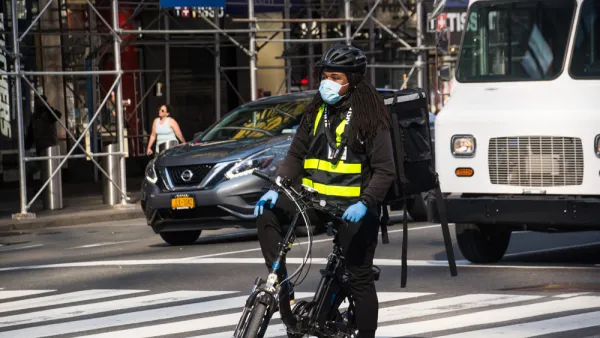
Guide to Planning for Public Health, Published by WHO and the UN
There is no planning without public health, according to a new guide released in a moment of global crisis for both professional fields.
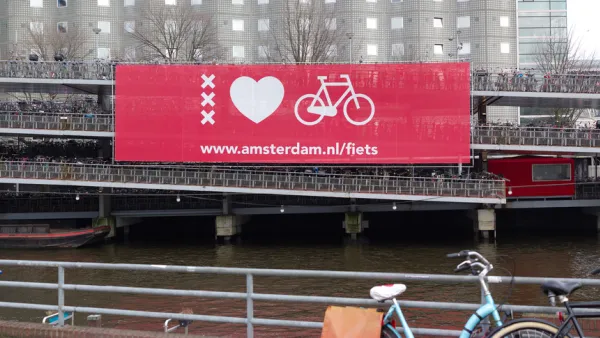
U.N. Declares ‘World Bicycle Day’
International celebrations commence June 3.
United Nations Taking First Steps Toward the New Urban Agenda
Some of the big work left undone by the Habitat III summit in finalizing the New Urban Agenda in December is now moving forward. The future of the New Urban Agenda and UN-Habitat can now start to take shape.

Planetizen Federal Action Tracker
A weekly monitor of how Trump’s orders and actions are impacting planners and planning in America.

California plans to bury El Niño’s downpour
If the state plays its cards right, it may be able to store a billion acre-feet of El Niño’s water in aquifers.

Desperate measures: Advocates weigh draining Lake Powell to fill Colorado River
Draining the reservoir could reduce evaporation losses by a couple hundred thousand acre-feet.

US buildings threatened, destroyed by fires set to triple by 2060
Researchers found a high fire risk for socioeconomically vulnerable neighborhoods in the American West.

LA residents may be allowed to paint their own crosswalks
Councilwoman Katy Yaroslavsky put out a motion instructing the Los Angeles Department of Public Transportation to study the feasibility of allowing volunteers to paint crosswalks.

Dallas moves to overhaul its zoning code
The city's zoning reform will allow more multi-family and mixed-use developments.

FREE Course: Walkable City 1: Why Walkability?
After describing his path towards focusing on walkability as the essence of good planning, Jeff Speck marches through his five principal reasons for making more walkable places.
Reinventing Malls: Planning Alchemy—Turning Gray Fields Into Gold
The course focuses on the opportunities and imperatives that shape reinvention of mall sites.

City of Rosemead
Rutgers University, Edward J. Bloustein School of Planning and Public Policy
One Hundred Miles
Hunter College, City University of New York (CUNY)
The Architects Foundation
University of Cincinnati Online
City of Cambridge
Montrose County
The Pocatello Development Authority