The perception that a city has reached its maximum population and nobody else should be allowed in, or nothing should be allowed to change, is limiting the potential of our cities and increasing housing inequality.


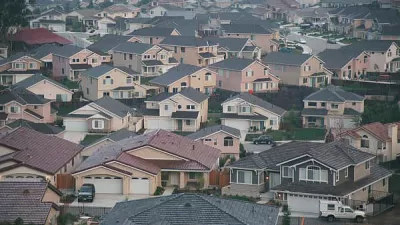
Emily Badger of The Washington Post's Wonkblog tackles the question of how we determine when a city just can't take any more people by comparing our densest cities with those around the world, and discovering we're not necessarily as dense as we think. Further, an increase in population in one area results in economic and environmental benefits.
"Put more and more workers in one place, meanwhile, and you also get buzzing hubs like New York's Garment District or Boston's biotech corridor, where people working on the same problems bump into each other and share ideas and suppliers and become more productive. Put more people in a city, and the economy grows. It's the opposite of diminishing returns. The environmental costs, per person, can actually improve. In drought-stricken California, some of the lowest water consumption per capita is in San Francisco."
Badger notes that the use of environmental laws by NIMBYs, particularly in California, has led to greater economic inequality. The cost of housing has continued to rise as residents have blocked new housing, thereby limiting the supply for newcomers and stopping the natural evolution of our cities.
Read the full story: There is no such thing as a city that has run out of room

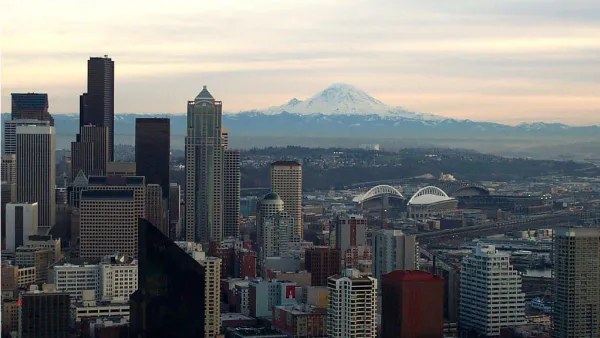
Growth Battles Heating up in Seattle
The growth of Seattle growth is inflaming passions on either side of the issue—some claim that the city wants everyone to "live in cubicles"; others say the city isn't doing enough to prepare for 120,000 expected new residents.

Is the built environment partly to blame for population decline?
The way communities are designed could be contributing to lower birth rates.
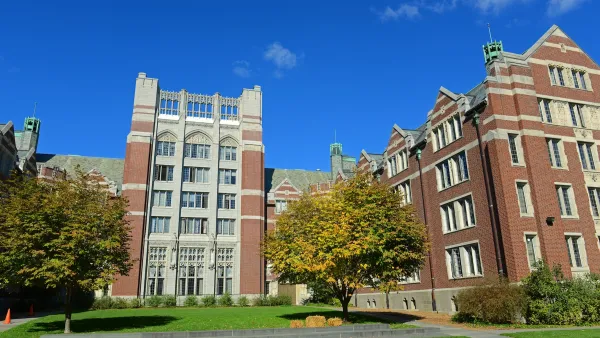
Wellesley sues state over proposed housing on state-owned parking lot
The college town opposes a 180-unit development that it says creates too much density for the area.

Amtrak, CN end decades-long dispute with eight-year agreement
The new operating agreement establishes an updated framework for the companies to work together, including processes to resolve disputes.

Judges permit Denver to divert 77,000 acre feet from the Colorado River for reservoir expansion
Overuse and climate change have caused the Colorado River’s water levels to plummet.
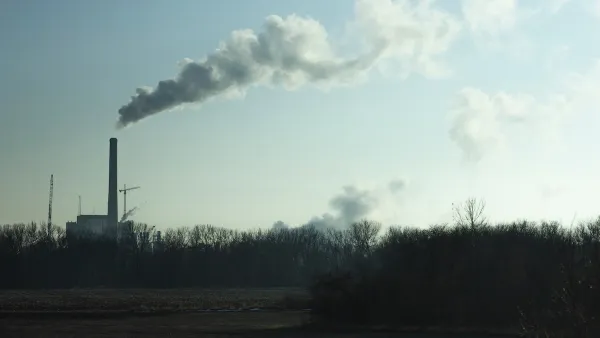
Nation's most wind-powered state turns to coal as data centers increase energy demand
For the first time in decades, Iowa has increased its generation of coal power.

Boston has spent millions making the Green Line more accessible — and there’s no end in sight
While the city has invested millions into expanding and adding platforms to the Green Line to make it more accessible, new train cars set to arrive next year will be too tall for disabled passengers to board without raising the current platforms.

Idaho may see an 18% drop in federal surface transit funding — the largest estimated cut in the US
Transit systems in rural communities are much more reliant on federal funding to provide their services.

How ‘post-disaster gentrification’ alters neighborhoods after natural calamities
After hurricanes, fires or other calamities, the original residents of a community are often replaced by younger, wealthier residents.

FREE Course: Walkable City 1: Why Walkability?
After describing his path towards focusing on walkability as the essence of good planning, Jeff Speck marches through his five principal reasons for making more walkable places.
Reinventing Malls: Planning Alchemy—Turning Gray Fields Into Gold
The course focuses on the opportunities and imperatives that shape reinvention of mall sites.

City of Wisconsin Rapids
Harvard University Graduate School of Design
KFH Group Inc.
The Architects Foundation
University of Cincinnati Online
The Pocatello Development Authority
The Urban Renewal Agency of the City of Pocatello