The failing world economy put many large eco-developments on hold, but many projects like the Amsterdam's 'smart city' and Germany's Eco City Hamburg-Harburg are on track and forging new ground in sustainability practices.


"...a host of other efforts from Finland to Arizona are in the works, many with a mix of government and private funding.
In July, for example, the first tenant moved into Eco City Hamburg-Harburg, just outside the German city of Hamburg. The project, developed by the global design firm tecArchitecture and engineering firm ARUP, is branded as a "sustainable creative-industrial environment." Its aim is to bring "large-scale industry and creative startups together in one cooperative and eco-friendly business community," its Web site says."
Read the full story: Eco-Cities: Building a Comeback?
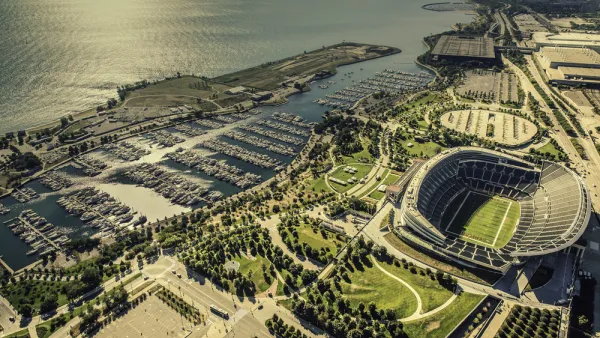
Phase 1 Revealed for $20 Billion Chicago Megaproject
Plans for One Central, a proposed megadevelopment that would add 22.3 million square feet of buildings to the city of Chicago, are taking shape.
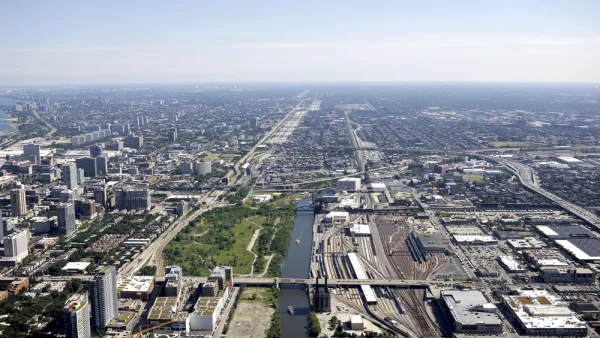
Proposed $20 Billion Chicago Megaproject Gets Reprieve
The 34-acre One Central project still faces opposition, but an extension on a federal loan application could give it a much-needed boost.
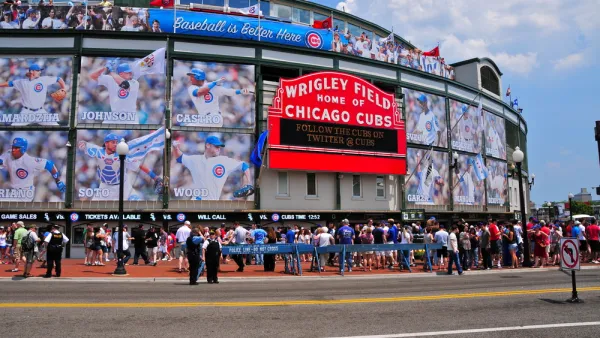
The Story of Ballparks Is the Story of American Cities
A new book looks at the evolution of American ballparks and the changes that have mirrored urbanism.

Planetizen Federal Action Tracker
A weekly monitor of how Trump’s orders and actions are impacting planners and planning in America.

Washington state to charge fee to drivers with fuel-efficient cars
Revenue from the fee will go towards supporting the state’s highways.

Trump to blast ‘hydrocarbon highway’ through ‘world’s longest art gallery’
Environmental and historic preservation groups are suing to stop the project.

Data centers need power – lower income, rural residents pay the price
In 2025, data centers paid only 38% of the energy infrastructure costs linked to their growth, with households, especially rural and low-income residents, bearing the remaining burden.

MBTA Green Line project moved to next phrase of CIG program
The modernization effort will cost $4.08 billion.

22-mile pedestrian and bike path to encircle Atlanta by 2030
The project will also support affordable housing.

FREE Course: Walkable City 1: Why Walkability?
After describing his path towards focusing on walkability as the essence of good planning, Jeff Speck marches through his five principal reasons for making more walkable places.
Reinventing Malls: Planning Alchemy—Turning Gray Fields Into Gold
The course focuses on the opportunities and imperatives that shape reinvention of mall sites.

City of Charlotte
City of Rosemead
Rutgers University, Edward J. Bloustein School of Planning and Public Policy
University of Michigan School for Environment and Sustainability (SEAS)
Hunter College, City University of New York (CUNY)
The Architects Foundation
University District Partnership