One writer argues that the crisis facing the nation's mobile home owners warrants public intervention.


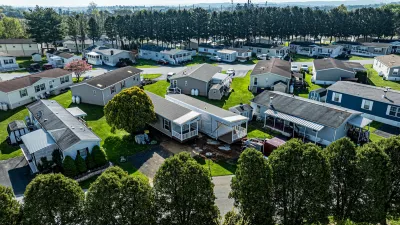
In an article for Johnstonian News, Mike Walden calls attention to the loss of a crucial affordable housing resource for many North Carolina communities: mobile home parks.
As Walden explains, trailer parks offer residents the opportunity to own a home without owning the land underneath it. However, this places households in jeopardy when trailer parks are purchased and the new owners increase the cost of the land lease or shut down the park altogether, forcing tenants to move — an expense that many mobile home owners cannot afford.
Walden suggests three options for keeping mobile homes affordable: assuming residents can afford the move, they can choose a new location with lower land prices or band together with neighbors to purchase their own land for a new park. However, this may put people farther away from jobs, schools, and economic opportunities. A second option is to switch to a traditional renting option, which "means giving up ownership of the trailer and the pride of ownership that comes with it."
Lastly, Walden suggests that the public sector could step in. Cities, counties or states could purchase existing parks or land to establish new parks. "Of course, taxpayer money would be needed to fund the land purchases, and the involved governments would be forgoing significant property tax receipts if the land was used for more expensive projects."
FULL STORY: You Decide: Why are trailer parks disappearing?

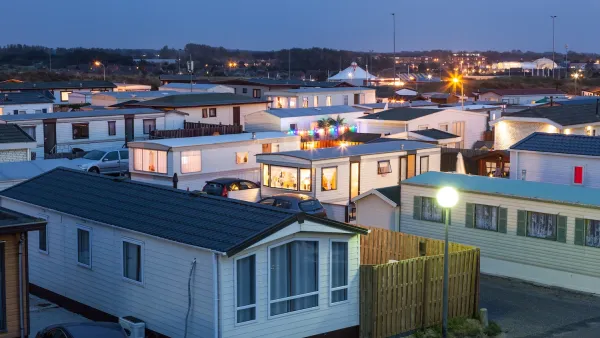
Poor Conditions in Mobile Home Parks Put Residents at Risk
Failing infrastructure, poor water and air quality, and predatory owners endanger the health of manufactured home residents, many of whom are elderly and low-income.
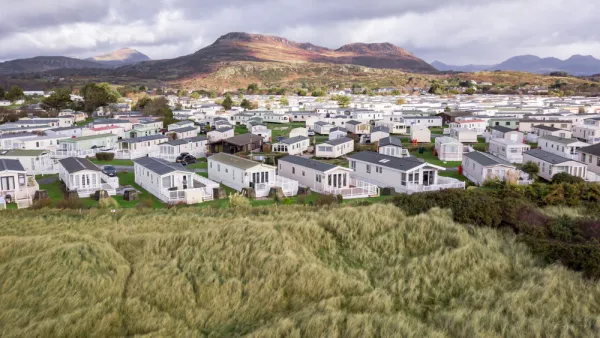
States Move to Protect Mobile Home Park Residents
Making it easier for mobile home park residents to collectively purchase the land they live on can protect their housing affordability for the long term.
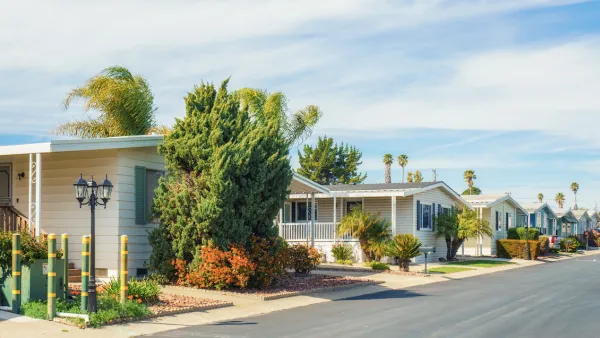
How Resident-Owned Mobile Home Parks Can Protect Affordable Housing
Cooperative ownership can provide housing stability for low-income residents and protect them from land rent spikes and poor management.

The state-sanctioned urbicide of Austin
People don’t kill cities. Freeways do.

US to reduce Colorado River water deliveries to Mexico
A new Colorado Treaty amendment reduces Mexico’s Colorado River water allocation by 250,000 acre feet.

New Jersey’s second-largest city bans standalone data centers
Jersey City will continue to allow co-location facilities, such as those meant for research institutions that store their own data.

Amtrak not solely to blame for New Jersey commuter rail's unreliability, report finds
A new study from the Garden State Initiative found that NJ Transit’s budget grew 20% across a 4 year period, but reliability declined significantly over the same period.

EPA erases limits on planet-warming pollution from power plants
Under Monday’s plan, power plants would still have some limits on how much mercury, arsenic and other contaminants they can emit.

Phoenix announces new on-demand transit service, more frequent RAPID buses
Both new services will launch in October, and are part of Phoenix's Project Effective Access Solutions for Easing Congestion.

FREE Course: Walkable City 1: Why Walkability?
After describing his path towards focusing on walkability as the essence of good planning, Jeff Speck marches through his five principal reasons for making more walkable places.
Reinventing Malls: Planning Alchemy—Turning Gray Fields Into Gold
The course focuses on the opportunities and imperatives that shape reinvention of mall sites.

Eagle County Government
Harvard University Graduate School of Design
Nashville Planning Department
The Architects Foundation
University of Cincinnati Online
The Pocatello Development Authority
The Urban Renewal Agency of the City of Pocatello
Journal of the American Planning Association