Data center projects are drawing away many of the state's electrical workers with higher wages that homebuilders can't afford to pay.


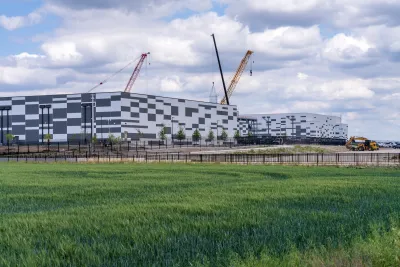
Home construction contractors in Texas say competition for electrical workers from data centers is forcing them to delay projects by as much as two months, reports Jowi Morales in Tom's Hardware.
Texas is experiencing a population boom, with over 2.6 million people migrating to the state since 2020, as well as a data center boom. "This means that a lot of construction projects are competing for specialized electrical workers from the same pool of about 71,000 electricians," Morales explains. Because AI companies can afford to pay electricians more, with 45% to 70% of data center construction budgets earmarked for electrical work, they are siphoning away workers from home builders.
According to an analysis, around 40% of data center projects are similarly delayed, although some AI companies deny this. "Aside from labor shortages, the build out is also facing constraints in the power supply chain, with half of planned projects affected. This massive push to build as many data centers as possible is just pushing available resources — in chips, energy supply, labor, and everything else related to building and running them — to the brink."


Can revolving loan funds revolutionize housing financing?
Revolving loan funds offer governments a way to support increased housing production with a one-time investment.
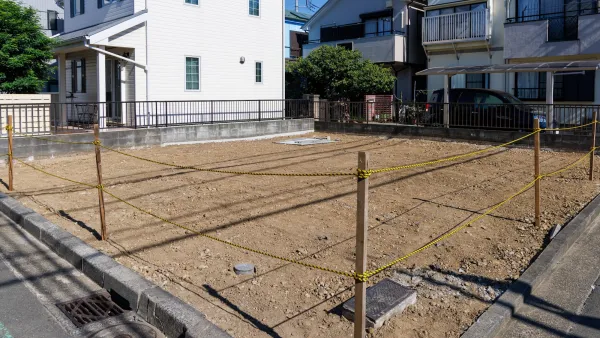
400 Maine Affordable Homes Unable to Break Ground due to Buy America Rules
Projects that receive certain federal funds are required to source 95% of their materials from the United States.
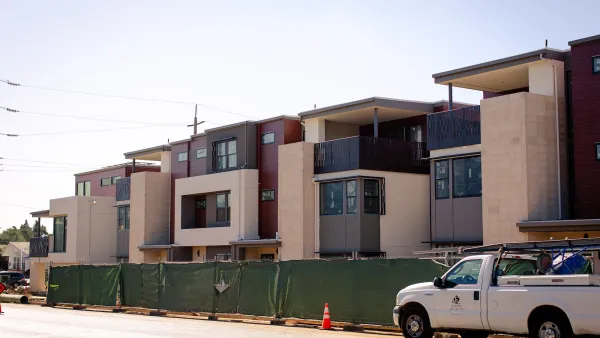
40,000 California Housing Units are Stuck in ‘Financial Purgatory’
A lack of sufficient funding is holding back the construction of hundreds of ‘shovel-ready’ projects.

Planetizen Federal Action Tracker
A weekly monitor of how Trump’s orders and actions are impacting planners and planning in America.

The state-sanctioned urbicide of Austin
People don’t kill cities. Freeways do.

US to reduce Colorado River water deliveries to Mexico
A new Colorado Treaty amendment reduces Mexico’s Colorado River water allocation by 250,000 acre feet.

Baltimore to break ground on $50 million Transit Priority Project
The project will bring faster bus trips, safer streets and better bike connections to Baltimore.

Airbnb launches $250 million 'last-dollar financing' housing accelerator, makes first investment in Austin
The company will put $6.4 million towards affordable housing development in Texas’ capital.

Guerilla urbanists are building DIY bus stop benches in Chicago
A before-and-after of one of the bus stops with a new bench. The new benches are not officially sanctioned or permitted, but the residents who placed them hope they will be the start of a network of DIY benches across the city.

FREE Course: Walkable City 1: Why Walkability?
After describing his path towards focusing on walkability as the essence of good planning, Jeff Speck marches through his five principal reasons for making more walkable places.
Reinventing Malls: Planning Alchemy—Turning Gray Fields Into Gold
The course focuses on the opportunities and imperatives that shape reinvention of mall sites.

Eagle County Government
Harvard University Graduate School of Design
Nashville Planning Department
The Architects Foundation
University of Cincinnati Online
The Pocatello Development Authority
The Urban Renewal Agency of the City of Pocatello
Journal of the American Planning Association