The administration plans to rescind the 2001 Roadless Area Conservation Rule, which protects close to 60 million acres of national forest lands from road development.


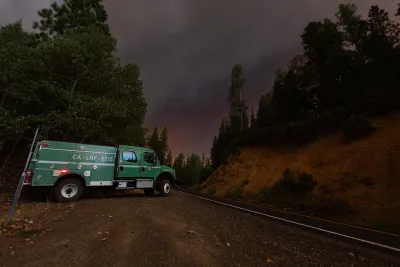
A new study is “throwing more cold water” on the U.S. Department of Agriculture’s rationale for rescinding the Roadless Rule and allowing for more road construction in national forests and other federal lands.
According to an article by Zoë Rom in Inside Climate News, “Wildfires on federal lands average about five times the size of those in the rest of the country, leading some of the nation’s top land managers to argue that national forests are a front line for fighting the nation’s steep increase in wildland blazes.” However, research — and experience — shows that a lack of roads is not one of the major obstacles to wildfire response.
The study found that between 1992 and 2024 wildfires were four times more likely to ignite within 50 meters of a road than in areas without motor vehicle access. The results were consistent across Forest Service regions around the country.
Notably, “The fires that escaped initial attack by firefighters, the ones that become the large, catastrophic blazes driving the current crisis, show no meaningful size difference between roaded and roadless areas. So more roads means more fire, and they provide no improvement in the outcomes of the fires that matter most.”
According to Rom, reversing the rule requires the administration to “be able to demonstrate a rational connection between the evidence and the eventual decision” before a court and the USDA “must fully analyze the environmental consequences of rescinding the rule, consider a full range of alternatives to the rescission and meaningfully grapple with the science.”
FULL STORY: USDA Says It Needs Roads to Fight Remote Wildfires, but a New Study Says Roads Bring More Fire to Forests

US Forest Service Could Open Millions of Roadless Acres to Logging
The USDA indicated it plans to repeal the ‘Roadless Rule,’ a Clinton-era regulation that prevents new road-building in undeveloped federal forest areas.

Carbon Capture Plan Draws Conservationist Concerns
The Forest Service says storing carbon dioxide under national forest lands is essential to reducing greenhouse gas emissions and meeting climate goals.

National Forests Were Highly Popular in 2020
New data shows more people than ever visited national forests and grasslands last year, according to a Forest Service report

The state-sanctioned urbicide of Austin
People don’t kill cities. Freeways do.

US to reduce Colorado River water deliveries to Mexico
A new Colorado Treaty amendment reduces Mexico’s Colorado River water allocation by 250,000 acre feet.

New Jersey’s second-largest city bans standalone data centers
Jersey City will continue to allow co-location facilities, such as those meant for research institutions that store their own data.

Amtrak not solely to blame for New Jersey commuter rail's unreliability, report finds
A new study from the Garden State Initiative found that NJ Transit’s budget grew 20% across a 4 year period, but reliability declined significantly over the same period.

EPA erases limits on planet-warming pollution from power plants
Under Monday’s plan, power plants would still have some limits on how much mercury, arsenic and other contaminants they can emit.

Phoenix announces new on-demand transit service, more frequent RAPID buses
Both new services will launch in October, and are part of Phoenix's Project Effective Access Solutions for Easing Congestion.

FREE Course: Walkable City 1: Why Walkability?
After describing his path towards focusing on walkability as the essence of good planning, Jeff Speck marches through his five principal reasons for making more walkable places.
Reinventing Malls: Planning Alchemy—Turning Gray Fields Into Gold
The course focuses on the opportunities and imperatives that shape reinvention of mall sites.

Eagle County Government
Harvard University Graduate School of Design
Nashville Planning Department
The Architects Foundation
University of Cincinnati Online
The Pocatello Development Authority
The Urban Renewal Agency of the City of Pocatello
Journal of the American Planning Association