A shift in focus from ‘Housing First’ policies to more restrictive approaches to homelessness could eliminate funding for long-term housing providers.


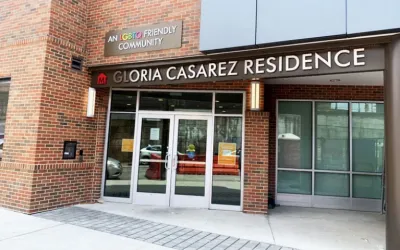
Philadelphia affordable housing providers are bracing for federal funding cuts that could amount to tens of millions in lost dollars for permanent and long-term supportive housing services.
As Alfred Lubrano explains in Governing, the U.S. Department of Housing and Urban Development’s new housing plan says it will “restore accountability” by addressing the “root causes of homelessness” through work requirements and other restrictions on housing assistance.
Nationwide, advocates say, the HUD plan could displace 170,000 people by cutting two-thirds of the aid designated for permanent housing.
In Philadelphia, a local nonprofit estimates around 1,200 housing units could lose federal aid. “In its plan, HUD will require the local planning bodies to compete for funding, and will attach ideological preconditions that could affect how much money a community like Philadelphia receives.” HUD’s new approach rejects Housing First, an increasingly popular approach to homelessness that aims to get people into housing without prerequisites before mandating drug treatment or other requirements.
FULL STORY: Philly Braces for Massive Housing Losses Under New Federal Rules

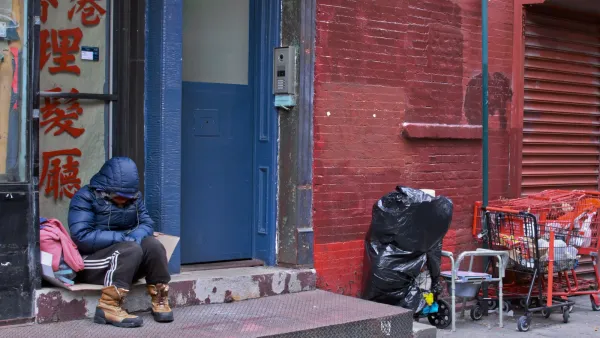
"A grim march toward death": What HUD’s new homeless policy looks like on the ground
Administrators from 55 Continuum of Care sites share their views on how proposed cuts, rapid changes to funding guidelines, and delays are affecting their work.

Federal cuts to voucher program put 9,000 New Yorkers at risk of homelessness
The Emergency Housing Voucher program is ending years ahead of schedule, forcing housing agencies to find new ways to support roughly 70,000 households nationwide.
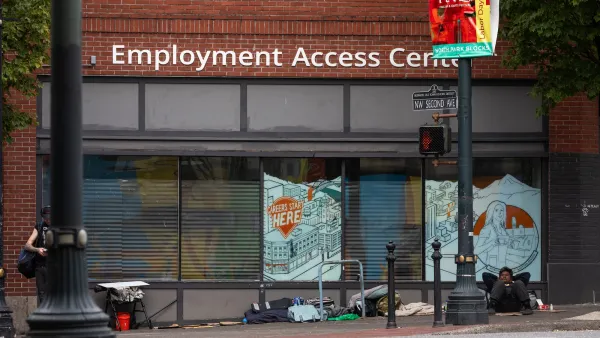
Judge: HUD acted illegally in changing homelessness grant rules
A Rhode Island judge struck down 'partisan' Trump restrictions on Continuum of Care Build grants.

Planetizen Federal Action Tracker
A weekly monitor of how Trump’s orders and actions are impacting planners and planning in America.

The state-sanctioned urbicide of Austin
People don’t kill cities. Freeways do.

US to reduce Colorado River water deliveries to Mexico
A new Colorado Treaty amendment reduces Mexico’s Colorado River water allocation by 250,000 acre feet.

5 New England states march closer to 800 megawatt wind energy project
Securing federal approval for the project may be complicated under the Trump administration, which has historically been hostile towards domestic wind power.

Baltimore to break ground on $50 million Transit Priority Project
The project will bring faster bus trips, safer streets and better bike connections to Baltimore.

Airbnb launches $250 million 'last-dollar financing' housing accelerator, makes first investment in Austin
The company will put $6.4 million towards affordable housing development in Texas’ capital.

FREE Course: Walkable City 1: Why Walkability?
After describing his path towards focusing on walkability as the essence of good planning, Jeff Speck marches through his five principal reasons for making more walkable places.
Reinventing Malls: Planning Alchemy—Turning Gray Fields Into Gold
The course focuses on the opportunities and imperatives that shape reinvention of mall sites.

Eagle County Government
Harvard University Graduate School of Design
Nashville Planning Department
The Architects Foundation
University of Cincinnati Online
The Pocatello Development Authority
The Urban Renewal Agency of the City of Pocatello
Journal of the American Planning Association