In 1919, Edith Elmer Wood drew the connection between ratcheting minimum housing standards and an inevitable crisis of homelessness. Her predictions have proved eerily accurate.


In the media and online, debates about the root cause of America’s housing crisis are often cast as a struggle between those who believe overly-restrictive regulations are to blame, and those who believe the problem is a lack of government funding for affordable housing. This simplistic narrative, often pitting YIMBYs against housing justice advocates, has never captured either position very well. Progressive YIMBYs, in particular, have been crying “both and” for years in the din of the Twitter thunderdome.
In fact, these two issues — too many restrictions on the construction of market-rate housing, and too little government funding for low-income housing — are closely interconnected, and always have been.
That connection is the focus of Edith Elmer Wood’s under-appreciated 1919 book, The Housing of the Unskilled Wage Earner: America’s Next Problem. In it, the fiction-writer turned policy wonk offers her vision for social housing in America based on an original, but highly intuitive, diagnosis of the nation’s housing problem. A century later, her framework remains an excellent one for understanding the nation’s current housing crisis, providing a historical lens on the “homelessness is a housing problem” thesis.

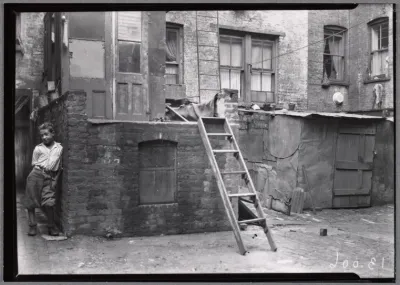
Wood’s analysis begins in a surprising place, with the progressive laws governing the construction of tenement housing in big cities. Wood unequivocally supported these minimum housing standards, but nonetheless had concerns about how they would impact the availability of housing for low-income people. As cities reduced the supply of low-quality, low-cost housing, the federal government desperately needed to step in and provide housing for the poor, Wood argued. Absent such a government program, the continued ratcheting up of minimum housing standards could ultimately “leave a considerable number of people homeless,” she writes.
From our present vantage point, it’s clear that her prediction was spot on. Over the past century, minimum housing standards were expanded far beyond health and safety safety requirements, becoming a means to enforce racial segregation and elite conceptions of the proper way to live. The result is a contemporary housing stock consisting largely of single-family homes and other housing typologies that are far out of the financial reach of the poorest members of society by design. Federal and state governments have never properly filled that gap, providing housing to only a fraction of low-income people, and leaving many of those without subsidized housing either homeless or on the brink.


As Wood argues, these two housing policy levers — minimum housing standards in the private market, and government provision of subsidized affordable housing — need to be calibrated in concert with one another. “There ought to be no quarrel between them or their advocates. Both are essential to a well-rounded housing policy. The housing problem will never be solved without the aid of both.”
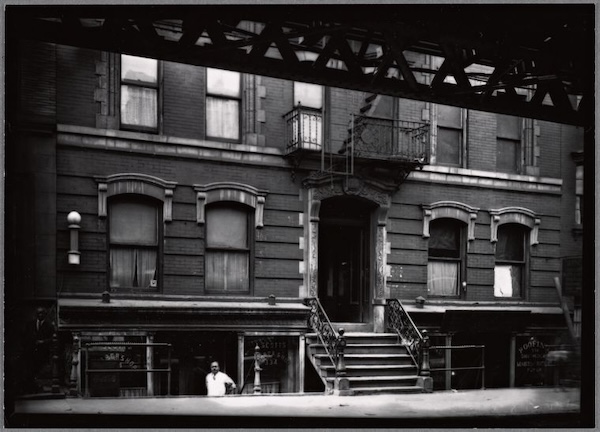
Housing of the Unskilled Wage Earner arrived at an awkward, in-between moment for American housing policy. World War I marked the first time the federal government had substantially involved itself in the provision of housing. An emergent activist community of “housers” was confident that it was a matter of when, not if, Washington would enact a mass affordable housing program, as most European countries had already done. But for the time being, the nation had no such program, and only a handful of local efforts. The vast majority of housing policy involved the enactment of minimum housing standards — whether for the tenement housing of the urban poor, or for the proto-single-family zoning regulations emerging that were beginning to take root in upper middle-class garden suburbs.
Wood strongly believed in increasing minimum housing standards for inner-city slum housing, arguing that “much more remains to be done” to improve these dire housing conditions and guarantee every resident light, fresh air, and bathroom facilities. But she was sensitive to the knock-on effects of these “restrictive” housing policies, especially in the absence of simultaneous “constructive” housing policies. A restrictive policy regime “will prevent the bad. It will not produce the good,” Wood writes.

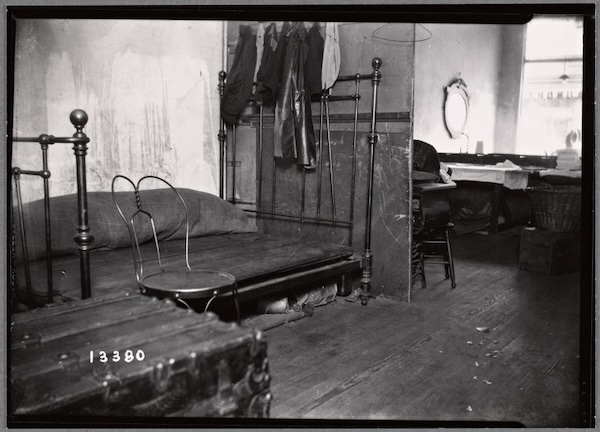
Already, at the time of her writing, the poor were not able to afford the homes produced under more enlightened standards. “The fact is that the new-law tenements, with the exception of a few jerry-built ones that have got by the inspectors in Brooklyn, are beyond the financial reach of unskilled wage earners,” she writes. The danger is that these laws would only further entrench slum conditions, forcing the poor to remain in a declining stock of inadequate housing, or else crowd into higher quality homes with multiple families per unit.
“Standards have sometimes been raised above this point, the supply of existing houses being counted on to take care of the unskilled wage earner,” Wood writes. “Perhaps it is believed that as the old houses disappear, wages will be automatically forced up to meet the situation. Perhaps that will be the result, though the danger of increased subletting and overcrowding is very real.”
Wood appears to recognize that her concerns about minimum housing standards could be perceived as carrying water for the real estate industry — a criticism frequently leveled at today’s YIMBY movement. “Housing reform must not be allowed to create house famines,” she writes. “This argument is naturally much used by those with interested motives, but it is powerful because of the amount of truth it contains.”


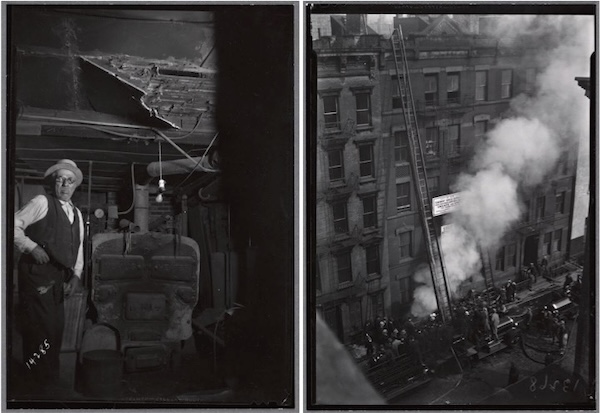
However, Wood’s broader agenda was not popular among developers or mainstream politicians at the time. The central premise of her book is to make the case for the government to get into the housing business and provide high-quality homes for the poor. Wood contends that “if there were no other way of securing a wholesome home for every family, the taxpayers ought to assume such a burden,” calling housing just as important as healthcare and education.
And yet, perhaps in a nod to political expediency, Wood argues that government subsidy would not be necessary. “We are advocating the use of the community's credit, not of its funds. We are aiming to give a service at cost, not below cost. A properly conducted constructive housing scheme is exactly self-supporting.”
Wood contends that with low-interest, long-term government loans, cities could put up housing for the poor without ongoing subsidy. She makes this claim despite proving earlier that low-income households cannot afford the economic rent of high-quality housing in expensive cities. She cites the “social housing” models of Western European nations as a guide, implying that low-income housing could be cross-subsidized by the rents of higher-income tenants, though she never specifies this exact tactic.
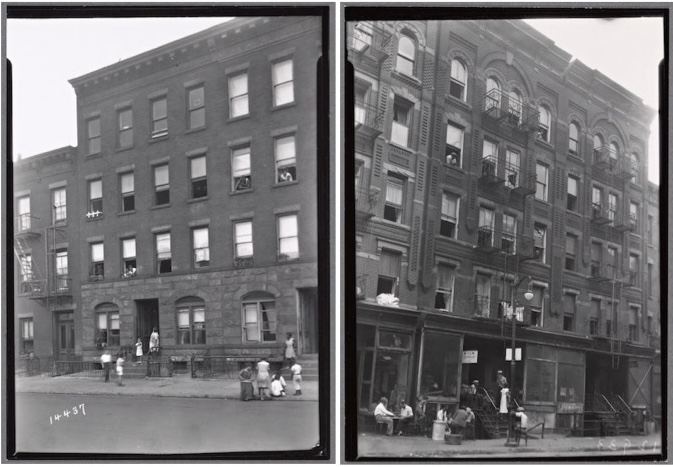
Wood went on to be a key advisor on the development of America’s public housing program in the 1930s. (That program was not “self-supporting” and has always required considerable subsidy.) Some of the ideas she offered in Housing of the Unskilled Wage Earner made it into those federal policies. But her insights about the risks of restrictive housing policy did not.
As housing conditions broadly improved, minimum housing standards went from having a quasi-public health basis (morality was always a big part of the equation, too) to having a largely “social” basis. These standards reflected biases against high-density, communal living arrangements, which were themselves informed by racist, paternalistic beliefs and the demands of the petro-automotive growth machine. (Yoni Appelbaum’s Stuck offers a detailed accounting of these moralistic biases, and how profoundly they shaped housing policy.)
After World War II, big cities pursued a policy of demolishing or converting their stock of SROs, also called residential hotels or flophouses, often under the auspices of federal public housing and other urban renewal programs. The decline of this “housing of last resort” is seen as a major contributor to modern homelessness, which emerged in the 1980s.
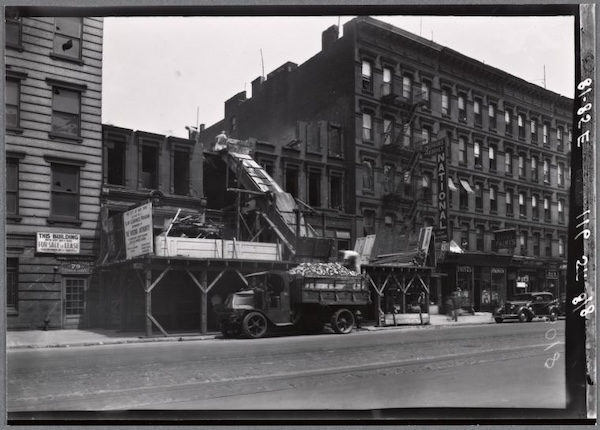
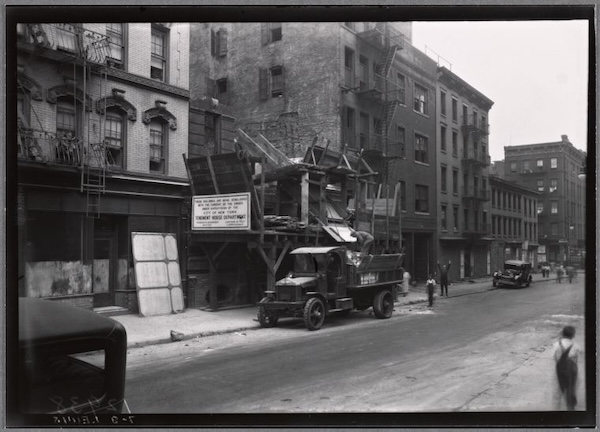
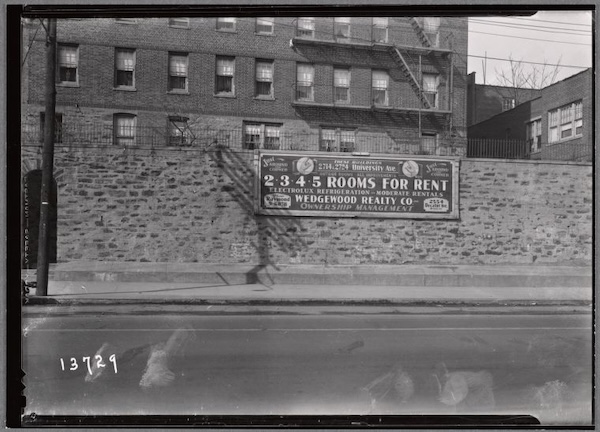
Single-family zoning, enacted in a majority of residential neighborhoods across the country over the course of the 20th century, acted as a kind of restrictive minimum housing standard as well. These rules put an end to the historical urban pattern of larger residences being subdivided into smaller ones as land values rise, cutting off another major form of low-income housing. Houses that had already been subdivided into smaller units were frequently bulldozed to make way for urban renewal-era public housing projects, which required a one-to-one replacement of slum housing for each new unit produced.
Thus, the federal government’s “constructive” housing program — never adequate to begin with — was forced to address an ever-growing low-income housing shortage induced by its own “restrictive” housing policies.
So where does Wood’s framework leave us today? An ambivalent anecdote about the reconstruction of San Francisco after the 1906 earthquake and fire is particularly instructive:
“The only answer of restrictive legislation to a house famine is the relaxation of its own standards. A striking illustration of this was furnished by San Francisco after the earthquake and fire of 1906. If there had been a national or state system of supplying credit for housing purposes, the disaster would have afforded a wonderful opportunity to rebuild the congested districts on model lines. As it was, the need of immediate shelter was so great, and private capital had been rendered so timid by the earthquake, that all bars were let down, and even the inadequate restrictions of the old building code were suspended. The result was that tenements were built in great numbers, covering 100 per cent of their lots and a dark-room problem created which will afflict San Francisco for many a long year.”
San Francisco’s post-quake rebuilding, which produced much of the city’s current stock of low-income housing in the Tenderloin and SoMa, was clearly not an ideal outcome for Wood. But her ideological flexibility, recognizing that in an emergency, less-than-ideal housing is better than no housing, is striking.
San Francisco and other expensive cities are once again in a housing emergency. The federal government is, once again, not going to help. What are cities going to do to address their house famines?
This article originally appeared on and is published in partnership with The Urban Condition. Benjamin Schneider is a freelance journalist who covers all things urbanism. He also writes the Substack newsletter, "The Urban Condition." His book, The Unfinished Metropolis, will be out in the fall from Island Press.


The state-sanctioned urbicide of Austin
People don’t kill cities. Freeways do.

US to reduce Colorado River water deliveries to Mexico
A new Colorado Treaty amendment reduces Mexico’s Colorado River water allocation by 250,000 acre feet.

New Jersey’s second-largest city bans standalone data centers
Jersey City will continue to allow co-location facilities, such as those meant for research institutions that store their own data.

Amtrak not solely to blame for New Jersey commuter rail's unreliability, report finds
A new study from the Garden State Initiative found that NJ Transit’s budget grew 20% across a 4 year period, but reliability declined significantly over the same period.

EPA erases limits on planet-warming pollution from power plants
Under Monday’s plan, power plants would still have some limits on how much mercury, arsenic and other contaminants they can emit.

Phoenix announces new on-demand transit service, more frequent RAPID buses
Both new services will launch in October, and are part of Phoenix's Project Effective Access Solutions for Easing Congestion.

FREE Course: Walkable City 1: Why Walkability?
After describing his path towards focusing on walkability as the essence of good planning, Jeff Speck marches through his five principal reasons for making more walkable places.
Reinventing Malls: Planning Alchemy—Turning Gray Fields Into Gold
The course focuses on the opportunities and imperatives that shape reinvention of mall sites.

Eagle County Government
Harvard University Graduate School of Design
Nashville Planning Department
The Architects Foundation
University of Cincinnati Online
The Pocatello Development Authority
The Urban Renewal Agency of the City of Pocatello
Journal of the American Planning Association

