A December report forecasts a continued “lock-in effect” due to high mortgage rates and a low production of multifamily housing.



A press release from Fannie Mae predicts that the “lock-in effect” in the housing market will continue into 2025, “with existing home sales forecast to move only slightly upward from recent multi-decade lows, according to the December 2024 commentary from the Fannie Mae (FNMA/OTCQB) Economic and Strategic Research (ESR) Group.”
Fannie Mae economists had five key predictions for the upcoming year: average mortgage rates will decline, but remain above 6 percent; existing home sales will remain low; new home sales will offer some options to prospective homebuyers — “where they can be built;” home price growth will slow; and multifamily housing “will remain in a holding pattern,” unwelcome news for households seeking smaller, more affordable housing types.
“While we think conditions on a national basis will remain challenging, we’re seeing meaningful regional differences in market conditions, and the homebuying experience — as the adage goes — will continue to be a local one,” said Mark Palim, Fannie Mae Senior Vice President and Chief Economist.
FULL STORY: Housing Market Unlikely to Thaw in 2025 Due to Affordability Challenges and 'Lock-in Effect'

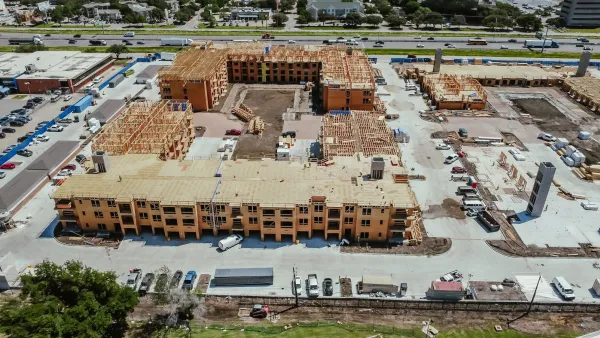
Controversial Texas housing law has 'directly facilitated' over 1,250 new homes
SB 840 allows developers to build multifamily housing by-right on lots zoned for commercial use without applying to a zoning change.

Pennsylvania Housing Action Plan Calls for $1B Fund, Expanded Renter Protections, Homebuyer Assistance
Gov. Shapiro’s proposed plan would bolster support for renters and homebuyers and reduce barriers to housing development.

Missoula Approves Zoning Reform Emphasizing More Diverse Housing, Walkability
The city’s new zoning code, map, and development standards will guide more expansive housing options and improved walkability.

The state-sanctioned urbicide of Austin
People don’t kill cities. Freeways do.

US to reduce Colorado River water deliveries to Mexico
A new Colorado Treaty amendment reduces Mexico’s Colorado River water allocation by 250,000 acre feet.

New Jersey’s second-largest city bans standalone data centers
Jersey City will continue to allow co-location facilities, such as those meant for research institutions that store their own data.

Amtrak not solely to blame for New Jersey commuter rail's unreliability, report finds
A new study from the Garden State Initiative found that NJ Transit’s budget grew 20% across a 4 year period, but reliability declined significantly over the same period.

EPA erases limits on planet-warming pollution from power plants
Under Monday’s plan, power plants would still have some limits on how much mercury, arsenic and other contaminants they can emit.

Phoenix announces new on-demand transit service, more frequent RAPID buses
Both new services will launch in October, and are part of Phoenix's Project Effective Access Solutions for Easing Congestion.

FREE Course: Walkable City 1: Why Walkability?
After describing his path towards focusing on walkability as the essence of good planning, Jeff Speck marches through his five principal reasons for making more walkable places.
Reinventing Malls: Planning Alchemy—Turning Gray Fields Into Gold
The course focuses on the opportunities and imperatives that shape reinvention of mall sites.

Eagle County Government
Harvard University Graduate School of Design
Nashville Planning Department
The Architects Foundation
University of Cincinnati Online
The Pocatello Development Authority
The Urban Renewal Agency of the City of Pocatello
Journal of the American Planning Association