Disability benefits will no longer exclude veterans from supportive housing programs.



Veterans who were denied housing assistance due to income restrictions because they receive disability benefits will now be able to access permanent supportive housing thanks to a rule change from the Department of Housing and Urban Development (HUD), reports Linda F. Hersey in Stars and Stripes. “Under the rule change, the disability payments will not be counted against veterans applying for ‘permanent supportive housing’ based on income restrictions through the program, known as HUD-VASH.”
Previously, some veterans could not access supportive housing programs because their disability benefits put them above the income threshold. Because veterans with more serious disabilities receive higher payments, some of the veterans with the highest need were excluded from the supportive housing program. Now, “Eligibility restrictions for veterans will be set at 80% of area median income, rather than the current 50% of area median income, HUD said.”
HUD also committed $20 million to 245 public housing agencies nationwide to fund security deposits and efforts to recruit more landlords to participate in the voucher program.
FULL STORY: Disability income for veterans will no longer disqualify them from rental assistance

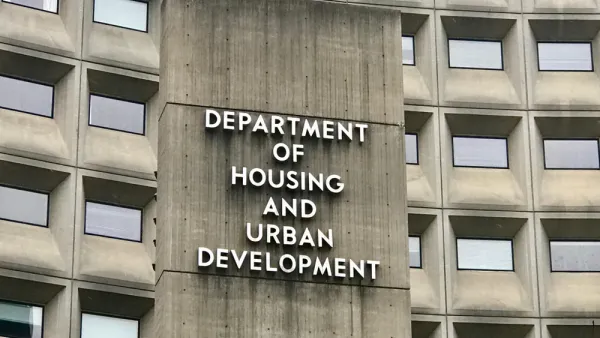
Blocked, Restored, Blocked Again — Housing Funds in Legal Limbo
Since Trump took office, the administration has blocked multiple affordable housing funding streams. Here's a look at which funds have been frozen, which have been reinstated, and which are in the courts.

Housing Vouchers as a Key Piece of Houston’s Housing Strategy
The Houston Housing Authority supports 19,000 households through the housing voucher program.
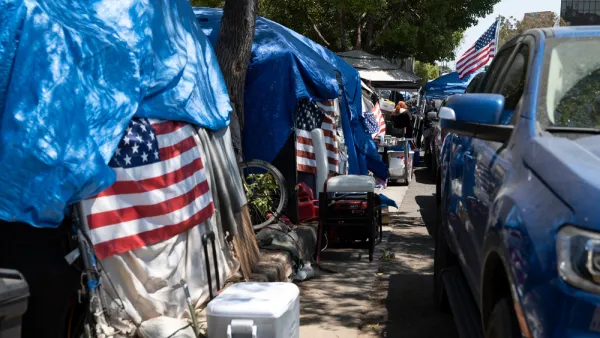
Homelessness Among Veterans Drops Sharply
The number of unhoused vets fell by more than 50 percent since 2016, with significant gains made in the last two years.

Planetizen Federal Action Tracker
A weekly monitor of how Trump’s orders and actions are impacting planners and planning in America.

The state-sanctioned urbicide of Austin
People don’t kill cities. Freeways do.

US to reduce Colorado River water deliveries to Mexico
A new Colorado Treaty amendment reduces Mexico’s Colorado River water allocation by 250,000 acre feet.

5 New England states march closer to 800 megawatt wind energy project
Securing federal approval for the project may be complicated under the Trump administration, which has historically been hostile towards domestic wind power.

Baltimore to break ground on $50 million Transit Priority Project
The project will bring faster bus trips, safer streets and better bike connections to Baltimore.

Airbnb launches $250 million 'last-dollar financing' housing accelerator, makes first investment in Austin
The company will put $6.4 million towards affordable housing development in Texas’ capital.

FREE Course: Walkable City 1: Why Walkability?
After describing his path towards focusing on walkability as the essence of good planning, Jeff Speck marches through his five principal reasons for making more walkable places.
Reinventing Malls: Planning Alchemy—Turning Gray Fields Into Gold
The course focuses on the opportunities and imperatives that shape reinvention of mall sites.

Eagle County Government
Harvard University Graduate School of Design
Nashville Planning Department
The Architects Foundation
University of Cincinnati Online
The Pocatello Development Authority
The Urban Renewal Agency of the City of Pocatello
Journal of the American Planning Association