The department is proposing an updated version of the Affirmatively Furthering Fair Housing rule, which requires local governments to take action to end residential segregation.



In an opinion piece published on CNN.com, Department of Housing and Urban Development Secretary Marcia L. Fudge explains the importance of the Affirmatively Furthering Fair Housing rule, a mandate aimed at furthering the Fair Housing Act that was ended by the Trump administration in 2020.
The rule “requires HUD, and those who receive our funding, to take proactive and meaningful action to overcome patterns of segregation, to promote fair housing choice, eliminate disparities in housing-related opportunities and foster inclusive communities that are free from discrimination,” Fudge explains. Now, the Biden administration is proposing an updated version “that builds on the successes of the 2015 rule and proposes refinements to make it stronger, based on a deliberative and thoughtful engagement process.”
According to Fudge, the proposal would enable state and local leaders to advance fair housing and create mechanisms to leverage federal funding with other sources. “Most importantly, the proposed rule would give the community a seat at the table in our ongoing work to guarantee fair housing, while adding accountability mechanisms to ensure that recipients of HUD funding comply with their duty to affirmatively further fair housing.”
While Trump called the previous AFFH rule an attempt to “abolish the suburbs,” fair housing advocates see it as a way for the federal government to ensure that cities and states examine any potential civil rights violations and develop plans to address historical inequities in their housing markets. The 2015 rule established a concrete framework for compliance that included an assessment some communities found too onerous. An article in Bloomberg CityLab explains that the proposed Biden rule, which calls on municipalities to produce local equity plans every five years, will give local officials greater flexibility.
FULL STORY: Opinion: HUD Secretary on how to make fair housing a reality


Ben Carson’s Clear Disdain for Fair and Affordable Housing
Carson has spent much of his time as HUD secretary attacking the housing programs, initiatives, and regulations central to the agency’s mission.
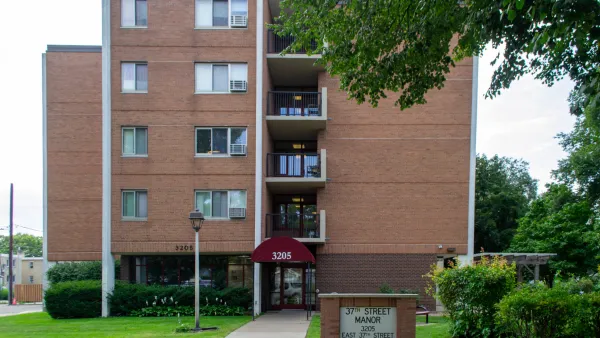
HUD to Investigate Minneapolis Over Allegations of ‘Racial and Ethnic Favoritism’ in Housing Policy
The Trump administration says the city’s housing policies and support of ‘cultural districts’ are racially discriminatory, while city leaders call the investigation politically motivated.

HUD Plans to Kill Key Fair Housing Rule
The department issued a proposal to eliminate the disparate impact rule, a cornerstone of some discrimination rulings under the Fair Housing Act.

The state-sanctioned urbicide of Austin
People don’t kill cities. Freeways do.

US to reduce Colorado River water deliveries to Mexico
A new Colorado Treaty amendment reduces Mexico’s Colorado River water allocation by 250,000 acre feet.

New Jersey’s second-largest city bans standalone data centers
Jersey City will continue to allow co-location facilities, such as those meant for research institutions that store their own data.

Amtrak not solely to blame for New Jersey commuter rail's unreliability, report finds
A new study from the Garden State Initiative found that NJ Transit’s budget grew 20% across a 4 year period, but reliability declined significantly over the same period.

EPA erases limits on planet-warming pollution from power plants
Under Monday’s plan, power plants would still have some limits on how much mercury, arsenic and other contaminants they can emit.

Phoenix announces new on-demand transit service, more frequent RAPID buses
Both new services will launch in October, and are part of Phoenix's Project Effective Access Solutions for Easing Congestion.

FREE Course: Walkable City 1: Why Walkability?
After describing his path towards focusing on walkability as the essence of good planning, Jeff Speck marches through his five principal reasons for making more walkable places.
Reinventing Malls: Planning Alchemy—Turning Gray Fields Into Gold
The course focuses on the opportunities and imperatives that shape reinvention of mall sites.

Eagle County Government
Harvard University Graduate School of Design
Nashville Planning Department
The Architects Foundation
University of Cincinnati Online
The Pocatello Development Authority
The Urban Renewal Agency of the City of Pocatello
Journal of the American Planning Association