The pandemic induced an accidental 'rewilding' in many places as animals took over cities and streets devoid of humans. As we emerge from our isolation, can we co-exist peacefully?


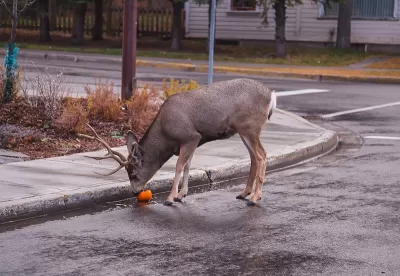
Writing from the perspective of an urban deer observing our post-pandemic return to a world where animals have repopulated areas they'd previously abandoned, John Yunker reminds us that "rewilding is a two-way street. As we become more visible, especially in places you’ve never seen us, you may need to rewild your own worldview." To keep newly visible wildlife safe and comfortable among us, Yunker writes, we must slow down when driving our cars, keep our eyes open, and accept a few creatures nibbling on our lawns or gardens.
"Rewilding is not just about letting a few species run free far away from human civilization. It’s about allowing our world to cross over into your world." According to the Rewilding Institute, "rewilding is comprehensive, often large-scale, conservation effort focused on restoring sustainable biodiversity and ecosystem health by protecting core wild/wilderness areas, providing connectivity between such areas, and protecting or reintroducing apex predators and highly interactive species (keystone species)." Rewilding can promote regeneration and resiliency with minimal human intervention.
The upside for humans, Yunker says, is huge: "As you return to your offices and begin to daydream about escaping into the wilderness, take a moment to gaze out your window. The wilderness is coming to you."
Read the full story: Rewilding is a two-way street
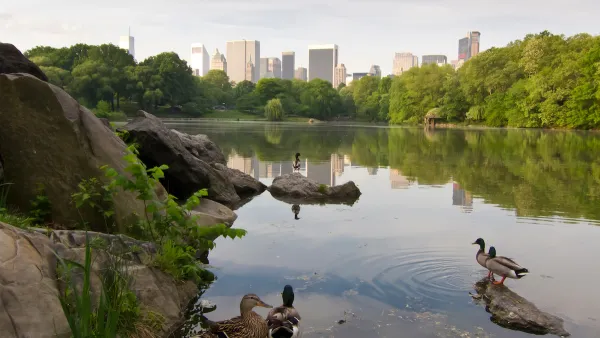
The Resiliency of Urban Wildlife
A wide-ranging research study highlights the various qualities that make animal species living in urban environments thrive—and how biodiversity improves the health of our cities.
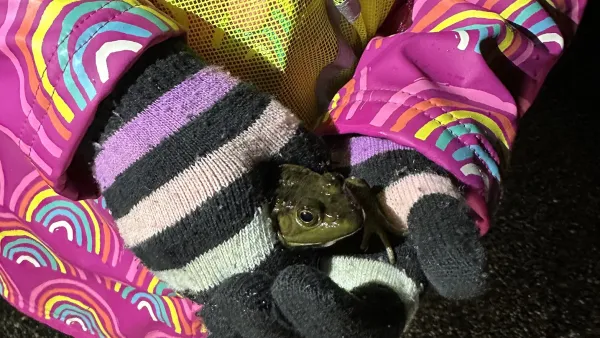
Once a year, Maine roads become highways for amphibians
The 'Big Night' brings out volunteers to help frogs, salamanders, and other migrating amphibians cross roads to reach their breeding grounds.
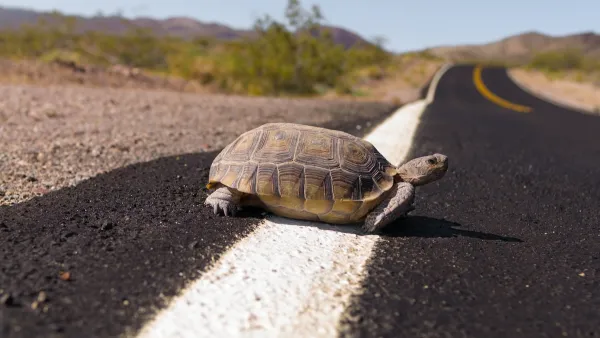
California Room to Roam Act Prioritizes Wildlife Connectivity
A new state law requires new development and infrastructure to minimize disruption to local wildlife habitats and migration patterns.

Planetizen Federal Action Tracker
A weekly monitor of how Trump’s orders and actions are impacting planners and planning in America.

California plans to bury El Niño’s downpour
If the state plays its cards right, it may be able to store a billion acre-feet of El Niño’s water in aquifers.

Desperate measures: Advocates weigh draining Lake Powell to fill Colorado River
Draining the reservoir could reduce evaporation losses by a couple hundred thousand acre-feet.

Chicago voters approve permanent festival grounds, penalty for vacant property owners
Currently, major summer and fall festivals take over public parks for weeks at a time, drawing criticism from nearby residents

NYC votes to cut outdoor dining red tape, speed up permitting
New York City also voted to allow the Department of Transportation to begin work on urgent projects before notifying elected officials.

California appears to reject Prop. 45
The proposition would have expanded the projects that qualify for a streamlined environmental review, effectively paring down the California Environmental Quality Act.

FREE Course: Walkable City 1: Why Walkability?
After describing his path towards focusing on walkability as the essence of good planning, Jeff Speck marches through his five principal reasons for making more walkable places.
Reinventing Malls: Planning Alchemy—Turning Gray Fields Into Gold
The course focuses on the opportunities and imperatives that shape reinvention of mall sites.


City of Rosemead
Rutgers University, Edward J. Bloustein School of Planning and Public Policy
One Hundred Miles
Hunter College, City University of New York (CUNY)
The Architects Foundation
University of Cincinnati Online
City of Cambridge
Montrose County
The Pocatello Development Authority