Massachusetts cities issued over 1,200 applications for ADUs in the last year, short of the Healey administration's goal of 1,600 to 2,000 units per year.



A new Massachusetts law legalizing ADUs has not yielded as much new housing production as state officials anticipated, reports Jennifer Smith in the Commonwealth Beacon. "Massachusetts municipalities received more than 1,600 applications for accessory dwelling unit permits and issued more than 1,200 in the past year. That is a sizable increase from the few hundred ADUs constructed over the past decades through local policies, but falls short of what advocates say is needed, and short of the Healey administration’s own target of 1,600 to 2,000 units per year."
According to a report from Abundant Housing Massachusetts, complex local permitting processes and local wetlands and sewer regulations are contributing to slow growth in the ADU sector. "The report argues the permitting gap doesn’t reflect a lack of homeowner interest, but rather a regulatory system that was never designed to handle an influx of development of the small housing units across 351 cities and towns with their own set of permitting rules."
The report suggests that the state should consolidate more control over regulations to make it easier for homeowners to build ADUs. "Even if, on paper, our law is stronger than some other states, the unique aspects of local control and fragmented permitting and regulatory oversight of new housing development in Massachusetts remains a barrier to achieving the full impact of the state ADU law that many of us in the housing advocacy community seek."
FULL STORY: Local complexity stymies ADU push


ADUs account for nearly 28% of Bay Area housing permits
In Hillsborough, 56 of 58 homes permitted in 2025 were ADUs.
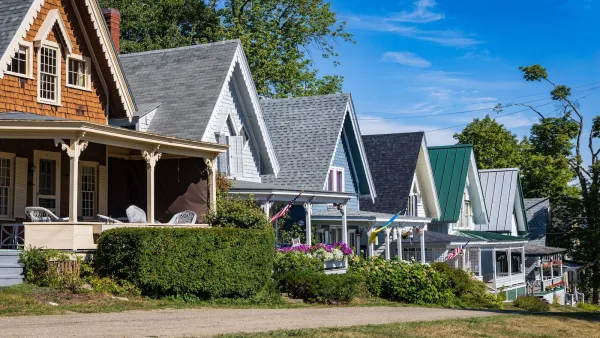
ADUs accounted for 9% of new Maine building permits in 2025
Maine officials approved roughly 500 ADU permits last year.
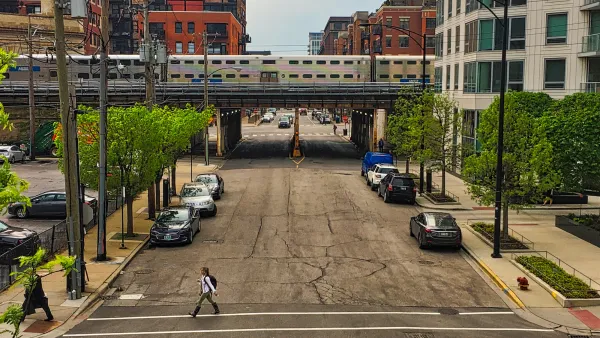
Chicago eliminates parking requirements near transit
In 2025, Illinois barred cities from mandating parking near train and bus stations.

Planetizen Federal Action Tracker
A weekly monitor of how Trump’s orders and actions are impacting planners and planning in America.

The state-sanctioned urbicide of Austin
People don’t kill cities. Freeways do.

US to reduce Colorado River water deliveries to Mexico
A new Colorado Treaty amendment reduces Mexico’s Colorado River water allocation by 250,000 acre feet.

5 New England states march closer to 800 megawatt wind energy project
Securing federal approval for the project may be complicated under the Trump administration, which has historically been hostile towards domestic wind power.

Baltimore to break ground on $50 million Transit Priority Project
The project will bring faster bus trips, safer streets and better bike connections to Baltimore.

Airbnb launches $250 million 'last-dollar financing' housing accelerator, makes first investment in Austin
The company will put $6.4 million towards affordable housing development in Texas’ capital.

FREE Course: Walkable City 1: Why Walkability?
After describing his path towards focusing on walkability as the essence of good planning, Jeff Speck marches through his five principal reasons for making more walkable places.
Reinventing Malls: Planning Alchemy—Turning Gray Fields Into Gold
The course focuses on the opportunities and imperatives that shape reinvention of mall sites.

Eagle County Government
Harvard University Graduate School of Design
Nashville Planning Department
The Architects Foundation
University of Cincinnati Online
The Pocatello Development Authority
The Urban Renewal Agency of the City of Pocatello
Journal of the American Planning Association