New Ulm leaders are approving multiple projects including tiny homes, apartments, and ‘shed homes’ using Planned Unit Developments to move projects forward faster.



New Ulm, Minnesota, a town of roughly 14,000 residents, is saying yes to innovative housing types, approving a project for two dozen ‘shed houses,’ over a dozen tiny homes, and a 148-unit apartment complex. According to reporting by Jp Lawrence in The Minnesota Star Tribune, “It’s a deliberate choice to hear out real estate developers proposing projects that could be seen as ‘out there’ or experimental, said City Manager Chris Dalton.”
Although small, the city is struggling with a similar housing crisis as the rest of the country. Its vacancy rate is below 1 percent, and high property prices are keeping many local locked out of homeownership. As Lawrence explains, “New Ulm has a record-low supply of housing for sale, and there’s a chokepoint in the real estate ecosystem due to the city’s aging population staying in their family homes with few independent living options to downsize into.” City leaders hope building more diverse housing types such as apartments and tiny homes can held relieve some of that pressure and offer smaller, more affordable options.
One project, a development of 22 metal-sided homes that would combine storage with living quarters, required zoning it as a Planned Unit Development, a legal instrument that can make things like changing use easier. Roughly half of new housing projects approved this year were permitted as PUDs, Lawrence adds.
In another instance, a 148-unit apartment building was approved for a site zoned agricultural, facing some strong opposition from neighbors. The city nevertheless approved it unanimously, with officials saying new housing is needed for the city’s survival.
Read the full story: Faced with a housing crisis, this southern Minnesota city is saying yes to experimental builds


Missoula Approves Zoning Reform Emphasizing More Diverse Housing, Walkability
The city’s new zoning code, map, and development standards will guide more expansive housing options and improved walkability.
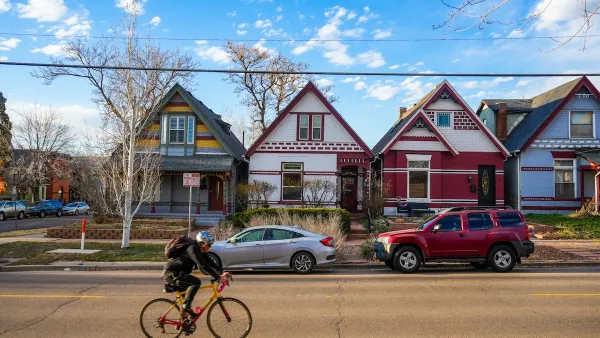
Amidst Colorado Affordability Crisis, Just 3% of Residential Land Zoned for Multifamily Housing
A new report suggests loosening restrictive zoning laws on multifamily development could help bring down high housing costs.

DC Residents Want Affordability Over ‘Character’
A poll finds that most residents want to see changes in zoning and land use laws that unlock more housing construction in the District and improve affordability.

Planetizen Federal Action Tracker
A weekly monitor of how Trump’s orders and actions are impacting planners and planning in America.

California plans to bury El Niño’s downpour
If the state plays its cards right, it may be able to store a billion acre-feet of El Niño’s water in aquifers.

Chicago breaks ground on $3 billion megadevelopment
The new neighborhood, titled Foundry Park, will one day host 3,700 residences.

California High-Speed Rail Authority CEO resigns after $600,000 scandal
Under Ian Choudri, the authority used taxpayer dollars to fund first class flights and trips to nightclubs.

Want to study the Missouri River? Soon, you may need unanimous approval from 10 states
Legislation would require 10 governors’ permission to study or build projects moving water outside the basin.

Desperate measures: Advocates weigh draining Lake Powell to fill Colorado River
Draining the reservoir could reduce evaporation losses by a couple hundred thousand acre-feet.

FREE Course: Walkable City 1: Why Walkability?
After describing his path towards focusing on walkability as the essence of good planning, Jeff Speck marches through his five principal reasons for making more walkable places.
Reinventing Malls: Planning Alchemy—Turning Gray Fields Into Gold
The course focuses on the opportunities and imperatives that shape reinvention of mall sites.

City of Rosemead
Rutgers University, Edward J. Bloustein School of Planning and Public Policy
One Hundred Miles
Hunter College, City University of New York (CUNY)
The Architects Foundation
University of Cincinnati Online
City of Cambridge
Montrose County
The Pocatello Development Authority