A suit brought by a developers’ group calls the cost burden of the city’s inclusionary zoning law ‘unconstitutional.’


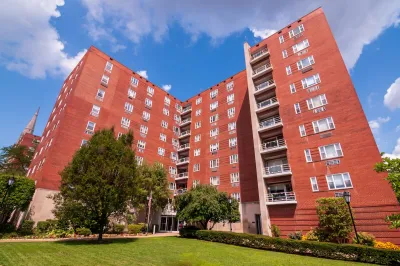
A legal challenge to Pittsburgh’s inclusionary zoning law could change the way affordable housing is built in the city.
According to reporting by Madaleine Rubin in the Pittsburgh Post-Gazette, the city is being sued by the Builders Association of Metropolitan Pittsburgh, which argues that the requirement to include affordable housing is an unconstitutional burden on developers, who claim each affordable housing unit costs an added $400,000 to $600,000. “In court filings, the city has countered that Walnut Capital did not request any exemption from inclusionary zoning while obtaining city approvals on the project.”
The association’s case is built on the claim that inclusionary zoning violates a section of Pennsylvania law that prohibits the city from adopting any law that “regulates business … by imposing duties, responsibilities or requirements.”
Pittsburgh requires inclusionary zoning in several neighborhoods, and its mayor has proposed expanding it citywide to almost all buildings with over 20 units. “If passed, the legislation would require builders to set aside 10% of units as affordable for households earning at or below half of an area’s median income.”
FULL STORY: Pittsburgh’s inclusionary zoning policy faces legal challenge


San Francisco to Reconsider Inclusionary Zoning as Development Slows to a Crawl
Critics of inclusionary zoning frequently point to San Francisco as an example of what not to do. A sluggish year of development has some local politicians ready to reconsider the city’s program.

Pittsburgh Mayor Proposes Zoning Changes to Curb Housing Shortage
The mayor’s plan includes legalizing ADUs in single-family neighborhoods, eliminating parking requirements, and adding new affordability requirements to buildings with over 20 units.

California Law Ends Road Widening Mandates
Housing developers will no longer be required to dedicate land to roadway widening, which could significantly reduce the cost of construction and support more housing units.

Planetizen Federal Action Tracker
A weekly monitor of how Trump’s orders and actions are impacting planners and planning in America.

The state-sanctioned urbicide of Austin
People don’t kill cities. Freeways do.

US to reduce Colorado River water deliveries to Mexico
A new Colorado Treaty amendment reduces Mexico’s Colorado River water allocation by 250,000 acre feet.

5 New England states march closer to 800 megawatt wind energy project
Securing federal approval for the project may be complicated under the Trump administration, which has historically been hostile towards domestic wind power.

Baltimore to break ground on $50 million Transit Priority Project
The project will bring faster bus trips, safer streets and better bike connections to Baltimore.

Airbnb launches $250 million 'last-dollar financing' housing accelerator, makes first investment in Austin
The company will put $6.4 million towards affordable housing development in Texas’ capital.

FREE Course: Walkable City 1: Why Walkability?
After describing his path towards focusing on walkability as the essence of good planning, Jeff Speck marches through his five principal reasons for making more walkable places.
Reinventing Malls: Planning Alchemy—Turning Gray Fields Into Gold
The course focuses on the opportunities and imperatives that shape reinvention of mall sites.

Eagle County Government
Harvard University Graduate School of Design
Nashville Planning Department
The Architects Foundation
University of Cincinnati Online
The Pocatello Development Authority
The Urban Renewal Agency of the City of Pocatello
Journal of the American Planning Association