The Department of Housing and Urban Development has released the details of the final rule for Affirmatively Furthering Fair Housing, which will give new strength to the goals set forth by the Fair Housing Act of 1968.


"The Obama administration announced an aggressive effort on Wednesday to reduce the racial segregation of residential neighborhoods," report Julie Hirschfeld Davis and Binyamin Appelbaum. "It unveiled a new requirement that cities and localities account for how they will use federal housing funds to reduce racial disparities, or face penalties if they fail."
According to Davis and Applebaum, the Obama Administration created the new Affirmatively Furthering Fair Housing rule "to enforce the goals of the civil rights-era fair housing law that bans overt residential discrimination," but have largely failed to prevent segregation. Included in the new effort is a promise by the Department of Housing and Urban Development to "make available a trove of data that local officials can use in deciding how they will address segregation and racially concentrated areas of poverty, rather than being told how they must meet the new goals." The article also notes the political divide provoked in response to the announcement—with civil rights organizations on one side and conservatives on the other.
Writing for the Urban Institute in a separate article, Solomon Greene and Erika C. Poethig provide their take on the Affirmatively Furthering Fair Housing rule, explaining its importance and commending HUD for taking steps toward addressing segregation and expanding opportunity.
The new rule follows shortly after a Supreme Court ruling that also strengthened the cause of the Fair Housing Act on the issue of disparate impact in Texas Department of Housing and Community Affairs v. The Inclusive Communities Project.
Read the full story: Obama Unveils Stricter Rules Against Segregation in Housing

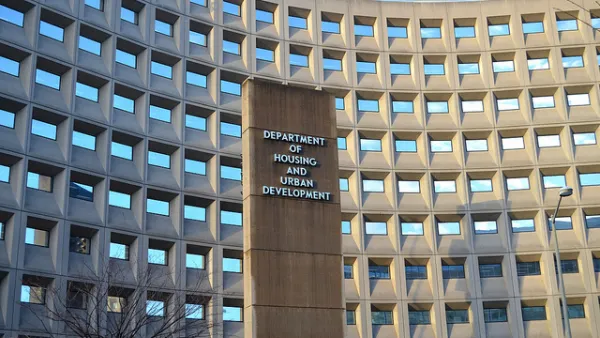
Trump Deals a Blow to Fair Housing Rules
The Trump Administration is gutting a key requirement of the Affirmatively Furthering Fair Housing Rule enacted by the Department of Housing and Urban Development under the Obama Administration.

The Hypocrisies and Troubles of Local Control
President Trump has opinions about the sanctity of local control that don't agree with his other opinions about local control. This is a cautionary tale.
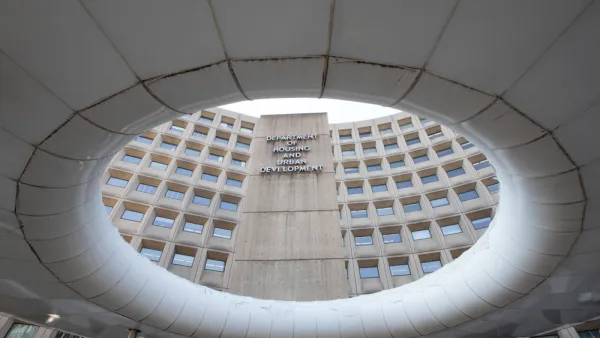
I Have Spent My Career Advocating for Fair Housing. It's Good to See Obama's Rule Go.
The Affirmatively Furthering Fair Housing rule, as adopted by the Obama administration and scrapped by the Trump administration, didn't include the policy tools necessary to achieve fair housing in the United States, according to this opinion piece.

Planetizen Federal Action Tracker
A weekly monitor of how Trump’s orders and actions are impacting planners and planning in America.

Amtrak, CN end decades-long dispute with eight-year agreement
The new operating agreement establishes an updated framework for the companies to work together, including processes to resolve disputes.

Nation's most wind-powered state turns to coal as data centers increase energy demand
For the first time in decades, Iowa has increased its generation of coal power.

Alabama scores up to $2.5 billion federal loan for largest infrastructure project in state’s history
The Mobile River Bridge and Bayway Project aims to ease congestion at Alabama’s worst bottleneck.

Trump is considering data centers on 6 states' public land — some state officials say they had no idea
If the administration approves the proposed projects, data center and data center-related developments will cover 17,600 acres of public land.

Despite court ruling, Trump is keeping nearly all wind projects in the US on hold
At least 110 wind energy projects have not heard from the government since a federal judge ruled that the Trump administration's freeze on wind turbine clearances was likely illegal.

FREE Course: Walkable City 1: Why Walkability?
After describing his path towards focusing on walkability as the essence of good planning, Jeff Speck marches through his five principal reasons for making more walkable places.
Reinventing Malls: Planning Alchemy—Turning Gray Fields Into Gold
The course focuses on the opportunities and imperatives that shape reinvention of mall sites.

KFH Group Inc.
Greater Baltimore Committee
Eagle County Government
The Architects Foundation
University of Cincinnati Online
The Pocatello Development Authority
The Urban Renewal Agency of the City of Pocatello