Spearheaded by the Van Alen Institute, and supported by the New Orleans Redevelopment Agency, the competition brings new life to some of the 30,000 vacant lots and abandoned structures left over from Hurricane Katrina throughout the city.


The competition, called Future Ground, is seeking submissions from "landscape designers, architects, planners, public policy wonks, and pretty much anybody in the business of shaping urban environments," according to Aaron Seward from Architects Newspaper Blog. Ten years after Hurricane Katrina's destruction, "Future Ground is looking to create design and policy strategies capable of adapting to changes in density, demand, climate, and landscape in New Orleans over the next half-century in an effort to turn these abandoned landscapes into lasting resources."
Winning teams will receive a small stipend, and work closely, "in a six-month collaborative process with local stakeholders and national leaders. The goal is to bring small, incremental improvements to individual neighborhoods as well as the city as a whole; to develop policy that bolsters beneficial design strategies; and to make these strategies good enough to be sustained into the next generation."
Applications are due September 29, 2014.
Read the full story: VAN ALEN INSTITUTE LAUNCHES COMPETITION SEEKING LAND REUSE STRATEGIES FOR NEW ORLEANS


The Fascinating Transformation of Suburban Architecture
The metamorphoses of suburban commercial buildings reflect a story of the urban landscape waiting to be told.
Skyscrapers of the Future
The 2011 eVolo Skyscraper Competition turned up some unusual and futuristic designs for future skyscrapers and other structures, from a reimagined Hoover Dam to a Ferris Wheel-shaped wind turbine.
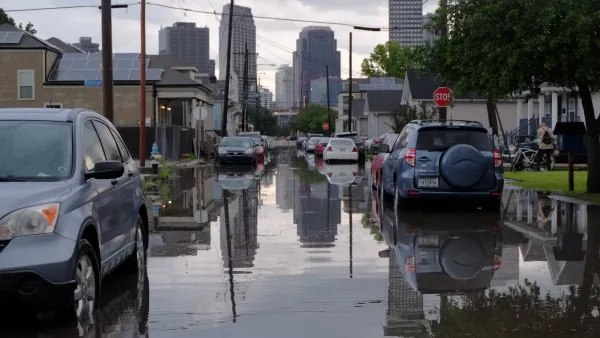
Study: New Orleans sea level rise is at 'point of no return'
Research shows that the city could be surrounded by water by the end of this century.

Planetizen Federal Action Tracker
A weekly monitor of how Trump’s orders and actions are impacting planners and planning in America.

Amtrak, CN end decades-long dispute with eight-year agreement
The new operating agreement establishes an updated framework for the companies to work together, including processes to resolve disputes.

Judges permit Denver to divert 77,000 acre feet from the Colorado River for reservoir expansion
Overuse and climate change have caused the Colorado River’s water levels to plummet.

Idaho may see an 18% drop in federal surface transit funding — the largest estimated cut in the US
Transit systems in rural communities are much more reliant on federal funding to provide their services.

How ‘post-disaster gentrification’ alters neighborhoods after natural calamities
After hurricanes, fires or other calamities, the original residents of a community are often replaced by younger, wealthier residents.

Maryland local governments examine if they should have more power to raise property taxes
Maryland’s housing market is out of reach for the majority of moderate-income residents.

FREE Course: Walkable City 1: Why Walkability?
After describing his path towards focusing on walkability as the essence of good planning, Jeff Speck marches through his five principal reasons for making more walkable places.
Reinventing Malls: Planning Alchemy—Turning Gray Fields Into Gold
The course focuses on the opportunities and imperatives that shape reinvention of mall sites.

Harvard University Graduate School of Design
KFH Group Inc.
Greater Baltimore Committee
The Architects Foundation
University of Cincinnati Online
The Pocatello Development Authority
The Urban Renewal Agency of the City of Pocatello