Energy is the key to the economy, so it should be used wisely. A new report shows that the United States performs very poorly in making the most of its resources.


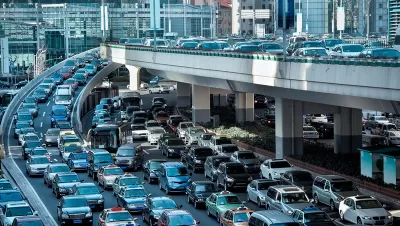
Rani Molla shares news of a new report by the American Council for an Energy-Efficient Economy, an environmental nonprofit advocacy group, that ranks the United States 13th out of the 16 largest economies in energy efficiency.
"The U.S. scored poorly for a number of reasons, including relatively low use of and investment in public transit, a high number of miles traveled in inefficient vehicles as well as high energy usage in both commercial and residential sectors. A lack of energy savings targets and efficiency standards also played a role, the report’s authors said."
Read the full story: U.S. Lags in Energy Efficiency
President Obama's Most Important Energy Efficiency Standard Unveiled
Just in time for winter, the U.S. Department of Energy released a standard to make heating and cooling in commercial buildings far more efficient, increasing minimum efficiency by 10 to 25 percent.
Beware of Energy Rankings for Cities
In a special "Energy for Tomorrow" report, The New York Times looks at "clean city rankings" of energy efficiency and land use. But ranking cities is no easy task—"winners on one list may appears as sinners on another."

Tall buildings: energy hogs, or undercover environmentalists?
While some commentators argue that taller buildings are inherently less energy efficient, recent studies suggest otherwise.

Washington state to charge fee to drivers with fuel-efficient cars
Revenue from the fee will go towards supporting the state’s highways.

Illinois considers spending $1 billion in taxpayer money on data center
A quantum computing campus and data center are currently under construction in Chicago.

Trump to blast ‘hydrocarbon highway’ through ‘world’s longest art gallery’
Environmental and historic preservation groups are suing to stop the project.

Boston City Council votes to no longer mandate parking in residential developments
The Boston Zoning Commission still needs to approve the proposal.

Passengers in New York, California lift off in air taxis
Two air taxi companies have received a Special Airworthiness Market Survey Certificate, which allows them to service passengers.

MTA to upgrade subway signals for entire network by 2050
This is the first time New York City has planned to modernize subway signals in the Bronx.

FREE Course: Walkable City 1: Why Walkability?
After describing his path towards focusing on walkability as the essence of good planning, Jeff Speck marches through his five principal reasons for making more walkable places.
Reinventing Malls: Planning Alchemy—Turning Gray Fields Into Gold
The course focuses on the opportunities and imperatives that shape reinvention of mall sites.

City of Charlotte
City of Rosemead
Rutgers University, Edward J. Bloustein School of Planning and Public Policy
University of Michigan School for Environment and Sustainability (SEAS)
Hunter College, City University of New York (CUNY)
The Architects Foundation
University District Partnership