Garden cities have been making news lately thanks to a new book by architect Robert A.M. Stern, but a design competition and policy declarations in the United Kingdom have put some serious skin in the game.


Mike Sergeant shares news of five finalists in a design competition to design a new garden city in England. The Wolfson Economics Prize, as its called, will award £250,000 to the eventual winner. The five finalists include entries are from: design consultancy housing charity Shelter; Barton Willmore; Chris Blundell; David Rudlin; and planners Wei Yang & Partners.
The competition was created to search for answers to the United Kingdom's housing shortage: "The number of households in England is expected to grow by about 221,000 every year this decade….But the number of homes being built is lagging behind - with the construction of 112,630 completed between April 2013 and March this year."
According to an earlier report from the BBC, Deputy Prime Minister Nick Clegg promised to build three garden cities, each with more than 15,000 homes. The garden cities will fended with "an existing £2.4bn pot will be made available for developments being built up to 2020."
Read the full story: 'Garden cities' competition finalists announced
Survey: NIMBYism Declining as a Result of the U.K. Housing Crisis
A newly released report from a U.K. housing non-profit reports a "Staggering turn-around" in attitudes about housing—more specifically described as a sharp decline in NIMBYism.
Can UK Politicians Force Owners to Develop Fallow Properties?
Britain's opposition Labour Party is promising to tackle the country's housing crisis as a centerpiece of its next election campaign. A proposed “use it or lose it” law aimed at forcing developers to build on fallow land is causing controversy.
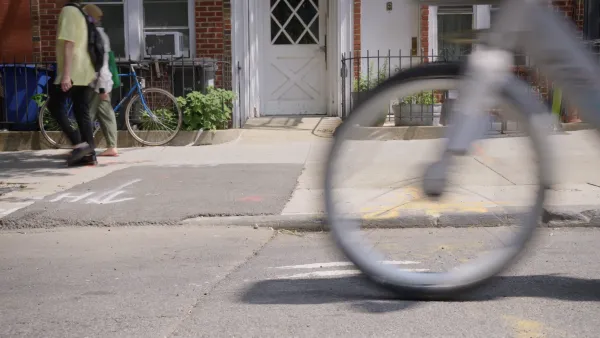
Art project makes NYC Citi Bikes physically harder to pedal in rent-burdened neighborhoods
Ground Truth, created by Brooklyn artist Justin Blinder, slows bikes down to make cyclists feel the burden of high rent.

Planetizen Federal Action Tracker
A weekly monitor of how Trump’s orders and actions are impacting planners and planning in America.

California plans to bury El Niño’s downpour
If the state plays its cards right, it may be able to store a billion acre-feet of El Niño’s water in aquifers.

Desperate measures: Advocates weigh draining Lake Powell to fill Colorado River
Draining the reservoir could reduce evaporation losses by a couple hundred thousand acre-feet.

Housing is the top priority of Seattle’s sole new councilmember
Jenks campaigned on building 1,000 new units of affordable housing.

New tax cuts may slash $1.5 billion in funding for Miami transit, public parks
Amendment 3 will save Miami-Dade homeowners $2,700 in 2028.

Arizona, Wisconsin, Pennsylvania hope to finally advance climate goals post-midterms
The three states have spent years under Republican or divided control.

FREE Course: Walkable City 1: Why Walkability?
After describing his path towards focusing on walkability as the essence of good planning, Jeff Speck marches through his five principal reasons for making more walkable places.
Reinventing Malls: Planning Alchemy—Turning Gray Fields Into Gold
The course focuses on the opportunities and imperatives that shape reinvention of mall sites.

City of Rosemead
Rutgers University, Edward J. Bloustein School of Planning and Public Policy
One Hundred Miles
University of Michigan School for Environment and Sustainability (SEAS)
Hunter College, City University of New York (CUNY)
The Architects Foundation
City of Cambridge
Montrose County
The Pocatello Development Authority