An article from the SPUR's "The Urbanist" shares insight into the work of the Southeast Food Access Working Group (SEFA).


The Southeast Food Access Working Group (SEFA) is a large group of Bayview residents, community-based organizations, city agencies and others working to achieve a “vibrant and robust food system for all Bayview-Hunters Point residents” by improving food access, improving diet through awareness and education, and developing community gardens.
The article details some of the partners and studies that enabled SEFA's programs, as well as news that the model has spread to other parts of the city, including where the Tenderloin Healthy Corner Store Coalition (THCSC) is working to redesign two local corner stones to a more healthy model.
Moreover, the grassroots activism of SEFA and THCSC has gained institutional support in City Hall: "Recognizing that city agencies could help support these neighborhood efforts, Supervisor Eric Mar introduced legislation in 2013 that created the Healthy Retail SF pilot initiative, which is led by the Office of Economic and Workforce Development (OEWD) under Mayor Edwin Lee’s Invest in Neighborhoods Initiative, in conjunction with the Department of Public Health." The OEWD's "SF Shines" initiative, for example, will help corner stores making the transition to more healthy options in acquiring tools for rebranding and signage.
Read the full story: San Francisco’s Healthy Corner Store Movement
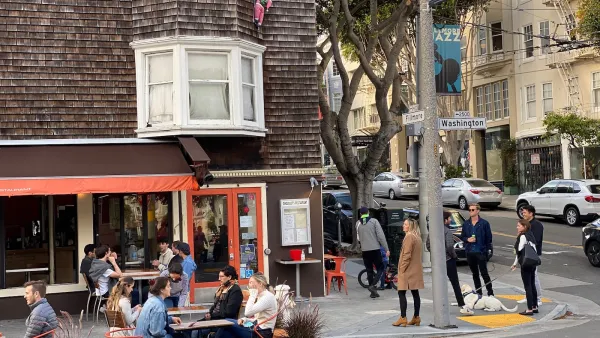
San Francisco leaders shelve proposed patio smoking ban
Facing backlash from business owners, supervisors postponed a discussion of legislation that would bar smoking from restaurant and bar patios.

Making economic sense of city-owned grocery stores
Several cities are moving to create municipal stores, but do they actually save low-income households money?
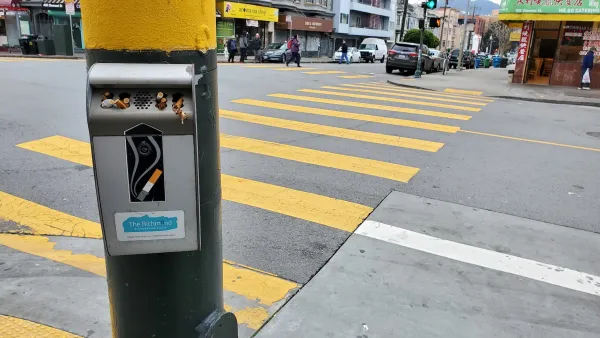
San Francisco weighs patio smoking ban
Business owners say the ban could force patrons onto sidewalks and disrupt long-standing bar culture, while proponents of the ordinance say second-hand smoke is a threat to patrons and workers.

Planetizen Federal Action Tracker
A weekly monitor of how Trump’s orders and actions are impacting planners and planning in America.

Eastern Nebraska is running out of electricity
Data centers and electrification are straining eastern Nebraska’s grid, throttling economic development.

Study reveals best places in the U.S. for cycling, walking
New research from Streetlight Data examines bicycle and pedestrian miles per capita in the 100 largest U.S. cities by population.

DSA members accuse Mamdani of 'abandoning values' over housing redevelopment
New York City's mayor plans to replace about 2,000 units of public housing with private, mixed-income housing.

All sides of BRT debate unhappy with CDOT’s most recent move
The Colorado Department of Transportation is no longer considering center-running bus lanes for Colorado Boulevard.

Massachusetts bogs generate both power, and cranberries
Putting solar panels above farmland is one way Massachusetts is advancing toward its goal of net-zero carbon emissions by 2050.

FREE Course: Walkable City 1: Why Walkability?
After describing his path towards focusing on walkability as the essence of good planning, Jeff Speck marches through his five principal reasons for making more walkable places.
Reinventing Malls: Planning Alchemy—Turning Gray Fields Into Gold
The course focuses on the opportunities and imperatives that shape reinvention of mall sites.

City of Rosemead
Rutgers University, Edward J. Bloustein School of Planning and Public Policy
One Hundred Miles
University of Michigan School for Environment and Sustainability (SEAS)
Hunter College, City University of New York (CUNY)
The Architects Foundation
City of Cambridge
The Pocatello Development Authority
The Urban Renewal Agency of the City of Pocatello