A recent study finds evidence of an overwhelming desire by Millennials to live multi-modal, car-lite lifestyles. They're even prepared to move to find what they want.


David Goldberg shares news of a recent study by The Rockefeller Foundation and Transportation for America finding that “[four] in five millennials say they want to live in places where they have a variety of options to get to jobs, school or daily needs.”
In addition, [three] in four say it is likely they will live in a place where they do not need a car to get around.”
The survey gathered responses from Americans aged 18-34 in 10 major U.S. cities, so there is self-selection involved. However, the data reveal a potentially troubling lack of transportation options in a city like Nashville, according to Goldberg. "While 64 percent in Nashville say they expect to live in walkable places where they don’t necessarily need a car, only 6 percent say they currently live in such a place."
Read the full story: Survey: To recruit and keep millennials, give them walkable places with good transit and other options

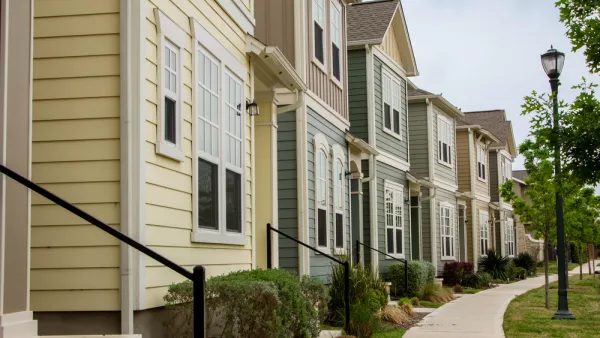
'Missing Middle' Housing and the Expected Millennial Exodus
The Washington Post examines "missing middle" housing as a solution for retaining millennials in cities and interior suburbs. There is still some question, however, about whether millennials are actually leaving urban areas.
More Towns Mimicking New Orleans and Allowing Public Drinking
It used to be that only New Orleans and Las Vegas allowed people to carry a drink outdoors and imbibe in public. Now cities all over the country, mostly in traditionally conservative states, are loosening their laws.

Surgeon General Warning to Local Governments: Stop Being So Auto-Centric!
No, those will not be the precise words of the forthcoming "Call to Action" by Surgeon General Vice Admiral Vivek H. Murthy, but he will call on cities to "design and build roads and public places to make walking easier, safer, and more pleasant."

Planetizen Federal Action Tracker
A weekly monitor of how Trump’s orders and actions are impacting planners and planning in America.

‘Going backwards:’ Baltimore mayor, students rally against state's transit funding plan
Maryland's proposed six-year plan provides no funding for Baltimore’s BMORE bus program and reduces its road maintenance funding.

Detroit to transform waterfront with $2.2 billion investment
Developers will convert about 18 acres of unused parking lot space into civic spaces.

Exemption applications for NYC’s pied-à-terre tax see 55% success rate
The city sent nearly 40% of its initial pied-à-terre tax warnings erroneously.

MTA invests $1.1 billion in ‘nearly-impossible’-to-evade fare gates
The new technology marks the Metropolitan Transit Authority's first turnstile redesign in decades.

HUD modernizes 50-year-old manufactured housing framework
The Next Generation Manufactured Housing Action Plan establishes new energy-efficiency standards for manufactured homes, and new guidelines for anchoring them.

FREE Course: Walkable City 1: Why Walkability?
After describing his path towards focusing on walkability as the essence of good planning, Jeff Speck marches through his five principal reasons for making more walkable places.
Reinventing Malls: Planning Alchemy—Turning Gray Fields Into Gold
The course focuses on the opportunities and imperatives that shape reinvention of mall sites.

One Hundred Miles
County of Mendocino
planning NEXT
The Architects Foundation
University of Cincinnati Online
Montrose County
Northern Illinois Transit Authority (NITA)
The Pocatello Development Authority