The Greater London Authority recently published the “Further Alterations to the London Plan” report, which set aggressive targets for housing in the booming city. Now details are emerging about how Mayor Boris Johnson hopes to incentivize housing.


John Geoghegan reported on the release of the “Further Alterations to the London Plan” (FALP) report at the end of February. According to that article, the most eye-catching of the report’s recommendations were the aggressive housing targets: “31 of the 32 London boroughs are also set to have their individual housing targets raised - one by as much as 83 per cent.”
The need for the plan update comes as a result of London’s quick growth, which far outpaces estimates from a plan approved in 2011. “There are 600,000 more people in London now than was projected in the 2011 plan…(8.4 million compared with the projection of 7.8 million). If current rates continue, this figure will rise to ten million by 2036, making London Europe's first ‘mega-city…’”
In an update on the developing FALP story, Richard Garlick reports that Deputy Mayor for Housing Richard Blakeway told reporters that the plan might rely on a mechanism called local development orders (LDOs) in yet-to-be-announced housing zones. According to Garlick, “[LDOs] allow councils to specify certain kinds of development that do not need planning permission, and up to now have mostly been used to encourage commercial and industrial development on business parks.”
“Other options being considered to help encourage development in the zones include using the mayor's land assembly and compulsory purchase powers, bringing forward of public land and acquiring sites.”
Read the full story: Mayor mulls LDO plan for housebuilding
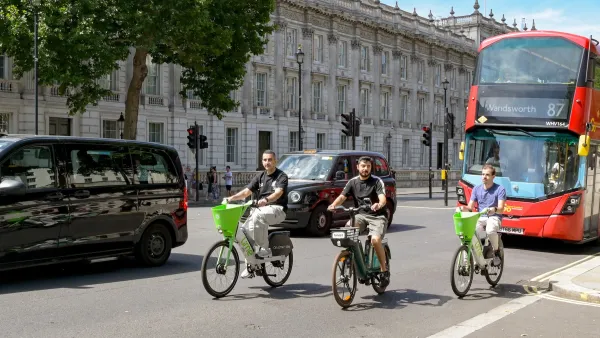
Bike use in London grew by 43% since 2019, but car use remains roughly the same
The city's efforts to reduce car use have stalled despite ambitious programs like congestion pricing and low-traffic neighborhoods.

Beavers save London Tube station from flooding
A small group of beavers is increasing biodiversity and creating cost-free flood mitigation infrastructure.

Can Robotaxis Handle London's Famously Tangled Streets?
Black Cab drivers say autonomous cars won’t be able to handle London’s unique conditions.

Planetizen Federal Action Tracker
A weekly monitor of how Trump’s orders and actions are impacting planners and planning in America.

Eastern Nebraska is running out of electricity
Data centers and electrification are straining eastern Nebraska’s grid, throttling economic development.

Move over, LA: St. Louis gears up for Olympics, invests millions in downtown redevelopment
The Missouri city will host the 2028 Olympic soccer group stage and knockout matches.

Dallas releases zoning code overhaul to officials
The drafted overhaul is over 400 pages long.

NYC renovations for dangerous, ‘mercilessly crammed’ street delayed until 2027
Construction was supposed to begin this fall.

San Diego’s Midway Rising project gets greenlight from city council
The project looks to become the largest affordable housing development in California's history.

FREE Course: Walkable City 1: Why Walkability?
After describing his path towards focusing on walkability as the essence of good planning, Jeff Speck marches through his five principal reasons for making more walkable places.
Reinventing Malls: Planning Alchemy—Turning Gray Fields Into Gold
The course focuses on the opportunities and imperatives that shape reinvention of mall sites.

City of Rosemead
Rutgers University, Edward J. Bloustein School of Planning and Public Policy
One Hundred Miles
University of Michigan School for Environment and Sustainability (SEAS)
Hunter College, City University of New York (CUNY)
The Architects Foundation
City of Cambridge
The Pocatello Development Authority
The Urban Renewal Agency of the City of Pocatello