A recent report from the National Housing Conference has moderately good news about the housing market—in many states, the number of working households “severely cost-burdened” by the cost of housing dipped slightly in 2012.


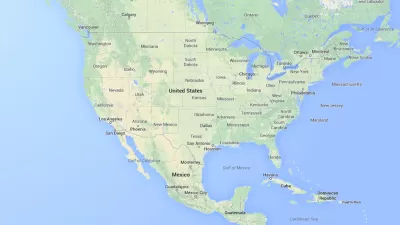
Mike Maciag shares news of a recent report by the National Housing Conference (NHC) that allows a shred of good news among the typically bad news about housing affordability in the United States.
“After years of steady growth, the share of working households considered severely cost-burdened dipped slightly from 23.7 percent in 2011 to 22.1 percent in 2012,” writes Maciag of the report’s findings.
“Between 2009 and 2012, the share of severely cost-burdened working households fell in 30 states, with 13 reporting statistically significant declines.”
The article includes a map of housing affordability in each state, as well as a list of the states with the largest drops in cost-burdened households between those years. Arkansas leads the list, with a 3.8 percent drop.
But it’s still not a good time to be a renter. “Renter households are twice as likely to be cost-burdened as homeowners,” writes Maciag.
Read the full story: Where Do People Spend the Most of Their Paycheck on Housing?

Less than 6% of California cities are building enough housing for very low-income households
Only five jurisdictions are on track to meet their housing goals for all income brackets.
Just 17% of San Diego households can afford the city's $1M+ median home prices
The city is becoming increasingly unaffordable to prospective homebuyers.

Indianapolis rents grew by 30% since 2020
The metro area has a shortage of roughly 137,000 affordable homes for the lowest-income households.

Planetizen Federal Action Tracker
A weekly monitor of how Trump’s orders and actions are impacting planners and planning in America.

‘Going backwards:’ Baltimore mayor, students rally against state's transit funding plan
Maryland's proposed six-year plan provides no funding for Baltimore’s BMORE bus program and reduces its road maintenance funding.

Detroit to transform waterfront with $2.2 billion investment
Developers will convert about 18 acres of unused parking lot space into civic spaces.

U.S.-Iran war may have ‘devastating’ impact on cost to warm homes
Vermont and Maine residents may see a 76% increase in the cost of warming their homes this winter.

Senate bill would ‘overhaul’ environmental permitting laws
Under the proposed act, government agencies would also not be able to suspend or rescind permits after granting them.

Exemption applications for NYC’s pied-à-terre tax see 55% success rate
The city sent nearly 40% of its initial pied-à-terre tax warnings erroneously.

FREE Course: Walkable City 1: Why Walkability?
After describing his path towards focusing on walkability as the essence of good planning, Jeff Speck marches through his five principal reasons for making more walkable places.
Reinventing Malls: Planning Alchemy—Turning Gray Fields Into Gold
The course focuses on the opportunities and imperatives that shape reinvention of mall sites.

One Hundred Miles
County of Mendocino
planning NEXT
The Architects Foundation
University of Cincinnati Online
Montrose County
Northern Illinois Transit Authority (NITA)
The Pocatello Development Authority