A new study published in the journal Environmental Science and Technology finds that moving to a more-green area can have a long-lasting positive effect on mental health, unlike the short-term jolt from pay rises, promotions or winning the lottery.


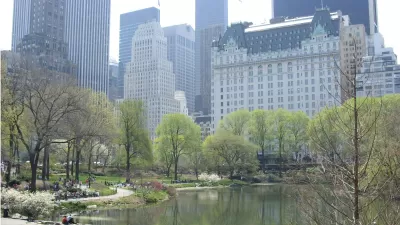
Researchers from the European Centre for Environment and Human Health at the University of Exeter, UK have completed a study of the mental health benefits of urban green spaces, reports Mark Kinver with the BBC. The study, which tracked tracked mental health outcomes of 1,000 participants over a five year period, was driven by a desire to find out "whether living in greener urban areas had a lasting positive effect on people's sense of well-being or whether the effect also disappeared after a period of time."
"To do this, the team used data from the British Household Panel Survey (now known as the Understanding Society survey), which began in 1991, and compiled by the University of Essex," explains Kinver.
"Explaining what the data revealed, [Co-author Mathew White] said: 'What you see is that even after three years, mental health is still better which is unlike many of the other things that we think will make us happy.'"
Read the full story: Green spaces have lasting positive effect on well-being
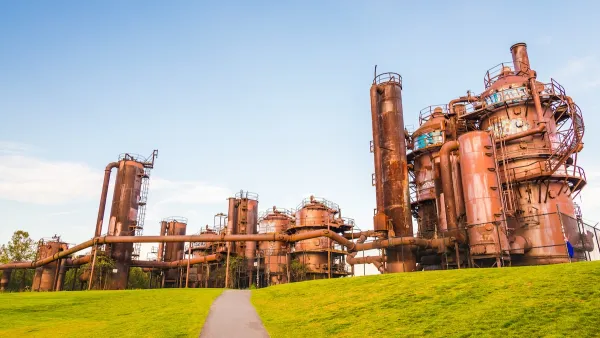
Revitalizing Cities Through Soil Health, Green Spaces, and Nature-Based Remediation
Investing in soil health, urban parks, and nature-based solutions for brownfield remediation is essential for creating resilient cities, restoring ecosystems, and improving community well-being.
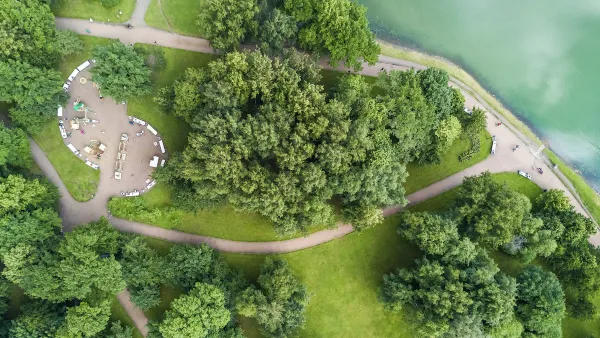
Not a Walk in the Park: What It Really Takes to Build Green Spaces
Park creation can take decades of perseverance to overcome financial, regulatory, and social hurdles, but the end result for the local community is more than worth it.
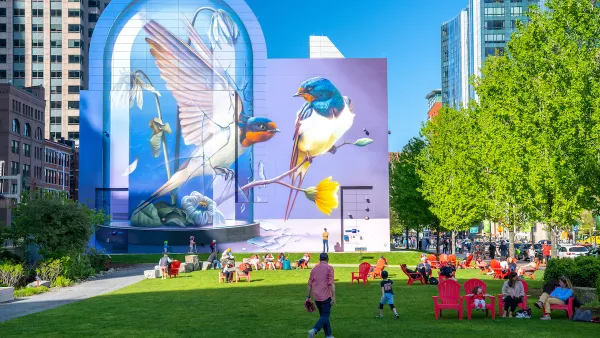
Why Social Infrastructure Matters
The pandemic highlighted the importance of parks and public spaces for maintaining both the physical and mental health of urban residents.

Planetizen Federal Action Tracker
A weekly monitor of how Trump’s orders and actions are impacting planners and planning in America.

California plans to bury El Niño’s downpour
If the state plays its cards right, it may be able to store a billion acre-feet of El Niño’s water in aquifers.

Desperate measures: Advocates weigh draining Lake Powell to fill Colorado River
Draining the reservoir could reduce evaporation losses by a couple hundred thousand acre-feet.

Mamdani’s pied-à-terre tax survives legal challenge
A panel of judges found that the plaintiffs failed to demonstrate injury as a result of New York City's implementation of the tax.

Eastern Nebraska is running out of electricity
Data centers and electrification are straining eastern Nebraska’s grid, throttling economic development.

Seattle passes record-breaking transit services expansion
Proposition 1 will double the city’s transit tax to add 95,000 more bus trips and preserve 180,000 bus trips annually.

FREE Course: Walkable City 1: Why Walkability?
After describing his path towards focusing on walkability as the essence of good planning, Jeff Speck marches through his five principal reasons for making more walkable places.
Reinventing Malls: Planning Alchemy—Turning Gray Fields Into Gold
The course focuses on the opportunities and imperatives that shape reinvention of mall sites.

City of Rosemead
Rutgers University, Edward J. Bloustein School of Planning and Public Policy
One Hundred Miles
University of Michigan School for Environment and Sustainability (SEAS)
Hunter College, City University of New York (CUNY)
The Architects Foundation
City of Cambridge
Montrose County
The Pocatello Development Authority